Archives

In Borneo

This entry was posted on by .

In Borneo

After Elizabeth Bishop

There are too many palm trees.
The sky, overcrowded with clouds,
towers with thunderheads
every monsoon afternoon. Too much beach.
At dusk the tide slides in,
rubs its rippling silver skin on the rocks,
licks its tongue along the sand.
The sun, broken, spills its yolk
onto too many mountains, distant islands.

Night lights a candle—
the gas flare of an oil rig
out at sea.

Should we have stayed on the couch,
David Attenborough’s voice
guiding us through the jungle
to a solitary orangutan
savouring wild fruit in a tree?
Our usual waiter, Rajis, sleeps
under a beach palm
on his rare day off.
Am I in a Graham Greene novel?
Locals watch us watch them.
They wave as we walk along the beach.
They seem to love us for the Ringits
we spend. Their smiles are so friendly.
We scan the sky for Imperial Green pigeons
winging to a hidden roost.
We yearn for Elysium
no footprints but our own.
“What a silly wish!” We agree
over G & Ts at the Sunset Bar.

It would have been a shame
not to drive the mountain road at dawn
watch the highest peak tear off the mist.
And not a shame. Ah, Sunrise. An Oriole,
tail on fire, feasting on yellow berries.
Is it wrong to feel the alpine forest throb,
hear it sing at 6am?
I crumple my guilt like the package
of taro chips, greasy with palm oil.
Toss it into the bin at the park gate.
Yes, a shame
not to see the Bird’s Nest fern huddled
in the crotch of a muscular fig tree.
A shame at the end of another day
to fill the jeep’s tank with cheap local petrol.
A shame to burn the brakes in the rain
all the way down the mountain
past the rubber plantations
as our species burns the jungle.

A shame not to watch the fading sky
drape the sea with its sarong.

Painting by Anna Bald showing a tiger holding a woman in its mouth.

Tiger from Memory by Anna Bald

the end of the world (three poems)

This entry was posted on by .

fault lines

i shake my fists at the imaginary monster living in the sky and i hurl a list of insults and complaints into his beady eyes i tell myself it’s his fault that the world is getting hotter and species are going extinct and there’s plastic in the ocean i write a letter and mark it urgent outlining every reason why he has ruined our chances of survival he rolls over on his side and i can see his scaly back and he is content to ignore my righteous manifesto and i tell myself it’s not my fault i don’t have blood on my hands and really this whole situation is beyond my control and the monster gets up he seems almost amused and i wait for him to reveal his grand schemy plan but his pad of paper is just filled with scribbles and i ask him why he has to be so cruel and he points to my bold circular lines and begs please get me out of this game

The Plant in the Disability Office

The plant that was sitting on the desk beside the woman who was sitting in the chair was starting to fall over. I entered the disability support office to hand in the piece of paper that says I have not worked in the last thirty days. The light in the office is like a giant refrigerator humming with claws. I ask the worker to make a copy of the sheet of paper and I stare at the plant which is falling over. Someone must have thought a little green would do the office good but the plant wasn’t so sure. There was no sunlight in the office and there was no rain. I wanted to ask the plant what it was like growing towards one side inside of a government building. But the plant and I—we pretended we did not know each other. And I stared at the faces of people who needed money just like me and wondered if they also noticed that the plant was dying. The woman behind the counter passed me my copies and I smiled at the plant. We nodded in agreement that this is what happens to life around here. I wanted to return the plant to an imaginary garden planted outside the government building but there was no garden. Only cement and steel. I wanted to say I am on the side of the plants. But this building was built to feed me. And I have concrete in my throat. And as I walked out of the building I felt my head tilt to one side and my eyes start to droop. But I’d been given food to eat. So I do not eat the plant.

the end of the world

when the end of the world comes and all of existence explodes into a ball of heat what will happen to me? i sense fear crawl up my spine and i wonder when the end of the world comes who will be the next elite? i try to be optimistic realistic and discount the language of experts call science the new religion but i’m still wondering when the end of the world comes what will happen to people like me who live with a disability and rely on the system? i try not to be selfish because it breaks my heart the planet is dying and i often prefer trees to humans but i can’t help but wonder when the mountains collapse and the icicles rise to the sky and the forests become a giant circle of fire what will happen to me? i don’t need much just a little apartment with my cat and my computer but what will i have to offer if the world goes to war from scarcity and i can barely make it down the block without being torn apart? i try not to think of the end of the world try to be realistic optimistic tell myself i also have support from family and try to focus on the present breathe in breathe out but the truth is i feel so small in the face of impending catastrophe i don’t want to be selfish as i rise to the microphone with my one final question for people in power but i have to ask if the end of the world comes what will happen to people like me?

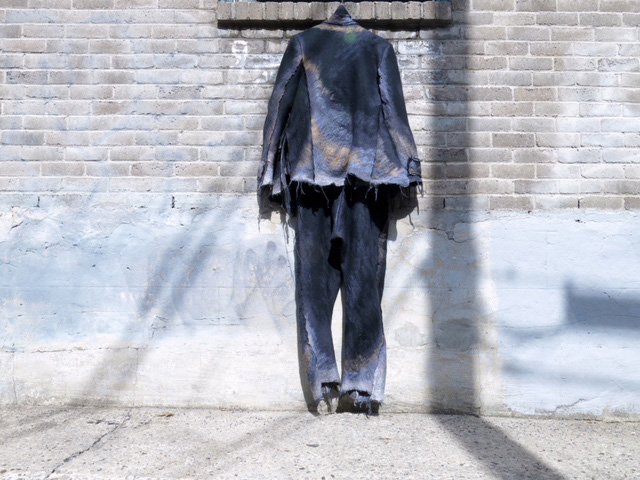
Photo of felt suit by Marjolein Dallinga

Les Chaises by Marjolein Dallinga (felted wearable art)

Field Notes on Desire Paths

This entry was posted on by .

Co-written Poem:

Ghazal 1

If we could trace the paths of airplanes,
carbon emissions etching the blue.

What surfaces in the body: PCBs, exhaust.
Glyphosate wilting the bellows of our lungs.

We move through it all: 18th-century smog,
21st-century extinction. We walk the path, a benediction.

Walking and the way it heals. Camino,
the body coming home to the land.

And what the land wants? Sweet rain.
Moonlight. Pull of gravity on core, on seed.

*

I Come Home to Another Season (Barrhead, Alberta)

Jenna Butler

We went overseas in the generous light of July—solstice just barely past, days in my northern Alberta home lingering long and rich through to midnight. The darkness never truly darkness, but an ombré of sorts, black shot through with peacock or plum, the satsuma curve of sun. Now, home again but with the old rose stone of Assisi behind my eyes, I find everything changed.

How fast the daylight slips when it’s made up its mind to go.

Incremental thefts: balsam poplar headed with gold at the start of August, the willows running ragged and wild. Crowberries picked over by bears, and in the morning, the pond a black mirror under a thicket of mist. Late summer has given us the slip, has passed us over, along with the sandhill cranes creaking their way south like the slow unfolding of windmills.

They say the boreal will not survive the coming years, the warmth of the south marching its way northward. Already, I see the needles of the muskeg spruce gone burnt with too much water, these endless summer rains. When I cut willow for tea, for the bitter painkiller in its white inner bark, I can’t help but notice how much of the tree has given itself up to rust, its leaves an unkempt spackle. I am not from this place, but the boreal has been my home almost all of my life. This great sweep of forest, so generous with its gifts, is drowning, its roots submerged in the peat. And it’s burning, overburden of brush easy prey for a careless cigarette. Everything is out of balance, tipping wildly.

In the never-come summer
In the rising marsh
In the floodwater river
In the winters harsh
In the sunless months
In the still-green grain
In the hay-bloated cattle
In the endless rain
In the land-keepers robbed of
The place of their birth
In the boreal flooding
A dirge for the Earth.

The forest teaches me again and again that I don’t know much. It’s a lesson that makes me want to learn more, to try to fill the gaps, but one that also stresses humility: as much as I can learn, there will be more and more that I still don’t know. The boreal teaches on a daily basis about letting go of pride and staying open. It inspires a fierce love for these great green lungs.

I don’t know if this deep connection to land is one reserved for women; in fact, that’s something I fight with, the idea that women have to be innately nurturing, to have some inborn connection to the land. Many of the male farmers around me are devoted stewards of the places they’ve grown up in, and even as they know them by heart, they are aware that these places are being reconfigured by climate change. So perhaps the humility isn’t uniquely female, but the concept of being a land custodian, or, let’s face it, in North America, a land “owner” (as a coloured woman, no less!) is fraught. It’s very, very complicated. I care for this land with all I have in me and make the best decisions I can to keep it safe … but at the end of the day, this continent is rightfully the home territories of the Indigenous peoples, and my name is there alongside my husband’s on the deed to this quarter. Ownership is deeply problematic for me. That’s what I was getting at earlier, in the reference above to being a coloured woman. Fifty, a hundred years ago, I and others like me would have been considered property. We wouldn’t have been able to hold title to land, much less our own agency. And here I am, running this much-loved farm and holding a piece of land that is part of someone else’s history.

Here I am, having travelled home at a time when the boreal I love cannot stand much more by way of temperature change caused by emissions.

Coming home is always welcome, but it’s so tangled, too.

*

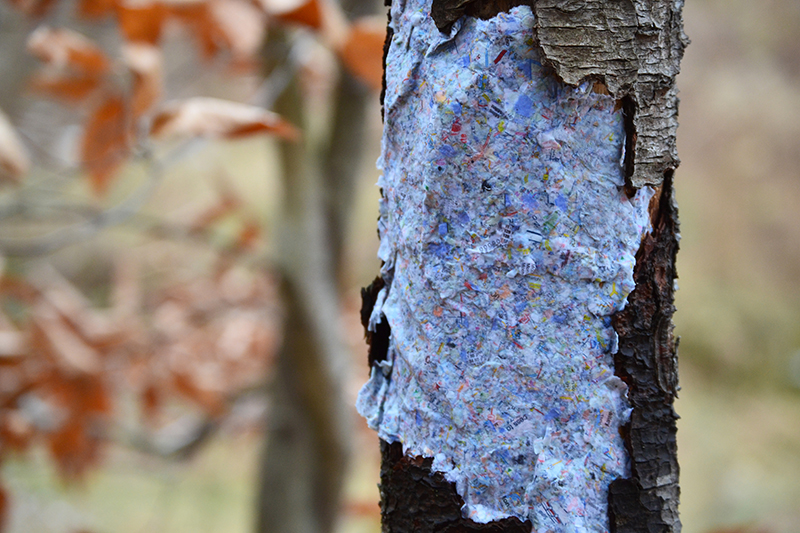
Art by Jackie Partidge showing a tree patched with a paper map.

Patched by Jackie Partridge

Spiders and Rain (Vancouver Island, B.C.)

Yvonne Blomer

The season here begins to shift as cool damp inhabits the late summer night. Some might say Victoria always carries that rainforest touch, but summers are getting hotter and drier, and even in the winter last year, I barely recall wet days.

Tonight, cool air shivers through the house, setting the spider’s webs, newly formed in every corner, quivering. Thieves steal into the garden, creep across vegetable beds and dewy lawn, overripe fruit and trees made bare. Bandits’ clawed feet leave evidence in loose soil. Later, sentinels return what has been taken—nibbled fig on the lawn, web across the laundry line, and a siren’s wail echoing across the city. Sheltered here, I am under Garry Oak, under cloud and damp, I am waiting for the sun, catching it the way beach glass does in a green glimmer. In a way, I welcome these furred bandits. Why take more rights than I’ve already taken to ground and trees and what grows despite my watering or my neglect.

What scientists say of the Boreal, they say of the Ocean. Great Pacific with its dying fish and dying orcas, starving nursing mothers and death up and down the oceanic food chain. Heat and acidity. And the vanishing sea birds.

My footprints follow my own earlier footprints through tidal dunes. If only this were our mark on the land: a footprint that vanishes, washes away, with the coming tide. Out and out, the water still only up to my shins. Long-leafed seaweed rushes in, forms islands my son swims through, his hands walking the sand: laughing human-crab hybrid.

Small fish. Blue,
blue as sorrow too and
iridescent-winged, slate-
blue August sky, clear blue.
Blue with the edges
cut away for a mountain.
Mountain cut away for a
thinning glacier. Blue
blue as a river, blue
as doubt which is also
a river. Blue. Evening’s
slow sigh of blue and
night’s clear night of it.

Recently, a long flight from Venice to London to Calgary and a drive home. Jenna north to the boreal and me west to the coast. After Italy’s protracted human footprint where change occurs on already changed land, I find the widening of the highway through the Rockies an offence.

We have been contemplating Desire Paths in Italy, and what is path but someone’s footprint creating a route through. I am no longer sure I can keep putting my feet down. But how often women have hidden their path-making from the world, all we know of some is the signature “Anon.”

And so, I hold two beliefs, as we all do here in the Anthropocene: I have a child, though I believe the population of humans should go down. I travel, have travelled, though I fear this travel is one of the worst things we can do. I buy toilet paper and take the offered toothbrush from the dentist. I try to make a name for myself and know this too is a way to mark a path. Perhaps this path is “preferential,” the way rainwater creates paths in limestone, or I set footprints in sand. Perhaps I should desire an interior path only, or move toward a more quiet, un-re-mark-able way.

*

Co-written Poems:

Ghazal 2

Sky scoured by heat haze,
fields seared August gold.

Wind silences cicadas. Rain
tamps yellow down. Grey fast coming green.

The scent of jasmine like longing or memory.
Pilgrimage, too, a desire path.

Desire—Italian couples reach toward each other;
paths lead in and out. What is desire but a long road,

the path that took us here—that circles us back,
changed … all we hold and let fall.

*

Ghazal 3

Italy rattling its desiccated lungs.
At home, the boreal exhales flame.

Here, no news of B.C. fires. Wonder
and bright days. Only rain clouds fast coming in.

The planes outnumber the clouds.
To Paris, New York—the sky a bronze band.

Lone drone stalls flight. What if—
I wonder. How travel these fraught paths?

How to travel these fraught paths? A poem
on our lips. A kind of prayer.

Canvassing

This entry was posted on by .

Hers was probably the fiftieth or sixtieth door I knocked on that afternoon. The sun had set enough that the white doors on the east side of the street were no longer too bright to look at. A dog barked inside her house, so I knew at least someone heard my knock. It’s always a guessing game: how long to wait before I accept that no one is coming. Thankfully, she answered quickly. She had a go-away face, though, her eyes hard and a tension around her mouth as if she were trying to spit me out.

I introduced myself and my organization and moved into the opening of my pitch before she could cut me off. “We’re a local non-profit that does a lot of environmental advocacy at city council and we’re in your neighbourhood doing some outreach this afternoon. I was wondering if you’re concerned about environmental issues?”

Her eyes hardened even further as I spoke, but her mouth relaxed to form the words with which she planned to send me away. “Well of course I am. Everyone is. But I don’t have time right now, so goodbye.” She shut the door before I could say anything more.

Hardly anyone has time to talk, so I was accustomed to this sort of rejection, especially at “cold doors” where the residents were not already on our member list. The closed door did not bother me, but as I moved on to the next house I pondered this woman’s assumption that of course she’s concerned, everyone is. Because everyone isn’t. That is one thing you learn when you try to talk to all the people on one street.

There were some houses I canvassed where the resident (often an older man) told me that he thinks we need more pipelines or, in one case, that he supports Donald Trump. These are the houses where we are trained to say, “Okay, have a nice day,” and move on, because the chances of recruiting them as supporters are slim. I wonder how the woman at the door that morning would have reacted if she encountered this kind of opposition from her neighbours. Would she have left her door open longer to prove that she’s on my side? Or kept it closed, satisfied that at least she cares, and that ought to be enough?

The vast majority of people seem to stop at caring, alleging sympathy, while still ushering me away claiming that this isn’t a good time. These are people with dinner on the stove or on the table, who are trying to bathe their kids, who just got home from a long day at work, who are trying to watch the game on TV. People who have someone on the phone, who are doing housework, who are just heading out, who aren’t feeling well today, and who don’t feel obligated to make excuses to a stranger. These people are me sometimes too, as I rush past a blue-vested street canvasser with my headphones in, pretending that I’m late to class.

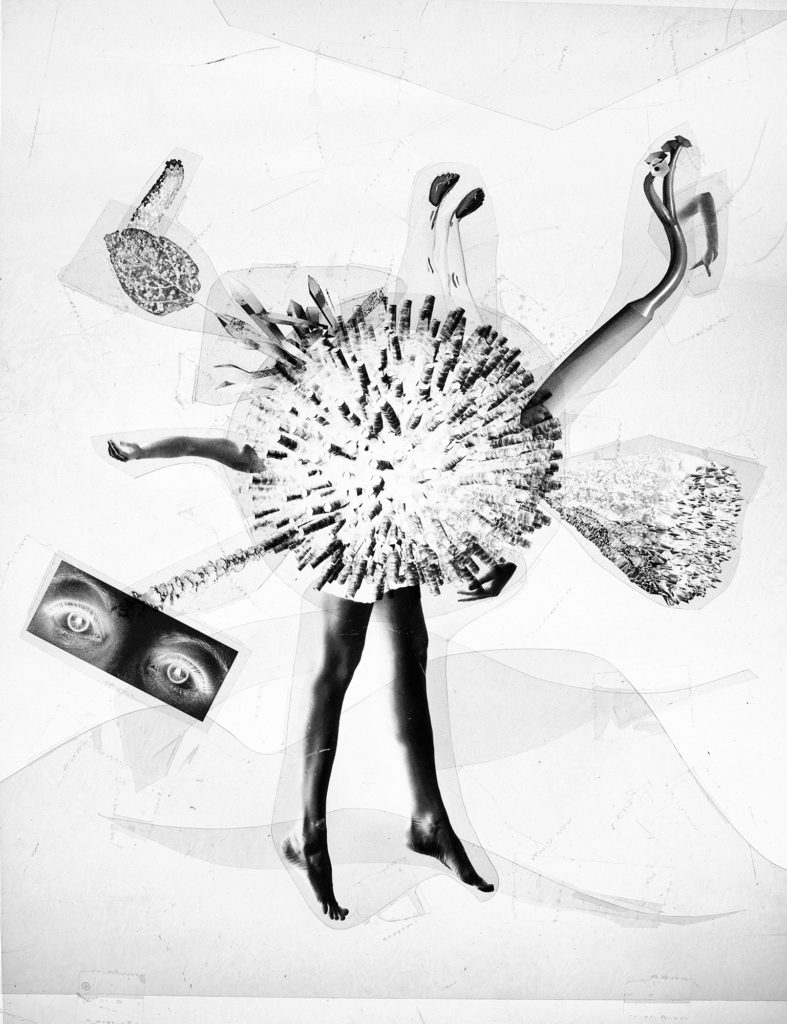
Digital art by Katarna Marinic showing a composite being with arms, legs, eyes.

Composite Hybrid by Katarina Marinic

The present is sabotaging the future, and it terrifies me. Yes, the system is rigged by fossil fuel companies and powerful climate-science deniers, but on the local scale, “I don’t have time right now so goodbye” is also a substantial threat to environmental progress. People are so caught up in the quotidian details of getting by that they have no time left to step back and think about solutions to problems that will make it harder to put food on the table and be secure in their home and maintain their health in the not-so-distant future. It’s easier to just avoid the rabbit hole of anxiety. This is both a major obstacle and a call to action for activists.

As another dozen doors shut in my face, or as I burrow deeper into my hood to avoid being stopped for a sidewalk survey, I can’t help but wonder if capitalism did this on purpose. I really do have to get to class on time, just as my canvassees really do have to get their kids to soccer practice. Society pushes us towards fulfilling our individual responsibilities in a way that makes coming together for systemic change highly inconvenient. We are barraged with alarm bells through every form of media, on the streets and in our houses. To breathe, we shut them out.

When I began to get involved in environmental activism in my first year of university, I thought it was about yelling. Get out in the streets with as many people as you can muster! Sneak banners into strategic locations and be disruptive! That way, everyone would have to remember how dire the situation is. It baffled me how people could just go about their lives and not be (outwardly) concerned about climate change. Don’t they know, I thought, that if we don’t do something right now we’re quite possibly going to destroy the planet forever?!  The more I talked to people both in my daily life and while canvassing at their doors, I realized that most people do know, yet they oscillate between denial and feeling overwhelmed. Instead of feeling the urgency of action, they just want the chatter to stop.

Imagine silence. No one pressing for solutions, as climate change lurks in the shadows. It would feel unbalanced, a chasm of potential waiting to be filled with the floodwater on its way to our doors. As activists, we are compelled to lead the charge, banners flapping behind us as we rush to stem the tide, echoes of our rallying cry emphasizing the emptiness behind us and in the pits of our stomachs.

No one will follow us if they only hear our alarm but don’t feel heard themselves.

To grow our movement, we can’t rely on simply convincing people, adding more anxiety into their already-busy lives. Yelling louder won’t cut through the noise. I used to go into conversations with potential supporters as if they were stubborn legislators: a verbal bulldozer, determined to stick to my position and not back down. But effective activism is really about listening. When I listen to people’s concerns, I find that most people already have the motivation to do something.

At the door, it was my job to show people how giving to my organization was one way to make a small contribution to environmental work, and that’s not untrue: for those with more money than time, donations to community organizations are vital to move the cause forward. But off the clock, there are so many other things that people can do. They can vote. They can vote with their money. They can get out and protest. They can go to a beach cleanup. They can have a car-free day or a meatless Monday or bring a reusable mug and cutlery in their bag. Deep into a conversation with one young mom about her efforts to avoid disposable diapers, I fumbled for any information that she didn’t already know, afraid of losing her interest. But in the end, she donated not because I led her to care, but because I stood with her in her struggle to work out her path, accidentally managing to assure her that we are in this fight together.

Yelling about how everyone needs to be actively involved in the solution often rips the environmental movement apart. We are caught in the paradox between being palatable to centrists and acting fast enough to protect marginalized communities. Ironically, these arguments can keep us from both immediate action and slowing down to listen to our neighbours.

As activists, we can’t get so caught up in our own concerns that, just like the woman I met at the door, we don’t have time when people want to talk. As a movement, we can’t let the climate crisis become our everything, causing us to shut out the other parts of life that threaten to overwhelm us. We can’t assume that we have the support of the entire left without doing anything to include them. Closing the door keeps us from building support and making progress. Instead, let’s take a breath. Lock eyes. And listen to how we can move forward together.

Re-Wilding Under Those Conditions

This entry was posted on by .

Re-Wilding Under Those Conditions


Stick this time – as in, half-formed century – with a pin
                       into the butterfly thorax, into embolism:
        there is not a word in every language for
                   extinction event
     but sometimes there are           a few words for burning
                  neiamgla'tijig,          they appear burning
nu'gwa'l'g,              I set it
                          on fire
                   gaqoqtegl,                  they are
                                 burned through
a cathedral into skeleton
      irritation into sensation
               ozone into nothing
       and it’s not just forests – nipugtl – that burn, that fall
and it’s not just the prisoners whose hands
                         hold this water
                                  hold this     this water they hold
                                                for no money, for nothing –
                            
Mu' nugu' pugweltnug       nipugt esgwiaq ula gm'tginug.
There isn't much forest left    here in our territory
           but there are          ashes, remnants,
                     golf courses    smoking in cinders
                    more beautiful                  than barbed wire
                             on any clear-skied day, by far –
                                  what is more beautiful than
                                      every       golf course burning
                                        and re-wilding with the
                                            things that grow
                                                 under those conditions
                                                     (wildflowers probably?
                                         mushrooms and moss and all of it –               
blooming      like seizing)
              after the fire was gone             after hands
                                    held water           and mansions
                                             became lanterns     
                     a snake        
                                    was found           jaws open and
                          hissing              having bitten
                                         the fire
                                                      as it burned
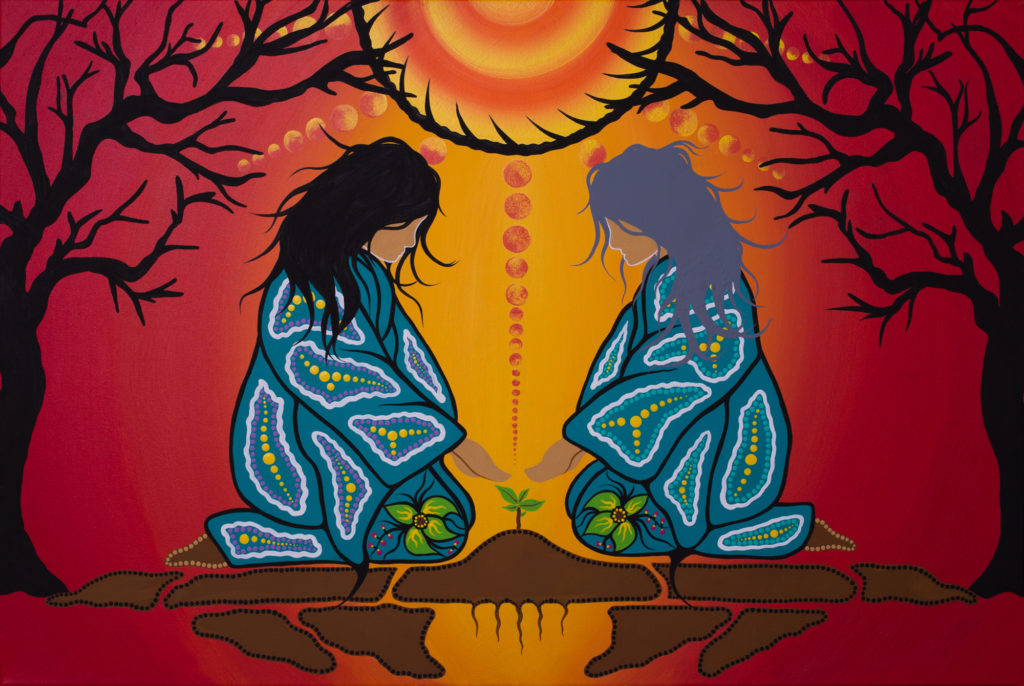
Painting by Tracey Metallic showing two Indigenous women kneeing in front of a small plant.

Offerings by Tracey Metallic