Archives

Quickening

This entry was posted on by .

My wife is not pregnant.

Two pink lines have appeared on the wand.

What now? I ask.

Hen shrugs and drops the stick into the bin. Now we wait.

Later, while she is sleeping, I slip out of bed and back to the bathroom. Hen is meticulous. The test is in the garbage; the instructions are in the recycling. It’s just as I thought: the pink lines.

When you are waiting for something, time cannot move fast enough. One day Hen says she went to the doctor. I rinse a plate and place it on the rack. She wraps a glass in a dish cloth. Water dampens the edge of my sleeve. I pull it up with my teeth and ask what the doctor said.

Hen turns to put the glass in the cupboard. Everything is fine. I’m going back in two months.

She doesn’t have to say the word: ultrasound.

In the middle ages, a woman was not considered pregnant until the baby quickened. That means, until she felt movement. Before that first kick, women could do anything and it didn’t count—poisons, pessaries, jumping up and down. The medievals got up to all sorts of things.

Babies need a lot of stuff. A crib. A stroller. They won’t let you leave the hospital without a car seat. We have a little car, a two-seater. Last year we almost traded it in for a cross-over. That turned out to be a mistake. We had to give up the deposit. One grand. But there are worse things to lose.

The medievals had it easy. The baby moved and the woman felt it and then she knew: pregnant. A clear line in the sand. But now, who’s to say? The way people go on about the sanctity of life. Sperm meets egg and then bam! It’s a baby. God has said. If you ask me, God doesn’t give a damn. This is what Hen and I think: the first three months don’t count. There’s nothing worse than a couple who announces they are four weeks pregnant. Hen says—and I agree—that’s just a late period. If you ask me, there shouldn’t be balloons or presents until after the baby makes its entrance. But then, no one’s asking me.

I pick Hen up at the office. Her face has gone white.

What took you so long?

She slides into the seat carefully. My hand makes a fist around the gear stick.

Hen touches my wrist. Neil. Go slow.

I drive like an eighty-year-old. Cautious, hugging the curb in case we need to stop. Hen has one hand on her head, one on her stomach. Elbow on the arm rest. We need to start keeping a bucket in the car. I ease into the driveway and she is already out, sprinting for the door. I linger, waiting for the flush. I can hear her heaving. I want to go inside, hold her hair. I wait with a cold face cloth. And I am thinking: This didn’t happen last time.

Ultrasounds are not how they look on TV. There’s never a doctor present, only a tech. The tech has a script. Look—there’s the head. Do you see? It’s a boy. It’s a girl. Congratulations! Twins. But if one thing goes wrong, if the baby forgets its cue, the tech gets cagey. Is everything all right? You can ask and ask until you’ve worked yourself into a panic. Your wife—feet in the stirrups—can start crying and still the tech won’t look you in the eye. The doctor will call you. That is what they are trained to say. It’s not the tech’s place to deliver the doctor’s lines.

At eight weeks the fetus measures less than an inch. It’s not even a baby yet. You can’t expect much from a tiny bunch of cells.

Hen’s sister comes by on Saturday. The girls have a date—shopping and a movie. We’ve had a bad night. Hen in and out of bed. Three am, crying with exhaustion. Why can’t I just throw up? Cells dividing and dividing. All the havoc they can wreak.

Daphne speaks in news bulletins. The new season’s stock is out! And there are sales! She’s already looked up the movie listings! Hen’s eyes are sunk into her face. Ten thirty and she’s still in a robe. I nurse an herbal tea in solidarity.

They disappear into the bedroom while Hen gets dressed. I hear murmurs through the doorway. In the kitchen, I make a list. Groceries. Mow the lawn. Replace light bulbs. The bathtub needs re-caulking. The girls leave and I close the door behind them. What I really need is a double espresso.

There are things you must not do when the pink lines appear. You must not research strollers online. You must not paint the spare room and call it a nursery. You must not choose a name. Chickens that are counted will never hatch.

We used to go to these meetings. Couples, or sometimes just women on their own, would sit around a circle and tell stories. It was a bit like AA or maybe Vegas. It was awkward at first, sharing things with strangers that we hadn’t even told our families, our closest friends. But not all of it was bad. We went three times, maybe four. Hen never said much in the group and then later, at home, even less. The last meeting we went to, a woman showed us a toque she had knit. It was brown with ears like a bear. Theodore would have worn this, she said. Theodore would have worn this and he would have gone tobogganing in the snow. She started crying and I felt Hen tense up beside me. Later in the car, she said, For fuck’s sake. That was the end of those meetings.

Hen says Daphne is coming with us to the appointment. I’m surprised she told her.

Hen says: I tell my sister everything. Is it okay that I invited her?

Yes, of course. I kiss her forehead. Your sister should be there.

Daphne’s great. I’m glad she’s coming with us. I don’t tell Hen this, but I’ve been doing my homework. Odds are, this time will be smooth sailing.

Hen pokes her head into the fridge. I’m starving. Let’s order in.

We used to be different. Hen was the one who had said, I know a great Pakistani place; let’s go. She was the one who invited me upstairs for a drink that never got poured. And in the morning, spreading marmalade on toast: I’m not usually like this.

I didn’t believe her. I watched her lick orange goop off her finger, standing there in a t-shirt and panties, and thought: I’ll never see this girl again. But then, she turned to the coffeemaker and said, over her shoulder, What are you doing later?

When no one else knows what to say, you can always count on the doctors. When everyone else has run out of words, they’ve got all the acronyms. D&C to remove the retained POC. The doctors will be brisk. They will brook no nonsense. It is their job to take care of these things. Quickly. Efficiently. This is more common than you might think. The human body is intelligent. One chromosome goes AWOL and the buck is stopped. Abort the mission. POC. Products of conception.

A date is circled on the calendar. For two months, we pretend it isn’t there. And go through the motions. Life as usual. We text each other from the office. A carton of milk. Movie at eight. One Saturday we drive out to the Gatineau Hills. The foliage has turned autumnal and crunchy. We climb to a point, a little clearing that looks out over a lake. Down below, the trees are the colours of a sunset. Hen says: Summer knows how to make a good end.

We don’t speak of the other thing. It has planted itself in the middle of our lives and we skirt around it, living on its periphery. Hen exists in a permanent state of exhaustion. By eight pm, she’s yawning, mouth open wide like a cave. I wait until she’s asleep, then wind myself around her, torso against spine, nose to neck. I kiss her bare shoulder. She exhales in truncated snores. I whisper things to her and imagine the words travelling through the dark tunnel of her ear, being carried, by blood vessels and tiny capillaries, to every part of her body—her heart, her brain, her womb.

On the afternoon of the appointment, Daphne picks us up. I fake a cavity to leave work early. I don’t know what excuse Hen used. Maybe she kept it simple—took a vacation day.

She’s already riding shotgun when Daphne pulls up. I sit in the middle, perched on the edge of the seat, behind the parking brake. Daphne is nattering. She’d like a niece and a nephew, one of each please. Twins run in the family; did I know that? Yes, I did. She’s bought a book. She’s got gum in her purse. She’s going to be the very best aunt. Daphne doesn’t know the rules. So. Hen hasn’t told her sister after all.

Hen is silent. I can’t see her face but I can see the straight line of her neck, the inward curl of her shoulders, straining for her ears. I reach around the seat and touch her arm, squeeze it gently, a little above the elbow. Her head tips back, rests on the seat.

She fainted once, years ago. At an outdoor concert, standing among the mass of shoulders and thighs. Pot smoke wafting. Hen had suddenly slumped, her body collapsing backward into mine. My arms around her, holding her up and just as suddenly, her revival, waking up as if from deep sleep. The opener wasn’t even off the stage and we had left, pushing and jostling past people: Sorry, excuse me, sorry. Hen gulping air on the sidewalk, bent double, elbows on her knees. I had one hand on her back and one raised to hail a cab. There are moments in life when you know exactly what to do.

The hospital is cold. It smells like disinfectant. We pass by rooms where machines beep in steady intervals. Dr. Horton is paged to the ER. Hen breathes through her mouth. Tiny beads of sweat dot her hairline. Even Daphne is silent.

This time, the technician is a woman. This is reassuring to me as I sit on Hen’s left. Daphne is on the right. She must turn and strain her neck to see the monitor. The tech dims the lights and squeezes a gelatinous slime onto Hen’s belly. She says words we do not hear. This part’s not important.

Hen’s chest rises and falls rapidly. I press my face against hers. Our eyes are open, noses squashed together. I cannot imagine what Daphne is thinking and I do not care. Hollow static fills the room: the sound on the other end of the line when the person you are speaking to says hold on and walks away to turn off the stove. What the inside of the body sounds like: sonorous and empty. And then, gradually, we hear it. Knocking. A tiny fist pounding on a door.
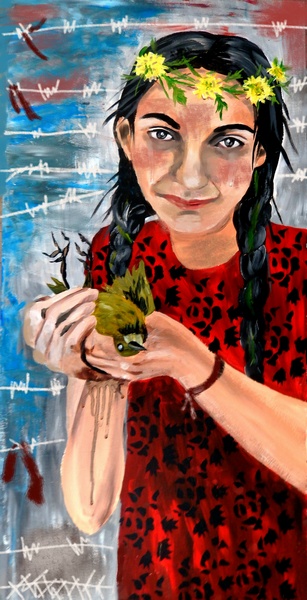
Freedom by Darlene Strong

There it is, the tech says.

Daphne asks, Is that what I think it is?

The tech has repositioned the wand and we hear it more clearly. Banging. The baby announcing its presence. Loud and insistent.

Hen is sobbing but it’s okay. These are happy tears. And I’m crying them too and so is Daphne.

You’re having a baby, she says, teary saliva forming a window between her lips. A baby!

We hold hands, all three of us, and I’m happy she is here.

One-fifty-two beats per minute, the tech says. A good, strong heart. Congratulations.


“Quickening” is a linked short story. Hen and Neil also feature in “Gliding, Weightless,” published in Riddle Fence. See Sharon Bala’s blog for details.
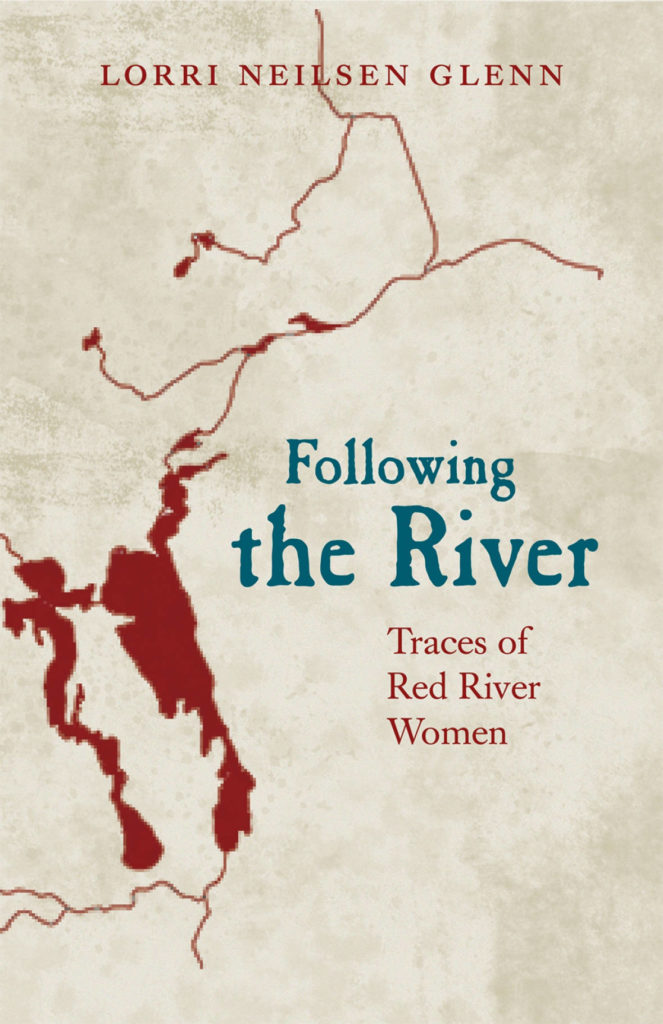
Her Many Names

This entry was posted on by .

frost exploding
the great moon
eagle
goose
frog
egg laying
feather moulting
flying up
rutting
migrating
freeze up
hoarfrost
long nights she waxes and wanes, is new, crescent, quarter,
gibbous, full. To some, a mirror of emotion, to others,
Queen of Life and Death. Hecate,
                Grandmother, Luna, Eternal One.
Works tides, holds a lantern to the dark, promises renewal
and perseverance. Without her, we are not. Learn
under her watch: strength, courage, respect, how
to scrabble for truth, be guided by
honesty, walk with humility.

Grandmothers Ke-Che-Cho-Wick, Wash-e-Soo-E’Squew,
Kitty (Catherine), Sally and Catherine—
under the same moons as cousins, strangers,
the unnamed, notorious, ordinary, extraordinary,
your stations in life
                both promise and threat;
The Bible, solace
                                and weapon; blood, the source
of strength and shame. Few of you knew old age. I sift
for detail in the words of those who whittle lives with a pen,
a rare instrument for a woman. A shred, debris, a tendril—
a past you lived we cannot fully know. Not the rustle
of your coats, footsteps in the night air, the touch of silken
or calloused hands. The tangy scent of ashes cooled
in the hearth. Wisdom—
                in the stirring of life under sugar moon,
storms of thunder moon, in falling-leaves moon when
loss is all around. You have watched the river rise
and fall, known it packed with ice, muddy
in spring rain, swift in summer. A red stream.
Many granddaughters later, countless first cries
and graves, and here I am, time waning.
The moon glints on the river,
water rises like blood.


Excerpt from Following the River: Traces of Red River Women by Lorri Neilsen Glenn (Wolsak and Wynn, 2017) Note: Grandmothers mentioned are Neilsen Glenn’s Indigenous ancestors from Northern Manitoba and the Red River colony. Reprinted with permission.

Bad Blood

This entry was posted on by .

I got a Keeper in my 20s. And I kept it to myself.

The Keeper is a muddy-red-coloured rubber menstrual cup that looks like a metastasised pencil eraser.

It wasn’t pretty. And it sure wasn’t cheap, either. Maybe $30—no small outlay of cash for a retail shift-scrounging early-‘90s undergrad; thirty bucks was more than my entire power bill back then.

But I loved it immediately; adored it. No more four-hour tampons, no more packaging waste, no bleach, no weird “scents,” no chemicals. And after I swallowed the capital cost I appreciated the monthly amortizing value of my little period pal.

But I definitely kept my Keeper to myself.

For the uninitiated, the concept of the menstrual cup is simple. You fold and insert the cup—about the size of a shot glass—into your vagina. You empty the contents after eight to twelve hours, rinse it, and pop it back up there. With a menstrual cup, you can see and smell the fluid. You know the colour and the consistency. It is your body and its processes, magnified.

And therein lies the problem with the Keeper in a public bathroom.

You’re on your period loud and proud when you carry a bloody menstrual cup to a public bathroom sink, flip the taps, and watch the remnants of your mucus-y flow carry down into the drain. The women applying lipstick next over are not always accustomed to this. Back when I got my Keeper, most of my friends even hadn’t heard of them. Today, you can buy them at Lawtons, Walmart and in grocery stores, but menstrual cup-users aren’t the majority. About sixty percent of women report using tampons as their primary method of period-wrangling; most of the rest, pads.

Blood Down the Drain by kerry rawlinson

I don’t shave my underarms; I go topless on any beach where it feels right. But Keeper-rinsing wasn’t the hill I was ready to die on in the name of body acceptance. So, I opted for the discreet, if somewhat ineffective, in-stall toilet-paper wipe.

My friend Nancy? Un-uh.

It was Nancy who introduced me to the Keeper, which, in those days in Halifax, you could only purchase at the newfangled environmental store, on the shelf next to the crystal rock deodorant. Nancy used hers, talked about hers, showed off hers. Nancy loved her Keeper. One time, her fluffy blond hound, Darcy, ate her Keeper when she left it unattended in the bathroom. That dog adored the smell of blood. Nancy, too, it seems. She bought a new one and kept-on Keepin’ on.

Nancy’s take on the public bathroom rinse was simple: it was necessity. Not unfortunate necessity. Not shameful necessity. Wonderful, welcome, please-excuse-me-I-need-to-do-this-thank-you-bye-bye-now necessity. Nancy rinsing her Keeper at a public sink was an act of defiance. She was taking a stand for herself and all women by way of freaking out bystanders who were too prudish to embrace their periods the way she did. She didn’t know who they were; she didn’t care. She waved her Keeper like a placard: I am woman, hear me pour.

But Nancy wasn’t aiming, I don’t think, for a revolution in menstrual admiration. For her, mere recognition was the goal—plain acceptance that navigating periods was the business of the bathroom, public or not. Sort of like: I know you deal this, too. Or you have. Or you will. Because, heck, we pretty much all do, at some point. So? No biggie.

Period-wise, Nancy was way out of the closet.

Me? I was still in there, with the door firmly locked.

In the field of public bathroom research (yes, of course there is such a field—how could humanity not study the culture and mechanics of such an everyday institution?) menstruation is often called “the third elimination.”

And that’s third not by factor of volume or frequency, but of shame.

We are embarrassed of peeing and pooping. (Let’s not even deny this. I am revising this essay on a plane and I began by reducing the font size from my usual 13-point to 11.) Going to the bathroom is a private matter in our society—quite opposite the late Romans who’ve left ample evidence of communal toileting—and our insecurities and neuroses only magnify when we take this private business into public spaces, be they bathrooms in concert halls, schools or hotel lobbies. Some of us refuse to empty our bowels anywhere but home; some of us pad toilet bowls with gobs of paper in order to lessen the sound of our urine hitting the water.

But menstruation? Menstruation is shame beyond.

For millennia, female has meant lesser. And the female body has been an object to control and fear—powerful and unpredictable, a site of unknown ickiness. (Remember, though, not all menstruators are women; many transmen get periods, too. And when was the last time you saw a tampon dispenser in a men’s room?)

Popular media only adds to the mystique and mystery, the invisibility of menstruation. The tone of most commercials for menstrual products is one of sly secrecy: “discretely pocket-sized,” “ultra-thin” and “you barely know its there.” An unnatural blue liquid that looks like melted Mr. Freeze dispatched from a glass pipette has long been the norm for illustrating the absorptive power of menstrual products on television.

This is what we get to represent a commonplace state of human health. One quarter of all women of reproductive age are menstruating at any given time. On average, women spend three thousand days over a lifetime menstruating. Can we have just a wee bit of space to have a real conversation about it?

Maybe.

In October 2017, UK pad company Bodyform took a turn from Mr. Freeze-land. The company, in a series of online ads, not only used red liquid to illustrate menstrual blood, but doubled down on killing period euphemism and double-speak with the slogan “Periods are normal. Showing them should be too.” One ad even shows blood dripping down a woman’s leg in a shower.

It’s a start. But no one’s waving around bloody Keepers in the mall bathroom just yet.

I gave up my original Keeper after about a decade. A Keeper is not a keeper at all if you get your first one before you have kids; women must move a size up after vaginal birth (which is at once horrifying and true and yet somewhat unbelievable since nothing feels different up there). I accidentally lit my second Keeper on fire boiling it dry on the stove. Such is life. My third is a Diva Cup, which is the clear silicone hipper little sister of the Keeper. It should stick with me through the end, barring any unplanned pyrotechnics.

So, I suppose there’s still time for me to take the plunge and start rinsing at the public bathroom sink. Or at least vow to increase the font size next time I’m writing about my period on a plane.

The Life of a Creature

This entry was posted on by .

A puppy. A German Shepherd, young enough that his ears are still flopped over. He has parvovirus. Liquid, bloody diarrhea squirts out of him, splattering everywhere, like the last bits of ketchup from an almost empty bottle. I hook up an IV, give him fluids, anti-emetics, antibiotics, but he dies anyway. That night at a party I drink too much tequila. I cry, in a quiet, messy way, in a corner of the kitchen, wedged in beside the stove, where a giant pot of ratatouille is simmering, spattering bright red spots of sauce onto the stovetop. A woman with grey eyes and confident hands pulls me out of the corner. She wipes away my tears, feeds me spoonfuls of ratatouille straight from the pot. I burn the roof of my mouth, but it feels good, raw and blistering. We kiss, dip hunks of crusty bread into the ratatouille, eat, kiss some more.

A dog. A lab-pitbull mix rescued from Louisiana, where there are hurricanes. He’s so skinny—just fur, black as midnight, and sharp, jutting bones. He licks me happily, obsessively, unaware of his tragic circumstances: homeless and infested with heartworm, transmitted to him by bloodsucking mosquitoes. He seems able to love, even with a heart filled with foot-long parasites. When I examine his blood smear under the microscope, I can see the threadlike baby worms. They make me think about all the things a body can hide, makes me think about what one body can give to another. She’s not a very honest person, my charming, grey-eyed lover. She had an affair, and I forgave her; she had another, and gave me an STD. We break up. I bring the rescue dog home and he curls up, coughing and exhausted, on my futon. I nestle beside him; he licks the tears from my cheeks. I call him Dog during his weeks of recovery, finally name him Orpheus, once all the worms are dead and gone.

Three kittens. Five weeks old, with wispy, white fur, like milkweed fluff. The guy who found them at a construction site brings them into the clinic in his hardhat. He hands it over with reverence, like an offering bowl. Fleas, small and reddish-brown, scurry through the kittens’ fur. When we bathe them the fleas take flight: they move into the kittens’ ears, burrow their way into the conjunctiva of their eyes, jump onto our arms. The kittens are so anemic from the fleas feasting on their blood that their gums are white, like bone. It makes them seem like ghost kittens. Fleas don’t look like killers, but one of them dies later that day. The construction worker comes back as we are closing up. He has come to check on the kittens. That’s what he says. But the way he looks at me, as he twirls his yellow hard hat around in his hands, says something else. He smells lovely, like fresh air, like springtime. His name is Kamal; he is named after his maternal grandmother, Kamala, an Indian freedom-fighter. He has dark eyes that look as black as my midnight dog, an MFA in writing, a ukulele. I fall in love fast.

A dog. A Rottweiler, black and tan, with pus oozing from her vulva. She has pyometra, an infection in her uterus. During the emergency spay surgery, the ligature holding the ovarian blood vessels slips, and the dog starts to haemorrhage. Fuck, I think, this is bad. The abdomen starts to pool with blood. I extend the incision cranially and caudally, picturing the enormous scar it’s going to leave. Rivulets of sweat start trickling down my back. I insert a retractor to open up the abdomen, but I can’t see the bleeder, just the blood, which soaks one sponge after another. There’s not enough air in the room; I’m hyperventilating inside my surgical mask. Don’t panic, I tell myself; don’t start clamping blindly, or you’ll do something stupid, clamp a ureter by mistake. Fuck, I think again, fuck, fuck, fuck. I don’t want to lose this dog. And I don’t. There’s nothing sweeter than the pinkness of the dog’s gums, eight hours post-surgery. You’re a friggin’ superhero Kamal tells me. We take Orpheus down to the beach that night, run barefoot with him across the cold sand to the water’s edge. Afterwards we go out dancing. I jump up and down, pump my fist, let my hair fly, scream along to a song that I don’t know the words to. We have sex in the washroom of the club, dance some more. We are unstoppable.

A cat. An old, orange tabby with brilliant green eyes. He has been losing weight, drinking and peeing more than usual. I take blood and collect urine, run some tests, diagnose him with chronic kidney disease. His kidneys are failing at their job of filtering the waste from his blood. I start treatment and he does well for a few months, but then he stops eating and the owners decide to euthanize him. I insert a butterfly catheter into his cephalic vein, check for a flash of blood, then inject the pentobarbital. His head slumps, his green eyes stay open. It seems too quick, this transition from the living to the dead. The owners leave but I stay in the exam room with the cat, petting his unkempt orange fur, telling him about cat gods and tender mice. I repeat a story that Kamal told me, about Dawon, a sacred tigress, ridden into battle by the warrior mother goddess Durga. You have the fierce claws and fangs of Dawon, I tell him, tugging gently on his white whiskers. I love Kamal, I tell the cat, I would ride into battle with him, fight demons for him, travel to the land of the dead for him.

Bird by Ildiko Nova

A pigeon. A hit-by-car, side-of-the-road pigeon. A woman brings her to the clinic in a low wooden box, marked Darling Clementines. The bird is wrapped in a beautiful gossamer scarf, burnt-orange, with threads of gold running through it. I unwrap it carefully: a small, round eye, the same colour as the scarf, a shimmer of green feathers, a few drops of blood, glistening like rubies, a broken wing. The woman runs a finger delicately across the pigeon’s head. This bird is not a piece of garbage, she says, so we give to her a powerful name—Xochiquetzal. You have not heard of her? She is the goddess of sex and babies, named for flowers, for beautiful feathers. The woman embraces me tightly before leaving, kisses both my cheeks. I clean the pigeon’s wound and apply a figure-eight bandage to the wing. On my lunch break I go to the pharmacy and buy a pregnancy test. When I see the positive line, I laugh out loud. Kamal is ecstatic about the baby. He comes home from work each day with poems he’s written for her on yellow sticky notes, presses them onto my belly; rubs my feet with coconut oil, which Orpheus tries to lick off; makes me mango lassis with a pinch of cardamom every morning. Hey Baby Sparrow, he whispers into my belly, you gonna be my little freedom-fighter, you gonna sing songs of freedom?

A rat. A hooded one, with blue-grey fur and beady, red eyes. She’s crying blood, the owner tells me. She does have red tears, but it’s porphyrin, a pigment released from a gland behind the eye, not blood. She has bloody urine though, and x-rays show she has bladder stones. The surgery is delicate and delightful, and the rat recovers well. I keep the stones, which look like a handful of small, smooth pebbles from the beach, in a clear specimen cup for urine and bring them home to show Kamal. They rattle musically when I shake the cup and Kamal laughs and grabs his ukulele, plays a little song for me and the baby, a song that sounds like sparrows chirping in the spring sunshine. Orpheus joins in, howling in delight. Later that night, a sudden pain grabs me, like talons clutching hold, and I feel wetness between my legs. I am bleeding, bleeding a river of blood, and the baby is washed away. I cry for days afterwards. I didn’t know, I keep telling Kamal, I didn’t know that I loved her so much already, didn’t know that losing her would hurt so much. At night I wake up because I hear Orpheus whimpering in his sleep, but it’s me, it’s me, whimpering for what I’ve lost, whimpering in the darkness of the night.

A cat. A talkative, lilac-point Siamese. He eats things he shouldn’t. Once, a rubber band, another time, a handful of change, mostly nickels. This time he has eaten Tylenol. He is depressed and drooling, having trouble breathing. I take blood: it’s muddy brown instead of red. It is the first time I’ve seen methemoglobinemia and even though the cat is ill, I’m kind of excited. I call Kamal on my lunch break to tell him about the cat. He’s in Vancouver on a book tour; his first novel has just been published. How are you, he asks, in that quiet way that he has. He knows though, how I am. I have miscarried again, a few weeks ago. Now I have three ghost babies. The doctor says I have a heart-shaped uterus, which sounds lovely, but isn’t really, not for growing a baby. But it’s spring and thin-petalled, purple crocuses are blooming in our backyard; it’s spring and Orpheus gallops through muddy ravines and laughs with his tongue hanging long and pink from his mouth; it’s spring and the sun is getting stronger and it warms my heart.

A dog. A midnight black dog from Louisiana, where the hurricanes live. A dog that I love, my good dog Orpheus, whose black muzzle is flecked with grey, and whose hips are stiff with arthritis. A dog who has hemangiosarcoma, a tumour of the blood vessel cells, and collapses from internal bleeding when his cancerous spleen ruptures. A dog who gets a blood transfusion and an emergency splenectomy and four more months to live. A dog that dies, dies when I am nine months pregnant. And I think: all this grief and all this wonder, it makes up a life, a good, good life. Ahh, but I loved him, my dog Orpheus, I loved him, and now my heart has broken open again.

A baby. A boy with eyes as black as my midnight dog. There is a moment, a terrible, still moment when he doesn’t breath and I hear Kamal whisper to him, you’re a fighter, it’s in your blood, and then he breathes and we are soaring, all three of us, bound together and soaring skyward. Fifteen minutes later I’m in labour again, and deliver the placenta. It is dark maroon and circular, like a meaty pancake, like a blood moon. Looking at it disconcerts me; it makes me feel dismembered to lose one of my organs. I don’t want to abandon it, so we take it with us. We drive up north to Oro-Medonte where my dad lives, so he can meet his grandson. He holds the baby awkwardly for a brief moment, then turns back to his dogs, a pair of old coonhounds, and rubs his weathered hands over their coarse fur. The dogs sniff the baby all over, lick his tiny feet. We all take a walk together through the old apple orchard behind my dad’s place. It’s spring, and the trees are flowering; the dogs romp together under them, and pale pink petals fall and scatter around them. Later, while the baby sleeps, Kamal and I go back to the apple orchard and dig a hole. I bury my old dog there, bury my placenta too, bury my sorrow, bury my joy, hope that they will grow, that they will nourish some small, sweet, red apples.

Blood and Vinegar

This entry was posted on by .

It happens as Al is walking home, her hands thrust deep into the pockets of her overcoat. Usually she is on her guard at such times, wary and aware, but tonight she is high on a night out with the old crowd—Sam, Jess, Billie, Little Jo, who’s just Jo now that Big Jo is gone. The old bars may be closed, but when they get together it’s easy to forget that the past is past and the present a different animal. Her heart is full, her step is light, and she fails to notice the two men who slip out of the shadows to follow her. It isn’t until they are nearly on top of her that she hears them coming, slipping and skidding on the last of the February ice.

When she was young and full of fire, she would have been ready for them. But she is too old and they are too fast, their fists in her jaw before she can get hers up. Under the eerie amber glow of the streetlights their faces are alien and fierce. She can only pick out the odd detail, here and there: a beard, a torn jacket, a belly tight and round as a drum.

They beat her until they get tired of beating her, and then they leave her lying on the sidewalk, staring up into the night sky. A few tattered wisps of cloud blow across the face of the moon like so much trash.

Al does not call the police. She is old enough to remember the days of bar raids and paddy wagons, when anyone not wearing at least three pieces of women’s clothing would be arrested or worse. And there was always something worse. Things may have changed, but she doubts they’ve changed enough.

Red and White Series 3 by Shreba Quach

After she drags herself home, stopping every few minutes to rest, she stands in front of her bathroom mirror and surveys the damage. Her left eye is swollen and plum-purple. Her nostrils are crusted with red, although the nosebleed has stopped. Her ribs are sore, but not broken. She’s had ribs snapped before, and she remembers the way they burned when she drew breath.

She’s lucky. It being a festive occasion, she went out wearing a full suit. And a tie can be a noose in the wrong hands.

Aside from her dignity, what has suffered the most is her shirt. Blood has soaked into the collar, crimson blooming on the fine white linen. Al stares at it hopelessly, plucking at its edge. Frances would know how to treat it, what mysterious bubbling liquid to dab onto the fabric to return it to its former glory. Magic, she said once when Al asked her how she did it, smiling that wry little smile of hers. Al hadn’t pressed her. Women need their secrets. Lord knows she has enough of them herself.

The shirt will have to go. Al tears it open, wincing at the bruises already blossoming on her arms. She balls the shirt up in a wad and walks into the kitchen. A takeout carton from last night’s dinner sits on top of the garbage can and the smell of it stops her in her tracks. Her nose twitches.

Vinegar, she thinks. She remembers Frances standing over the kitchen sink with a bottle in her hand, dousing a stain and pressing it with a cloth. For the next few days the tang of vinegar had overpowered all other smells in the apartment: the potpourri in the living room, the discount flowers Al brought home from the supermarket, the dark spot on the bedroom carpet where Frances had once spilled a bottle of perfume.

That spot is what’s left of her now. The spot, and the pictures on the walls, and the potted fern on the windowsill that somehow hasn’t died yet. Even her ashes are gone, sent to a cousin out west. She counted as blood. Al didn’t.

The vinegar is hidden at the back of the fridge, between a jar of beets and an orphaned can of beer. Al brings it to the kitchen sink, upending it onto her collar. She dabs at the stain with a tea towel the way she remembers Frances doing it: firmly, gently. One of her arms is stiff where it was kicked, and moving it sends white-hot darts of pain up into her shoulder. She ignores it and keeps going.

At first nothing seems to happen. Then, after several minutes of blotting, the red seems to be more of a pink. The pink turns to blush, which turns to only the faintest sigh of colour on the white. You’d have to have your nose pressed close to her neck to notice it at all.

Al runs the shirt under a cold tap and drapes it over the back of a chair to dry. Touching the collar, she glances at Frances’s fern, lush and green against the darkness of the kitchen window. The plant looks lonely, she thinks. She’ll have to get another to keep it company. Something strong and beautiful, vibrant and sweet.

Al washes her hands. She brushes her teeth. She goes to bed and imagines the plants she’ll buy, violets and geraniums and philodendrons bursting riotously out of their pots. It will be spring soon. The winter will end.