Archives

A Profound Call to Serve

This entry was posted on by .

The church sanctuary is huge: wide rows of dark-wood pews with a centre aisle and four red-carpeted steps up to the pulpit. Behind the pulpit is a large choir loft which sits under a vaulted ceiling elevated to accommodate not one but two stained glass windows.

It’s the kind of elaborate building the Methodists put up in the late 1800s to the glory of God but which also showed off their wealth and standing in the community. It seems rather contrary to the message of their founder, who famously said, “None of you can become my disciple if you do not give up all your possessions.”

I think of this every week I stand behind that pulpit and look over the small congregation gathered in that lofty sanctuary. As a writer and first-time author living in rural Nova Scotia, I’m fortunate to find part-time employment using my speaking and writing skills: I’m a lay worship leader, providing services to churches when they don’t have a minister due to vacation or sabbatical, illness or retirement.

Service. This word has several meanings associated with the work I do. I create a service of worship that includes hymns, prayers, and a message (a sermon); I am called to be in service to these congregations; and each week we listen to a brief message from the United Church’s Mission and Service Fund, which supports a variety of national and international organisations.

Before I became a lay worship leader, however, I learned what it meant to be in service when I became a caregiver for my father after he was diagnosed with dementia. This happened in 2002, when my father was sixty years old and before “early onset dementia” was even a type. My marriage had ended at about the same time, so after I’d landed back home and learned of the diagnosis, I knew I would live with my parents to help take care of my father. It was a struggle, partly because of the changes the disease produced on an almost daily basis and partly because of the lack of resources, but mostly because of me.
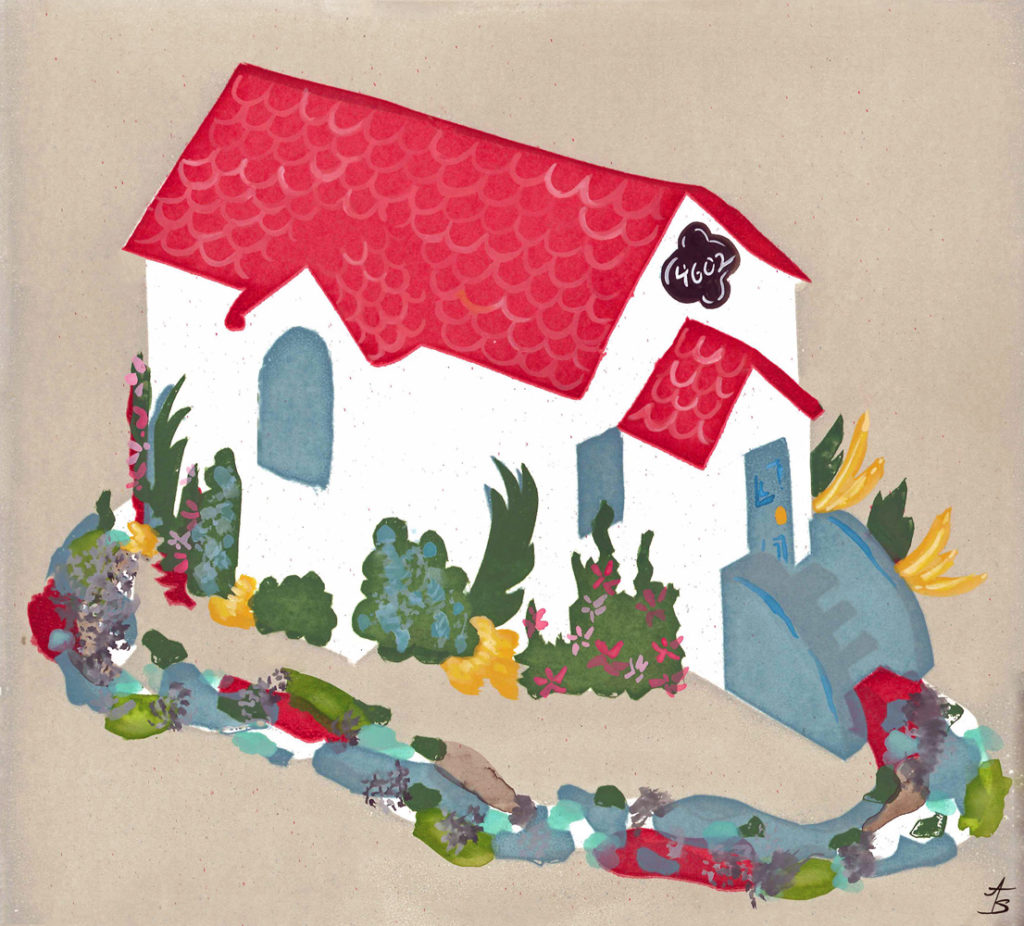
House and Home by Amber Solberg

After my father died in 2009, I spent a lot of time reflecting on my time as a caregiver and, in hindsight, the degree of my selfishness shocked me. To this day, I’ve not let go of the guilt of not giving myself—my time and my energy—entirely to my father and his care in those seven final years of his life. The worst thing that could happen to my father became the best thing to happen to me because it taught me about compassion, acceptance, and advocacy. The single most important lesson I learned from my father’s illness, from his suffering and his death, was this: Dementia is a profound call to be in service to someone.

I still weep when I type that.

I weep because there was one way I could have been of greater service to both my father and my mother and I failed to realise it, failed to act on it.

“Would you take your father for a drive, please? And end up at Tim’s so he can have a coffee and a muffin,” my mother had asked me one Sunday afternoon.

Not an unreasonable request and I’d have been happy to do it. But, one, she shouldn’t have had to ask me and, two, I should have done it every day.

Every single day, I could have given my father some pleasure, some feeling of normalcy, of familiarity. Every day, I could have made life easier for my mother by giving her time to herself at home. Yet I was so caught up in going through a divorce, in feeling lost, in not knowing how the rest of my life would unfold that I couldn’t give myself over completely to the urgent needs of my parents.

The epiphany came too late.

Becoming a lay worship leader also happened unexpectedly but rather necessarily. I was working for the local community newspaper and part of my responsibility was to update the church notices each week. It became apparent that one rural pastoral charge, made up of three churches, didn’t have a regular minister. I thought, “I was raised in the United Church, I know what to do.” I phoned the person who provided the information to the newspaper and learned that they were scrambling to find enough people, ordained or otherwise, to provide long-term pulpit supply while they figured out how to attract a minister. She booked me for right after Christmas.

On January 6, 2013, I walked into a small, white, clapboard church on a country road surrounded by snow-covered blueberry fields. The sanctuary was small enough to make the congregation of twenty look like a full house. It was Epiphany Sunday, when many Christian churches mark the visit of the magi to the infant Jesus; the theme of this service often involves the idea of a journey. I called my sermon “Going Out Not Knowing” and talked about the signs that pointed me in the direction of home just when my parents needed me most. Little did I know it would be the same with becoming a lay worship leader: a sign showed me an opportunity I’d never anticipated, taking me on a journey that has taught me about myself and what it means to give yourself over to someone’s needs.

In that first sermon, I wrote, “Journeys aren’t just about understanding others; they are about understanding yourself. All you need to do is listen to your heart, listen to what the voice inside you is saying. That knowledge, even if it’s scary or confusing or surprising, is your true path, your star-lighted way.”

Supporting my father through his dying could have been a scary and confusing time but it was only surprising. Being with him through his final days and hours, through the drug withdrawal and his return to awareness, provided my first epiphany. After he’d passed, after we’d sat with his now-peaceful body and listened to the finches chittering at the feeder outside his room, after the nurses came in to say it was time for his removal, I walked out of his room and thought, “I will never be afraid of anything again.”

I still weep when I type that.

My father was a funeral director and he set an example of what being in service means. When he was responsible for the funeral of a person who had no family, particularly those considered “indigent,” my father would ask my mother to sit in on the service. He offered respect and dignity to everyone. He offered himself in service to everyone. Yet he made an even greater effort for those who needed more.

I’m now into my fifth year providing pulpit supply to rural churches in my area. This experience, however, has not convinced me to pursue full-time ministry. I would not be great as a minister; I am more suited to being a lay servant. But whenever I stand in a pulpit looking over a vast sanctuary built for two hundred people and see only a few dozen scattered around the pews, I remember what my father taught me and also recall the words of that guy I quote a lot: “Where two or three are gathered, I am there.”
Island Girl

This entry was posted on by .

Everyone in their Sunday best for ship day on the wharf, she boards a fishing boat that reeks of diesel and rotting tuna. The slapping waves. Her parents’ reluctant blessing. The boat bobs out to meet the Southampton Castle—a looming ship of solid metal that reaches from the black depths to the steely sky. She is pulled up the gang plank and lifted aboard by a sympathetic man who pats her arm. Chin up, lovey.

For sixteen nights she sleeps fitfully in her berth, the contents of her stomach rolling like the ocean. Always on the harsh edge of seasickness but never turning down the elegant evening feasts of foods so savoury, so sweet and thick, she sometimes weeps, though she isn’t sure if it’s the delicacies or the sharp memories of her beloved donkey or her stern Mum.

In a homemade cotton dress, a matching crocheted skull cap on her frizzy black curls, billowing panties of flour sacking, and her too tight slip-on shoes, she finds herself on the docks in the country of the new young Queen. Unsteady on her legs, her inner ears sure she is still at sea, she bids farewell to the other young women, each scattering toward waiting cars.

A tall chauffeur with a white moustache calls her by name in an accent she has only heard on the BBC. In one proficient move, he takes her nearly empty canvas satchel from her shoulder while opening the back door to the purring Rolls Royce. Her first car ride.

Embarrassed that she doesn’t know how to get in, she crouches to a squat before stepping one foot at a time into the car, kneeling on the floor and raising herself up onto the seat, sliding cautiously backward against the soft leather.

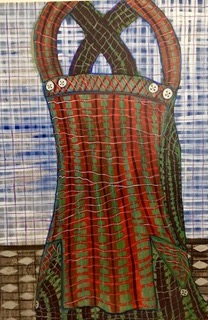
Taffeta Apron by Deborah Stephan

Greenery, tall brick buildings, vehicles of all sizes, pale-faced people with grim expressions. All this whizzes by at a speed she has never known possible. A brooding watercolour painting, a haze, a mist, then darkness.

Hours later, the car slows and turns past a gatehouse with warm yellow lights in the windows. And then, in sudden silence, they float up an impossibly long driveway to a brick mansion and into the glaring brightness of electric bulbs.

Clattering, deafening clattering. Three flights up narrow wooden steps, led by a busty woman with a mouth that moves nonstop, rearranging itself under a bulbous nose. She is finally deposited into a room with a ghostly white iron headboard and a flat feather pillow. Cold white sheets and a lilac counterpain. The smell of a new country, of wind and dampness and strange soap. A slosh of warm tea fills the saucer as she bends her face over the steam and squeezes her eyes shut.

In this house, she will learn the workings of indoor plumbing, Hoovers, and specialized polishes. She is given two maid’s uniforms—a day uniform of blue and white gingham and an evening uniform of black and white with a lace-trimmed cap—soft underwear, a pair of sensible black leather shoes that almost fit. Eventually, she will earn a winter coat of Navy blue wool and shiny buttons.

Slowly, she settles in, becomes less homesick, makes friends with the cooks, the governess, another maid, the gardeners, and tries hard to speak as poshly as she can but only when she isn’t too tired to remember. She stands out in the village, the only black girl, and at the post office where she buys stamps and mails carefully wrapped brown paper parcels.

She is welcomed into the church, though congregants turn in surprise as she sings with strong faith and conviction from the back pew the familiar hymns and recites the Apostles’ Creed in her best articulation.

I believe in the Holy Spirit
the holy Catholic Church,
the communion of saints,
the forgiveness of sins,
the resurrection of the body,
and life everlasting. Amen
.

They remember her birthdays with a leather-bound Bible, pages crisp as onion skins. A box of blue “Avion” writing paper and a heavy Cross pen. And in her third and final year with them, a coveted transistor radio.

She knows her place as a servant yet she marvels at her four pounds a week. Twice as much as her dad earns in the flax mill back home.

The wonder of it. Life. Everlasting. Amen.

What Counts / Dirt Medicine

This entry was posted on by .

What Counts

Some days
life crumples you
folds you
in on yourself
pulls you
inside out
leaves you raw

Some days
the puddles
seep through
your boots
the coffee burns
the bad news
comes in torrents

Some days
you are foggy
with grief
dazed and confused
thoroughly fallible

On such days
there is only
one question:
How many ways
can you
sing your praises?

And if
you can
stay with
that question,
follow it with
how many ways
can you
count to ten?
And how many ways
can you count on community
to pull (you) through?
How many ways
can you count
your blessings?

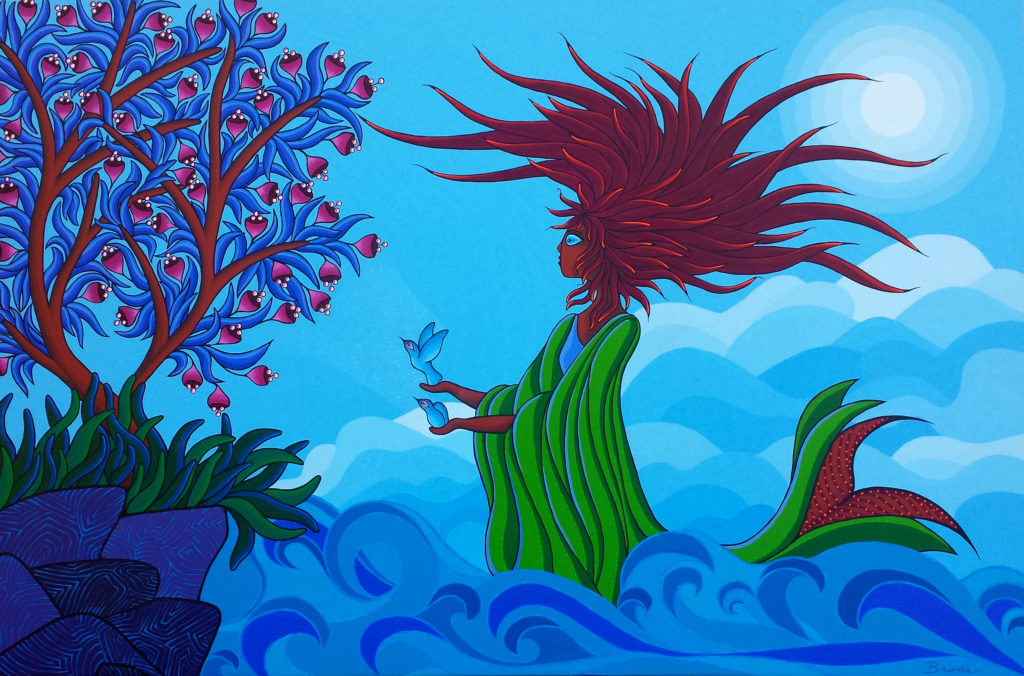
Blessing by Brona Wingell

Dirt Medicine

We, the fossil fuel-addicted,
gather:

AA circles of the present
include true confessions of grief
for lost land and
wayward soil,
disconnection from earth
and mourning
the changing ecology
cars, cars, cars,
and where did all
those trees go?

Sunshine resting
on the backs
of armchairs
encircling such
sadness shared

Let them eat
the future
Wendell Berry writes

But with
no memory of community
among the 20-somethings,
is the future here
now?

Moving
into guilt
limits
language
reclamation, revolution
and my mind
hearing the offered answer
less, less, less,
shouts back
more, more more!
of the pluriverse
diversity
multiplicity
complexity

I am
holding tenderly
my friends
the milpa farmers
the mud-bathed paddy planters
the sukuma wiki sorceresses
in shanty towns and slums
and high rises and huts
in countrysides and downtowns,
heart steadfastly beating
in solidarity with
peasants, taxi drivers,
CEOs, agrarian royalty,
indigenous, immigrant,
settled, unsettled, resettling,
creatures, lives, people
worlds away,
across the street,
underfoot.

If I were
to relinquish,
focusing even less
on the practice
and letting go of the theory,
the world would
continue
to breathe me,
at least until that time
my body passes
back through the land—
the phase of rest and change
these molecules know best.

Until then, the land
continues passing through
my body, while I:

monitor the stripmining
of its sources of nourishment,
knowing intimately the effects of
bread more obscene
than our movies

learn the call
and answer
slogans of the struggle
for liberty, community,
land and life

sit in circles
with new friends
reveal myself in earnest
hope and
loving curiosity
somehow still believing
—a magical secret
scorching through my pocket—
that the answers
are not
as valuable
as the questions

walk in mindfulness and quiet
contemplation
swelling full to
teary-eyed brimfuls
with the scent of pine
cooked by sun

fall to my knees
catching the sight
over my own shoulder
of dried wind-dancing
flower spines embroidering
the rolling field

let myself be
fully embraced
in the lap
mother earth provides

drink in
late April brilliance
of awakening life—
squabbling crows in counterpoint
to windchime birdsong—
supported by rich
dark soils, sharp
green cedar sparkling
on my tongue,
sky so blue
it cracks the
winter exoskeleton
clean off,
welcoming me back,
here,
home, home, home.

Four

This entry was posted on by .

Four

Crow’s shadow slides
Down icy perch
Calling no one
Howls and hisses
Screaming, spitting
Echoes over
Empty morning
Of bitter air
And spiteful frost
Reverberates
Over concrete
And inside me


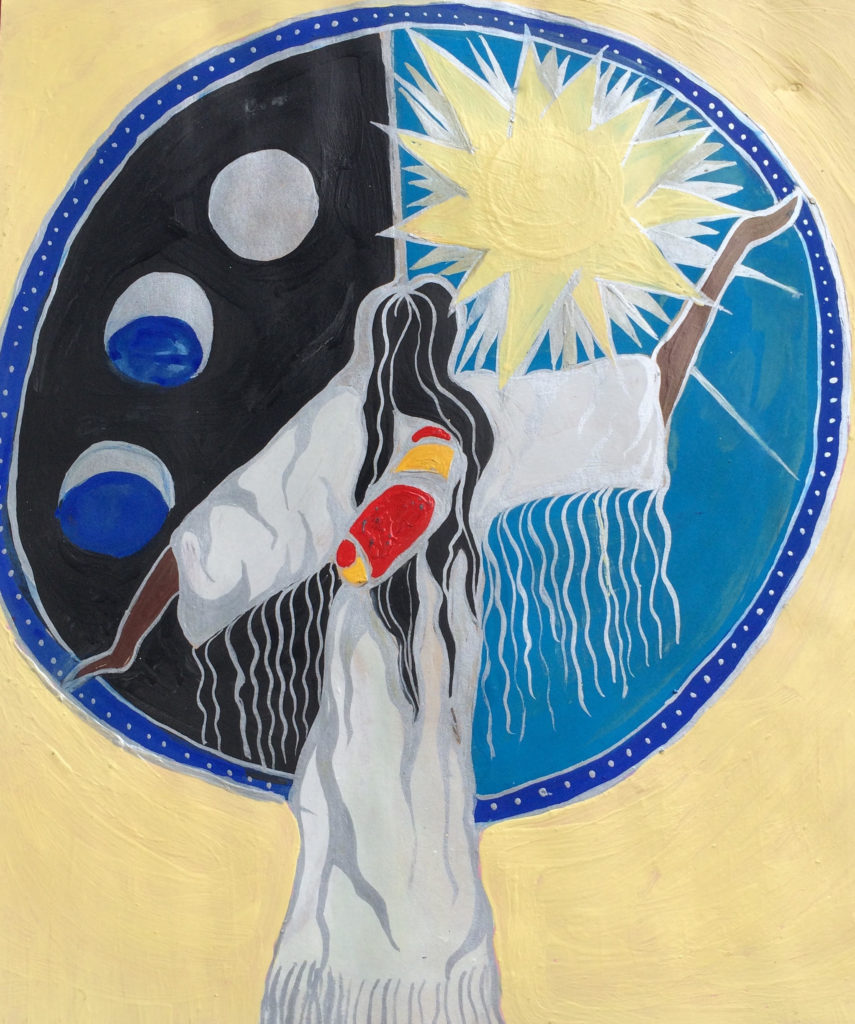
Mother’s Solstice and Her Sacred Bundle: The Child by LA Harris

Join the Conversation:
The Politics of Poppies

This entry was posted on by .

Since World War I, red poppies have symbolised the loss of military lives in war. The imagery stems from two poems, “In Flanders Fields,” written by Canadian physician John McRae in 1915 and “We Shall Keep the Faith,” written by American professor Moina Michael in 1918.

Following Michael’s lead, many people still choose to wear a red poppy around Remembrance Day and Memorial Day to commemorate the sacrifice of military personnel in wartime. Many other people, however, choose not to wear a red poppy, believing the message too one-sided to capture the complexities of war.

Maya Eichler, a feminist scholar of militaries and military conflict, and Jessica Lynn Wiebe, a Canadian Armed Forces veteran and artist, aim to open a conversation about the politics of poppies. What does the red poppy mean today? What does the symbol leave out? What might the red poppy mean in other cultures and circumstances?

As the politics of poppies illustrates so well, there is no single story of war. At the same time, there is often resistance to hearing different, and sometimes conflicting, stories about war.

We invite you, readers of Understorey Magazine, to join this conversation.

The images below show art work by both Maya and Jessica. The text provides their own statement about their piece and initial questions to each other.

How would you answer the questions below?

Do you have other questions for Maya or Jessica?

Do you wear a red poppy? Why or why not?

Please add your comments in the “Leave a Reply” box at the end of the article.


“The National Politics of War and Peace”


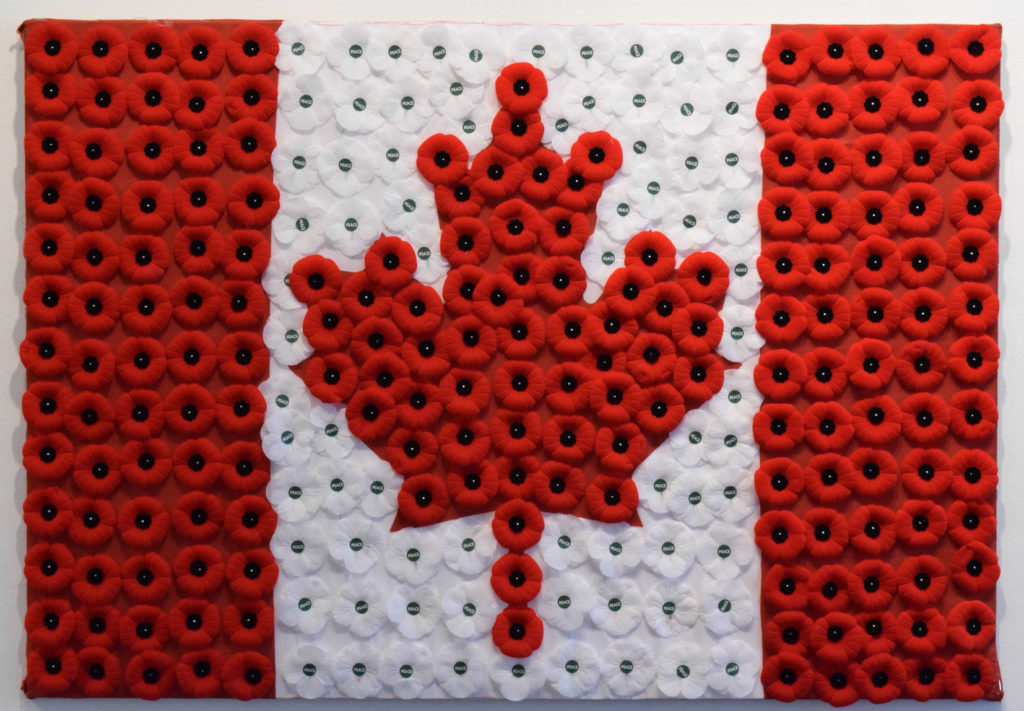
The National Politics of War and Peace by Maya Eichler

“The National Politics of War and Peace” is a Canadian flag Maya created out of red and white poppies. The white poppy campaign was first initiated by a group of UK women, the Women’s Co-operative Guild, in the 1930s. Its intent is to commemorate all victims of war—not just military but also civilian—and wearing the white poppy symbolises a commitment to working for peace. In Canada and the UK, however, wearing the white poppy can be controversial. The Royal Canadian Legion has spoken out against the white poppy and characterised it as disrespectful of military members and their sacrifices.

Every November, Maya struggles with the politics of poppies and with the divisiveness between those who choose the red or the white flower. She has worn the white poppy, both a white and red poppy, and on occasion a red poppy. In the fall of 2014, the politics of poppies seemed particularly heightened when a Canadian soldier was killed on Parliament Hill. That year, Canadians were called upon to start wearing the red poppy to show respect for soldiers well in advance of Remembrance Day on November 11. At the time, Maya was teaching a class on Canadian Foreign Policy in which there was much discussion of Canada’s shift in emphasis from peacekeeping to combat over the previous decade and a half.

She decided to create “The National Politics of War and Peace” to express both the personal and political tensions that emerge from how people choose to talk about past wars and how people make sense of Canada’s military identity today. She wanted to draw attention to how commemoration is political and shapes current understandings of Canada’s military role in the world. Creating a piece of art seemed like a potentially productive way to engage others in these difficult and sometimes uncomfortable conversations.

Maya: What is your reaction to the flag I made out of red and white poppies?

Jessica: When I first saw your work, I did not understand what the white poppy represented. In the past, I had accepted the interpretation of those around me, with no research, investigation, or questioning on my own. I had perceived the white poppy as a stand against the military and war. It was uncomfortable to confront my own lack of deeper questioning. As a result of engaging with your work, I now understand the history of the white poppy in relation to the broader politics of war.


“Root Funding”


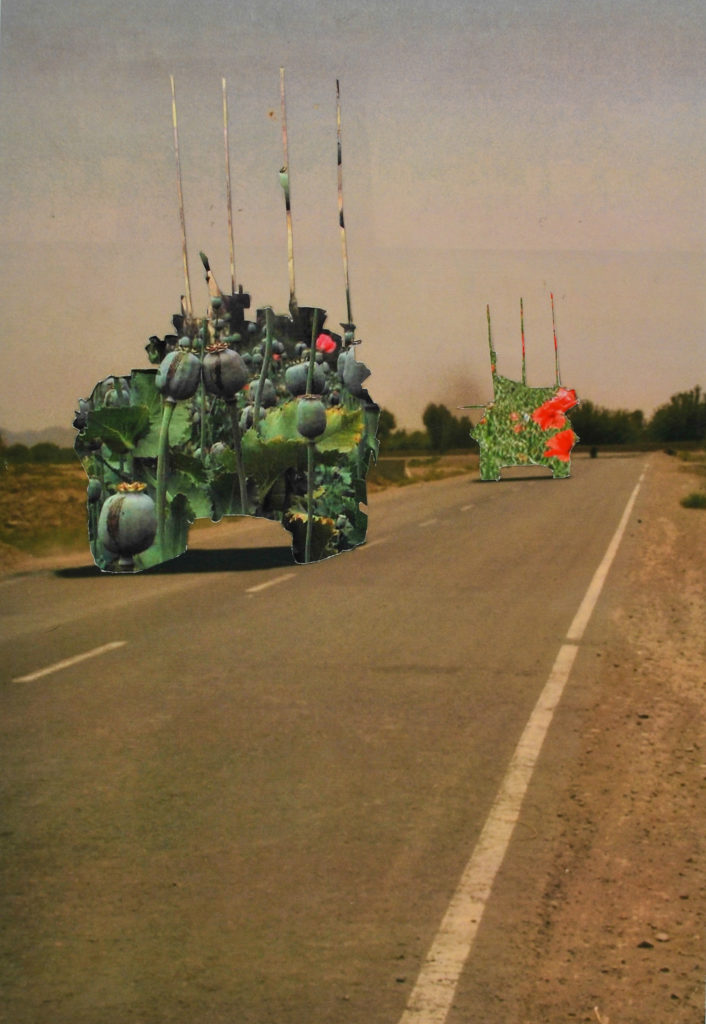
Root Funding by Jessica Lynn Wiebe

In “Root Funding,” Jessica used a photograph she took of two Light Armoured Vehicles (LAVs) rolling past her position in the Kandahar region of Afghanistan. Using collage, she replaced the vehicles with images of poppies. During this time in her art practice (2014), Jessica was beginning to look deeper into the politics of the war in Afghanistan. She noted how the poppy is represented in Canada, for remembrance and sacrifice.

However, as a soldier with the International Security Assistance Force, a NATO-led security mission in Afghanistan, she recognised the poppy as the root funding of the conflict, fuelling the drug industry and the fighting. To her, the poppy in this context represented vulnerability and danger. According to the United Nations Afghanistan Opium Survey, the main profits from the opium trade go to the drug traffickers, warlords, and the insurgency. Therefore, a good spring poppy harvest indicates an intense fighting season.

With this work, Jessica wanted to draw awareness to how the poppy manifested specific meanings in different places and cultural contexts. This work also highlights, if only at a surface level, the political and economic complexities and nature of the war and its perpetuation.

Jessica: What is your reaction to “Root Funding”?

Maya: I really like how you let the piece speak to the uncomfortable truth of the underlying war economy. But when I first saw the piece, I was most struck by its aesthetic beauty and its contrast with my aesthetic image of war. I felt a tension and a lingering discomfort with how you had “beautified” the Light Armoured Vehicles. But that discomfort made me look again, and think again, about the different ways in which we buy into war, whether for economic reasons, ideas of patriotism and sacrifice, or visual appeal—and how entangled they are often with one another.