VODKA
 She was young. Many would say too young. Jasmine was fourteen years old when she first tasted alcohol. Being homeschooled until grade six hadn’t been an advantage when it came to fitting in at middle school. She wanted to be popular, as many young girls do. She looked at the different groups of kids and at the top of the pile were the jocks. She knew she would never fit in with them. She was never very sporty and although the jocks were considered popular she thought they were kind of dull and boring. Then there were the band geeks and the artsy kids, but they were losers in her eyes and she didn’t want to be looked at that way. One day while exiting the school, she noticed a group of kids smoking outside and she thought they looked cool and tough and everyone else seemed to be mildly afraid of them. Everyone called them the druggy group. She decided she would become part of this group.
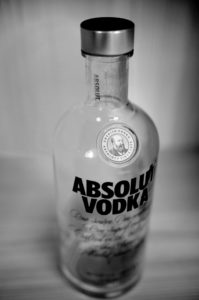
Jasmine befriended a girl who she thought of as a “total druggy” and asked her to hang out. This girl suggested that they get drunk. Jasmine lied, saying that she had “been drunk many times before,” although it was her first time and she felt a bit scared but the desire to impress this girl was stronger than her fear. The two went to a liquor store and waited for a stranger to come by who was willing to “boot” for them. They got a 2-6 of vodka and went home to Jasmine’s basement where her strict parents were upstairs. They opened the bottle and the girl took a swig. Now it was Jasmine’s turn. She put the bottle to her lips. The unfamiliar smell almost turned her insides but she didn’t want to look stupid in front of this girl so she forced herself to take a large gulp. It burned as it slid down her throat and hit her empty stomach. It made her ill but she loved the feeling that it gave her, it was euphoria. She continued, she simply couldn’t get enough of the fiery liquid. She eventually blacked out and then threw up much of the night and felt terrible the next day but that didn’t matter. The feeling she got from the alcohol was so addictive that she couldn’t stop herself. In her own words, “This was where my journey began.”
ECSTACY
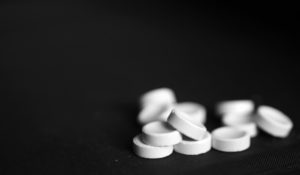 Jasmine was now fifteen and, all too soon, alcohol became boring and no longer filled that forever-hungry, growling void inside her. Although she still indulged in alcohol and weed whenever the chance presented itself (and that came often), she needed more. In fact, there weren’t many days when she wasn’t under some kind of influence. She drank and smoked at school with her friends and the teachers never seemed to be the wiser or, if they were, they didn’t seem to care. As time went on, she had to imbibe more and more to feel the effects. She had to move on to bigger and better things. She moved on to ecstasy. Life got progressively worse and she ran away from home shortly after turning sixteen. She couch-surfed or slept wherever she could. It didn’t matter, it felt good to live her own life. She had been expelled from school by then and maybe that was good because she was mostly checked out when she was there anyway. Her parents called the cops and the police caught her and her seventy ecstasy pills. Even Jasmine’s friends thought she was crazy to buy so many pills at once but she was never the kind to do something half way and she had a stash of money that she had been saving to buy a car. The police couldn’t hold her or maybe they thought she would be fine now—just a young girl on the wrong path. It was a mistake to release her though because shortly afterwards she overdosed for the first time.
Her parents knew they had to do something drastic but also knew Jasmine wouldn’t willingly go to rehab. They told her they were going on a trip to visit some family in a nearby town. Jasmine didn’t suspect anything and resolved to not do any drugs on the short trip but she constantly thought about getting her next hit when she got home. She wouldn’t get home for a long time. She was checked into rehab. Her life had gotten out of hand so quickly. Even Jasmine knew she could not continue in this way. She met a councillor at the rehab centre and they connected because the councillor articulated what Jasmine was feeling. Other than that, rehab was all about getting through each day, making it out, getting back to real life. Jasmine did well in rehab and made lots of progress. She was released and it lasted … but not for long.
COCAINE
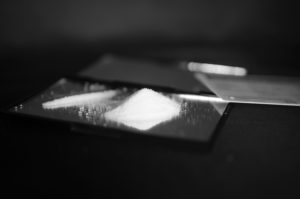 Jasmine finished rehab and everything was going well. She had a job and was developing friends in a new town where there were none of the old temptations from her home town. But soon the void inside her reared its ugly head yet again. This time, weed, alcohol and ecstasy were not enough, the void needed something stronger. Being sober had been a good thing for Jasmine. She knew this but was unable to resist the need to be numb. Cocaine was the next step on her journey and, luckily, it would be her last step before she knew she had to quit.
Her second relapse since leaving rehab was longer and much worse than the first. She continued to feel more empty the more drugs and alcohol she had. Coming down from coke was worse than anything she could imagine and the only way to make it better was to do more coke. At first, it was exhilarating because she was able to convince herself that she was better on the drugs. More productive. Faster. Smarter. But that soon faded away and all that was left was a shell of a human being. She cared about nothing except drugs and alcohol. She cared least about herself. She was so empty that it was unbearable and the cocaine made her forget for a little bit but eventually nothing would be enough to calm that inner voice, that inner fear and self-loathing.
Jasmine knew, just knew, deep inside that she couldn’t continue down this path. She had the sudden realization that she would die if she didn’t stop. Maybe part of her didn’t mind dying but another part wanted to live, for her family and for the hope that things could really get better. So she made a deal with herself: get sober for good or die. Jasmine decided to check herself back into rehab and make it work. If she wasn’t sober in six months, she would commit suicide.
EPILOGUE
Jasmine’s last attempt to get sober worked. She has been sober for over five years now. She has a good job and has just finished getting her high school equivalent. She is also a budding photographer and enjoys capturing lasting moments. In fact, she shot the photographs in this essay. On taking these photographs of substances that once plagued her and almost killed her, she says: “I don’t feel like I am a slave to those substances any longer. I can be around them and be unattached to them and what I went through. It’s a letting go of the past.”
Disclaimer: Names have been changed or omitted to protect the identities of the involved individuals. However, all events are true.
#
Related reading: “In the Museum of Your Last Day” by Susie Berg