Archives

Aftershock

This entry was posted on by .

Downstairs, something crashes to the floor. Claire waits a moment, alert to the smallest sound. When the house stops moving, she grabs the phone and dials.

He answers on the second ring. “Buckman, here.” His voice—so self-assured—silences her.

“Hello?” he prompts.

“It’s me. Are you okay?”

“Yes, is something wrong?”

“You didn’t feel it?”

“Feel what?”

“The earthquake.”

His laugh sounds relieved. “You’re joking, right?”

“I’m serious. Our house moved. You should leave that office tower.”

“The house moved.”

“I was in the back bedroom. It shifted and now the door frame is crooked. This isn’t funny, Ryan, I know what I’m talking about. I lived through a lot of quakes as a kid. We’d hear the crystals fall off the chandeliers.”

“Were you napping when this happened? Dreaming maybe?” He changes his tone. “Have you checked on the baby?”

“Yes.”

No.

“There’s nothing showing up on the news feed about an earthquake. I think you’re safe, sweetheart. Give a kiss to my little guy. I’ll try to be home early.”

*
She stands by the crib, her arms lead weights. The baby is asleep, eyelids aflutter, hands clenched like walnuts. His face looks unfamiliar. She shuts the door as she leaves the room.

*
Dave Simpson punches Ryan’s arm lightly. “How old is that baby of yours now? How’s Claire?”

“Three weeks,” Ryan answers. He hesitates, then adds, “I think Claire’s a bit down. Unfocused, you know.”

Dave nods, becomes fatherly. “It’s all normal, no need to worry. She’s probably only getting two, maybe three hours of sleep a night.” The second time, his knuckles linger against Ryan’s bicep. “Give it some time, man. She’ll get through it.”

*
On the dining room floor there is a starburst. The light from the window picks out glittering pinks and blues. Claire squats to examine the concentric circles of breakage. The bell-shaped chandelier now misses its ornamental clapper. It can no longer sound the alarm. She places her finger on a crystal chip to sweep it closer to the epicenter of damage. The pain is out of proportion to the wound. Drops of blood mimic the spray of splinters. They smear on the dustpan when she gets the broom.

*
“I’m home! Where’s Mattie?” Ryan throws his suit coat on the sofa, pulls on a fleece sweater that will be soft next to his newborn son.

“He’s asleep.”

“He sleeps more than I expected.”

“Well, all he really needs is the bottle.”

“Yes, but do you think he interacts enough?”

“Are you suggesting I’m doing something wrong?”

“Claire, love, I wasn’t accusing you of anything.” He reaches for her, holds her lightly. “You’re a great mom. I’ll just go check on him and then I’ll make dinner. Why don’t you have a shower, call a few friends?”

She doesn’t move. He says, “What happened to the chandelier?”

“I told you. There was an earthquake.”

Upstairs, the baby starts to fuss but Claire still does not move, doesn’t seem to notice. There is no sign she has had him downstairs during the day—not an empty bottle or a toy. Ryan observes this but, with effort, holds his tongue.

*

The baby is warm, bottom-heavy. His lips wow open and closed as Ryan changes him and slips tiny limbs in a clean sleeper. The desire to satisfy that small mouthing need sends a shudder through his body. He is now a father. He lifts the child to his face and whispers endearments. He promises to keep him safe forever.

With the infant tucked in a sling against his chest, he heads to the kitchen. At the back bedroom he stops. Is the door frame crooked? Maybe. It might have been that crooked before. The house is a hundred years old, after all.

*
“So what did you and Mattie do today?” Ryan pours Pinot Grigio into Claire’s glass.

“I’ve been thinking about the earthquake. We aren’t really ready if there’s an emergency. We should have a kit.”

He rallies to the change of subject. “We probably have the stuff we need in the camping gear. Four-season bags, candles and flashlights, a water filter. We could always use the barbeque if the power went out. We’re in pretty good shape, I think.”

“I’m going to put something more together. I bought bottled water today. The Internet said we should have four litres per day per person for at least three days.”

“I guess if we’re on the subject, I should anchor the bookcase in Mattie’s room to the wall. I meant to do that last weekend. And it probably wasn’t a good idea to hang a glassed picture above his crib.”

Claire rises, paces the length of the dining room, back and forth, back and forth.

“I need to make a list. Can you clean up dinner? Feed the baby?” She walks upstairs with a pad of paper.

The dishes take longer than he expects. When he joins her in the bedroom, he has missed the news broadcast. In the corner, Claire is hunched over the computer. By the bureau there are two boxes of litre-sized water bottles.

Three people. Only two dozen bottles.

*
She’s animated in the morning.

“Did you know that, across the country, there are over five thousand earthquakes a year? I didn’t realize that there could be foreshocks and aftershocks. Yesterday’s earthquake might have been a foreshock. I made a list of all the things I need to get to be fully prepared. Here, I want you to have this picture of me in your wallet. One of the advisories said to have pictures of your family and friends in case you’re separated.”

“What about Mattie?” he asks.

She looks surprised. “He’d be with me, wouldn’t he? Besides, in no time he’ll look different.” She takes another gulp of coffee, toast untouched. “I’ve asked your mom to come sit with him this morning while I go out.”

In occurs to him that he hasn’t seen her touch Mattie in two days.

*

The baby is flat on his back. She should change him but doesn’t. Would she recognize him if they were separated? She closes her eyes, but can’t conjure his face. What she sees looks smashed, like a deflated ball or a splintered crystal.

*
“Ryan, where did you put the candles?”

“Calm down, Claire. I can buy candles on my way home. I was going to go to the drug store after work anyway. Mom said we’re almost out of diapers and formula. Unless you picked them up after she left?”

“No. I wanted to get this emergency kit ready. I have to go. I left some things in the car.”

*
“Dave, did you hear anything about an earthquake yesterday?”

“If it wasn’t in the business section, I didn’t read it. Man, Ryan, you look wiped. Walking advertisement for prolonged bachelorhood. Go home and get some rest. I’ll cover.”

“I just might do that, thanks. Once I’ve finished this paperwork, I’ll go.”

*

The front door is unlocked but won’t push open. Ryan puts his shoulder to the wood. The crack widens. The resistance increases. “Claire!”

Seconds pass. His body floods with adrenaline, muscles tensing. He pushes harder. Something gives way. Cardboard or plastic. He can just squeeze into the vestibule. Almost the entire space is piled with boxes and duffel bags. Neck high. She can’t be leaving him? Moving out?

The upper box contains tins. He yanks the zipper on the closest bag. Unfamiliar nylon billows out, the color of a construction cone. He rifles below. A down jacket, five hundred dollar price tag still attached, rubber boots, heavy gloves. Underneath, sleeping bags. New, not the ones they own already. Tent poles. The stacked boxes are labeled. Inflatable raft. Generator. Oxygen from a medical supply store.

“Claire!” What he sees is so wrong. Breath-sapping, stomach-turning wrong. That part of the book on post-partum—the part he’d skimmed—what did it say? Moodiness. Sadness. Not this.

He pushes past the piles, opens the inner door.

“Ryan, take cover!”

Claire is under the dining room table. She judders, as if the room is moving violently. But the house is static, silent, except for the sound of Claire bumping against the floor.

“It’s okay, sweetheart. Come on out. Everything is okay. Where’s Mattie?” The knot in his stomach sends out a wave of heat, crashes like a tsunami when it hits his heart.

“Claire, where’s the baby!” He starts toward the stairs. Her chin bangs rhythmically against the floor.

“Take cover!”

Even two at a time, the stairs are too many. The back bedroom doorframe is crooked. Just a little crooked, same as always. Mattie’s room is a distant three strides down the hall. The crib is squashed. On top, the bookcase is almost flattened to the floor.

He hears no sound, no cry. The quaking of his body is the only movement. He thrusts his hands under the fallen wood. Surrounded by wreckage, he heaves.
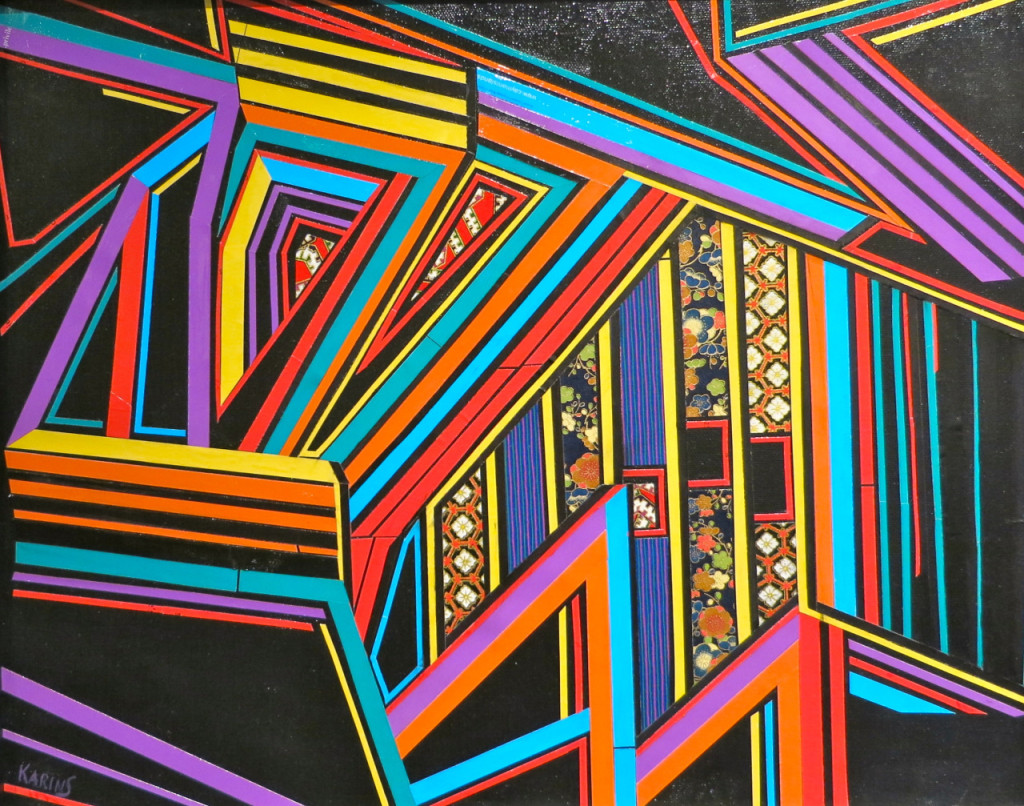
Staircase by Karin Shaddick
Staircase by Karin Shaddick

Things I Shouldn’t Say

This entry was posted on by .

The first time I write about my mother, she hates it. What I write is this:

“In the morning my mom tells us to go back to bed because it’s too erly [sic].”

It wouldn’t be so bad if it wasn’t sitting on top of a line about my dad buying me candy. In retrospect, it’s him she should have had the problem with. She reads the incriminating sentence in my notebook on parent-teacher night and the next day, my dad speaks to me about it.

“Your mom was pretty upset about what you wrote,” he says.

“Oh,” I say.

In The Argonauts, her memoir about motherhood and identity, Maggie Nelson muses, “Most of my writing usually feels to me like a bad idea” (123).

I haven’t yet learned that feeling. I am seven. I didn’t write it to hurt her.

*

Looking back, I’m not surprised that, when faced with the Herculean task of writing a sentence on each of my family members, I struggled with what to say about my mom. So completely absorbed in her familial roles, eager to experiment in her own obliteration (Nelson, 37), she seemed barely more substantial than whatever I felt toward her in the moment. I clung to scraps of her. In first grade, when it was my turn to say what I wanted to be, I said, “A physiotherapist,” except I couldn’t get the word out right. I didn’t know what it was or how to pronounce it—just that it started with a p and was what my mom used to do. Before me, back when she was a real person.

*

cutfromthesamecloth_cropped

Cut from the Same Cloth as the Elephant in the Room by Robin Smith Peck


The next thing I write about my mom is even shorter, but she hates that too. It’s her birthday and I want to help make it special, just like she does for us: I make her a birthday banner. I don’t know who her favourite cartoon characters are, so instead I just write, “Happy Birthday Mom!” and decorate the rest of the Bristol board with colourful exclamations of her age: 35. I’m proud of my work and I think she will be happy, but she cries instead. I ask my dad, “Why?” and he tells me that she is sensitive, she doesn’t like seeing her age up on display. But my age is always on the birthday banners. Once again, I feel confused.

*

I grow older and the mother in my head grows ever wispier, evanescent. I learn what a physiotherapist is and know immediately that I don’t want to be one. One day at supper, my dad asks who my role models are and I say Whoopi Goldberg when really I mean Guinan from Star Trek, and Mariah Carey because I’ve just been given my first radio and she is my favourite.

“Don’t you think your mom would be a good role model for you?” he prods.

And I say, “No, not really,” awkwardly, without looking up, the same as when mom comes back from the hairdresser. It feels like a test and I know that I’m failing, but I don’t know why they keep asking me questions they won’t like the answers to.

*

My mother says I am a wonderful writer. She tells Nanny and Grampy how talented I am, while I read the new Post-It note on Nanny’s fridge. It says, “There shall be no criticism in this house.” I show my parents the bits of my schoolwork that I think they might like: reports on books that I love, projects on topics that interest me. I keep my feelings in simple sentences. For my birthday, I request a diary with a lock.

*

Christmas Day, 1996, I sit at the kitchen table, alone, writing in my diary and crying. I am crying because five days before my little brother was hit by a car while crossing the street. What I write is exactly what you think:

“It was the worst Christmas ever. My brother is dead.”

My mom comes up behind me, screaming, “Don’t write that! Don’t write that!” She snatches both the diary and pencil from my hands and begins erasing furiously. As if I won’t remember if it isn’t written down. As if it won’t exist if it isn’t on the paper. But I don’t want to cry in a vacuum.

“Mom, stop it! That’s mine! Give it back!”

She is in pain, I know—the kind of black hole pain that can’t ever be fixed. Eventually, she’ll learn to step around the hurt, to tread lightly across that valley in her memories where Luke lives. Fresher griefs will come to steal the spotlight; future joys will distract her. But not tonight, not when she has only begun to fall.

I know all this, but still I scream and snatch my book away; I am in pain too and I’m not in a comforting mood. She flees the room in tears and I sit at the table, alone again, retracing all my words from the leftover pencil indentations. Tears drip over the paper, even though they know it’s cliché.

*

Fifteen years old, I compose a short speech for church. It takes less than a minute to thank our departing youth leaders and give them a blanket as a wedding present. My words are a blip, half-improvised, tossed in the bin before I sit back down.

But my mom loves this speech like nothing I have ever done before. She tells me I would make a wonderful pastor’s wife and immediately I shatter. Each fragment of my self seems a frightened, wounded casualty, crying out, “Help me, save me, I’m still here!” I scramble to find some noble aspect that I can hold up to her eye and say, “See, this is who I am, and I am worth more than that!” But I can’t find any heroes and she doesn’t understand why I’m upset.

*

I stop writing. Then I feel lonely, so I start again. My dad leaves, returns, leaves again; the rest of us wonder where that yo-yo will land. She sits alone in the dark. She doesn’t want to celebrate her birthday. She refuses to be in photos with her grandkids.

We fight, it uproots all our shallow graves. Her apology email opens, “I wish I had your writing skills at a time like this.” I told her, I’m not mad, because how could I be? How could I function, constantly burning? Eula Biss writes, “The mother of an adult child sees her work completed and undone” (in Nelson, 140). I’m not mad, I’m just Me. I can’t erase our history. She says to my sister, “I could go my whole life without knowing what Amy thinks of me.” Once again, I see my shadow and run.

I am scared to write. I am scared of saying things I’m not supposed to say and feeling things I’m not supposed to feel. I’m scared of you getting hurt because not everything in our family was apple pie and hugs, even though enough of it was. Maggie Nelson expands on Barthes: “I am a writer; I must play with the body of my mother” (106). Am I a writer? I know by now the stories I want to tell, they’re formed from all the thoughts I shouldn’t say—ideas so enthralling they need to be followed around for a while. There is nothing beautiful or complicated that will just sit still and let you capture it. That’s why the pen moves. I didn’t learn to be quiet; I didn’t learn to be polite. I couldn’t learn to bury my most hurtful truths; I’d have to fall in after them.

Please forgive me.

*

Nelson, M. (2015). The Argonauts. Minneapolis: Graywolf Press.

*

Understorey Magazine is a project of the Second Story Women’s Centre and a registered charity. If you like what you see here, please share with friends and consider making a donation. Thank you.

Two Poems

This entry was posted on by .

Loon Mother

She moves through time and place without hint of physical effort.
Her neck is sensuous in its turning.

Rises on the surface, wings beating silently, near meeting in prayer.
Calls to her children lost over centuries.

She dives.

Her wail reaches down.

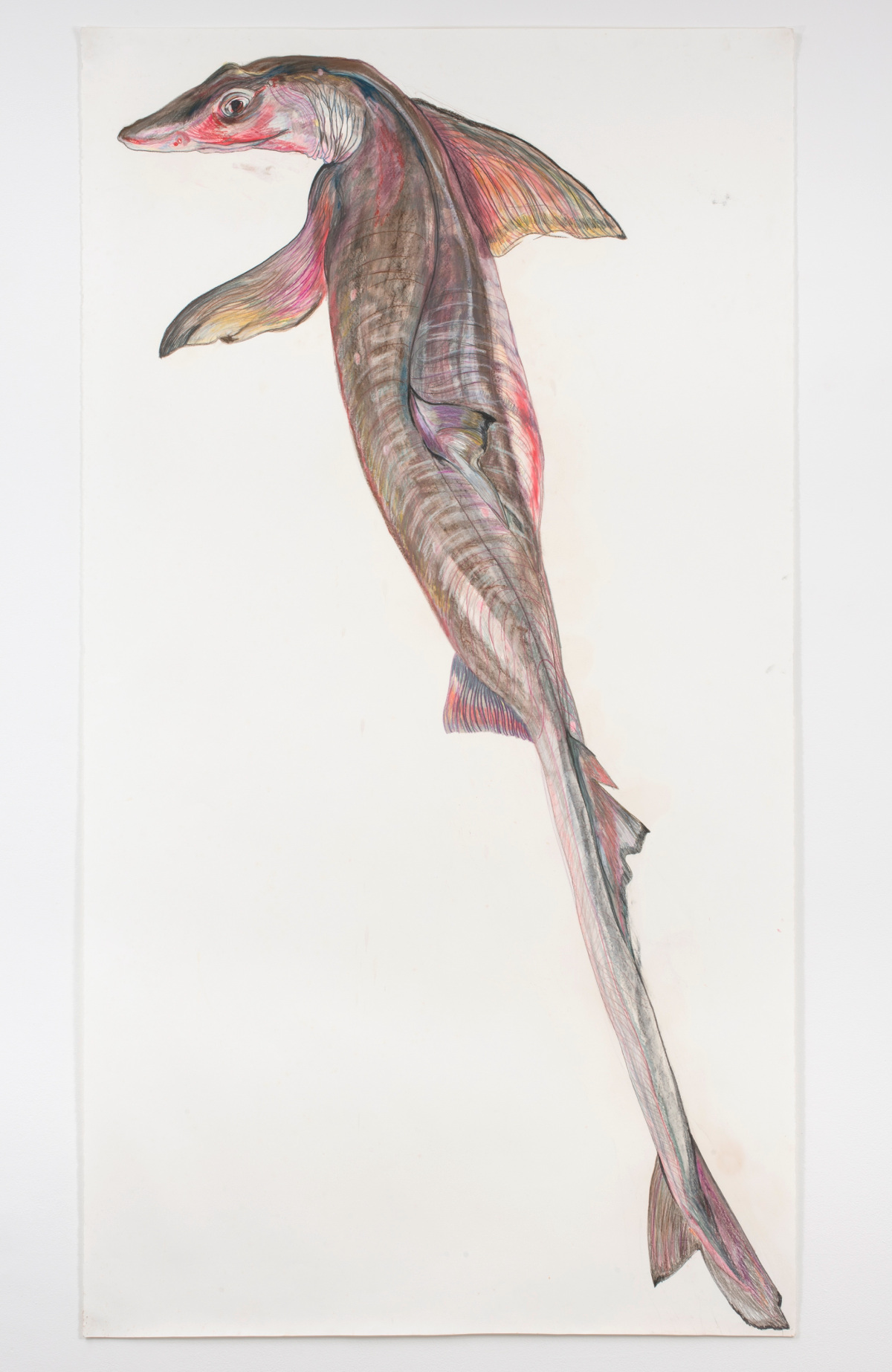
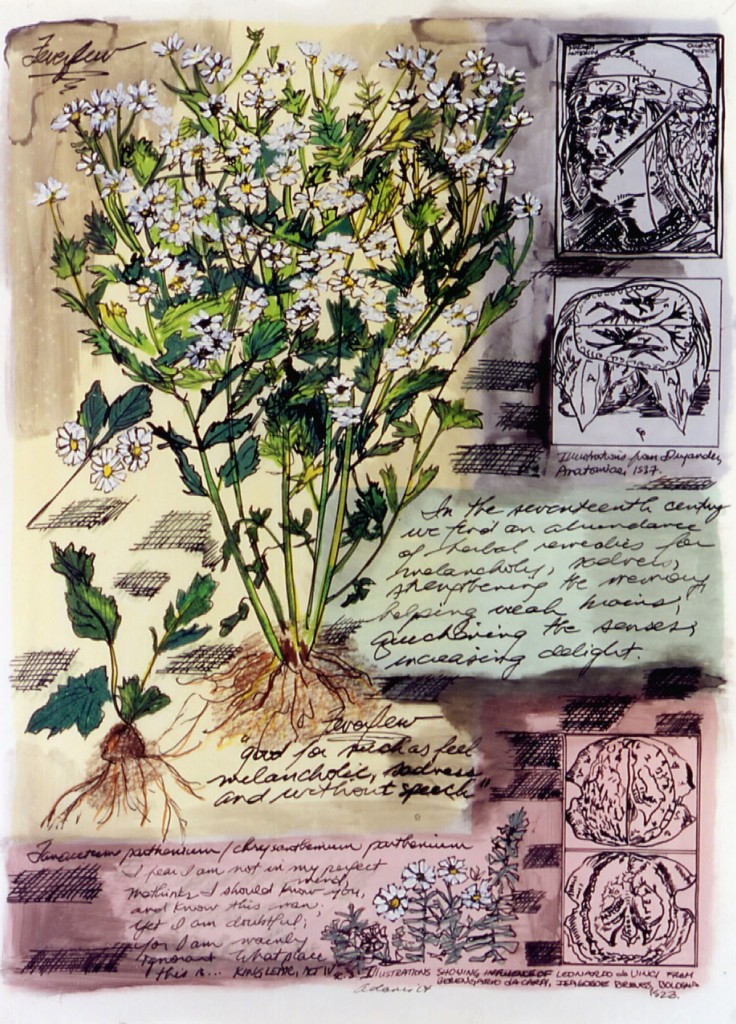
Feverfew by Rose Adams

Feverfew by Rose Adams


Fish and Feverfew

Recalling Rose Adam’s art.

I remember a bird-beaked fish.
Crowfish?

Lying long and prone on a slab of canvas.
Sleek length of flesh, pink blush.
Or blue?

Head side-lying to the left.
One eye flash frozen.
Pastel? Watercolour?

With an elegant twist
she is looking back with half her vision,
looking for the pearls of her offspring.
They have dispersed;
perhaps never existed.
Would I recognize mine? Was there a daughter?

I remember
scales flaking off my skin
floating away like drowning fireflies.
Sometimes the waves are restless
and I glimpse light
reflected off particles of my life.

Fish by Rose Adams

Fish by Rose Adams

Stacked Up Together

This entry was posted on by .

I felt the car sink up to its axles in the soft ground. Damn! The winds whipped heavy snow about my face. Large wet flakes settled and clung to my eyelashes, making it harder to assess my predicament, but the plummeting temperature meant I had to extract my little red Datsun before I rested or she’d be frozen in by morning. As my two little boys slept blissfully under a blanket on the back seat of the car, I stood alone in the storm feeling panic grow by the second.

Some months before, the three of us had been abandoned by the boys’ father. I was now farmer, farmer’s wife, mother and father on a farm that demanded the efforts of two grown adults. I was doing okay, for the most part. Young and strong, I’d plunged into my responsibilities with a fervour. Dave was eight and Pete only six; I could not let them suffer the scars of divorce. But Dave had come to me one evening as I gazed out the kitchen window at the ten cord of wood that was yet to be cut and split. I had no money to hire somebody; winter was hard on my heels. I considered all the ominous tasks that I had to complete alone: clearing snow, barn chores, hauling water for the cows across ice and snow, bringing two-foot logs into the house, cleaning the furnace pipes—all on top of my normal chores and a full time job. “Don’t worry Mum,” Dave said. “Pete and me stacked up together, we’ll make a man.”

“I know you will,” I replied. But did I?


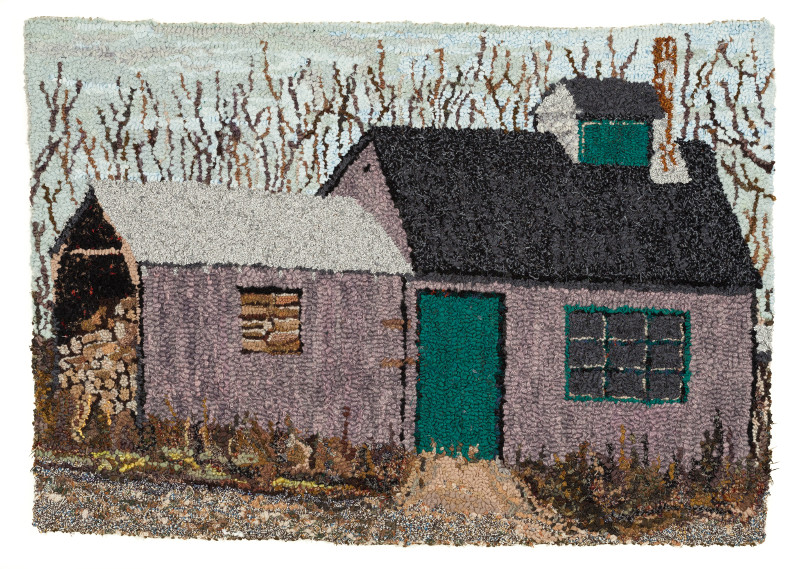
JoannaClose-Prospect17-2015-11

The Sugar Camp by Joanna Close; photo by Eliot Wright


Between chores, we filled blank spots in our time with concerts, movies, plays—anything that provided the maximum entertainment for the least amount of our precious money. We even managed one afternoon in Halifax with the Harlem Globetrotters. On that particular stormy night in late November, we had just returned from a puppet show, Aladdin, performed at the Bridgewater High School. The skies were overcast with a nip in the air when we’d left in the late afternoon. We emerged from the school into a raging storm—heavy, wet snow that accumulated fast. I struck out for home with my fingers crossed, hoping I could keep my car on the roads, most of which were narrow and rutted. Snow spiralled towards the windscreen as I fought the hypnosis it intended. Standard shift, front wheel drive and a homing instinct got us back to our empty farmhouse. I drove as close as I could to the house and woke the boys. But as they stirred from their blanket, the car settled into the earth.

“Boys! Wake up! Get into the house and straight to bed. I’ll be in soon to light the furnace.”

Or so I hoped. We had been gone for hours. The fires would be out and our poorly insulated house cold. My little boys ploughed their way to the front door as I made for the barn to collect boards and hay. The milk cow softly lowed a greeting which soothed the rough edges of my nerves. My “fancy” boots and nicer slacks were not designed to keep out the chill but I didn’t notice as I scraped away ice and dirt from behind the tires. The snow fell as fast as I could clear it. Such futility merely increased my frantic efforts. Before I dared face how I might push and drive the car at the same time, the front porch light went on. There was Pete, dressed sensibly in his overalls and big rubber boots, plodding through the drifts towards me.

“Pete, you should be warm in your bed,” I said, relieved to see someone, anyone. The countryside was asleep, as we should have been.

“I can’t leave you out here all alone, Mum,” he said.

“Okay,” I managed to get past the lump in my throat. “Can you drive while I push?”

“Yep,” he answered. I gave him a quick lesson on how to use the clutch. It was close to midnight and we could barely see two feet in front of our faces. The snowflakes were smaller but thicker, indicating a drop in temperature and an intensifying storm.

“I call forward or reverse, okay? The trick is to avoid running me over.”

“Yep,” he said again and hopped in behind the wheel.

“Reverse!” I screamed against the wind. My feet, searching for traction, found a rut that stopped them slipping. I pushed. She moved—not much, but she moved. I looked up to signal to my son. He had disappeared from view! On closer inspection, I found him stretched out under the steering wheel with his rubber boots firmly on the clutch and the brake, awaiting instructions.

“We’ll try reverse again,” I called, unable to decide if I should laugh or cry. Backwards, forwards, backwards, forwards, while I pushed with all I had. Pete got it right every time and suddenly the struggling car popped out of the muck. I ran to jump in. Pete scooted over and I moved the Datsun onto more solid ground. We had done it! We had done it!

I hugged my little man, for man he was. We put away the tools and headed for the house. Warmth welcomed us in. Somebody had lit the fires. I looked at Pete, who answered with a wry grin and wee shrug. What could I say? Stacked up together? I had my answer that stormy night.

Nana

This entry was posted on by .

When I knew her, Nana smelled like roses and powder. She smoked pack after pack of Craven A cigarettes and laughed with the sound of those years of ashes in her throat. She sat in an armchair in the corner of the apartment that she shared with my grandfather, her cigarettes on a small, round table beside her with a lighter—those were the days of lighters—and an ashtray with a beanbag bottom. And a glass of Tang lemonade (yes, Tang made lemonade too). And the TV guide.

The apartment’s balcony was trimmed with Nana’s geraniums, ugly, red, scraggly but lasting year after year. There were clumps of dirt in their pots and my little brother, my big sister and I would throw them over the balcony—the clumps, not the pots—and watch them shower onto the windshields of the innocent cars in the parking lot below.

Nana was funny and gentle and soft. And strong as steel. She ran interference for us kids, over and over again, growing in stature each time she did. Every Sunday, all four of her boys and their families would crowd into that tiny overheated, under-ventilated apartment and she would make tea and we would sit for hours and hours. The boys—always “boys” no matter how old—were loud; they’d laugh and argue with my stubborn and handsome grandfather. My Nana and her four daughters-in-law, all of whom remember her with great fondness (unusual for daughters-in-law, I know), sat on the edges, talking and serving. Everyone smoked the air blue, so we kids hung like puppies out the window onto the balcony, looking for something to breathe.

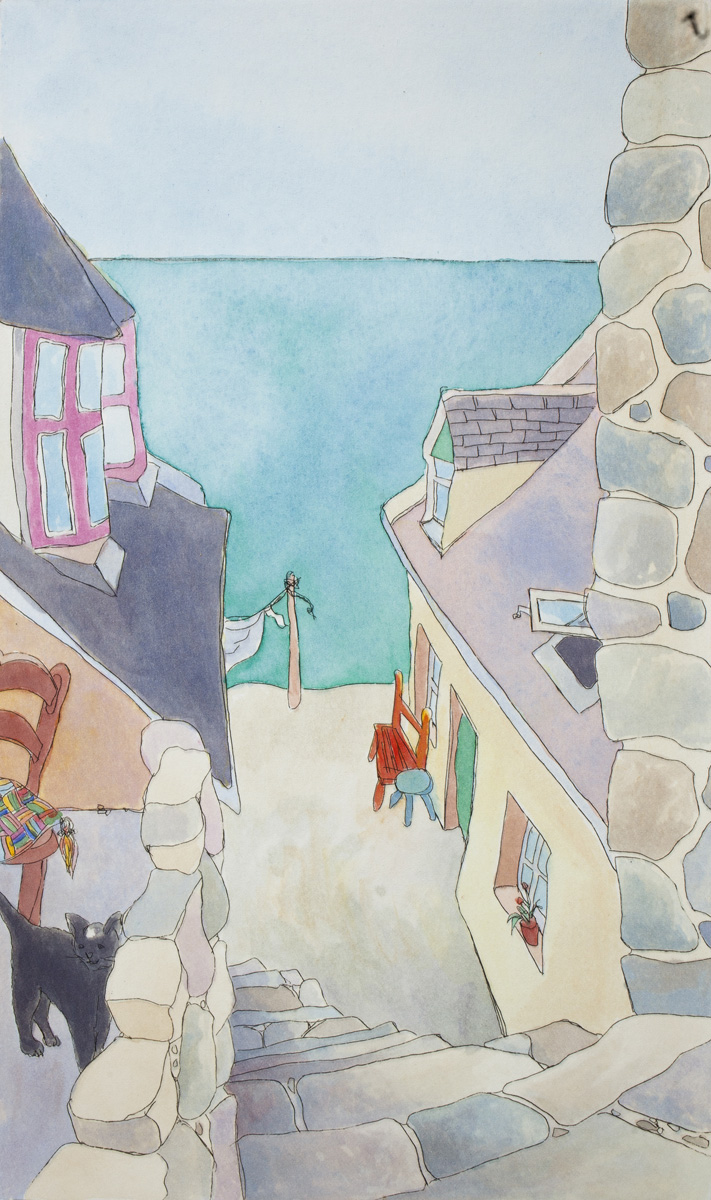
betweenthehouses

Between the Houses by Tessa May

Nana would often bake for us, too, layering the icing sugar on thick in one corner of the cake for my brother who ate so much she wondered where he put it all and, I think, secretly admired him for his unstoppable appetite. Or she would make chicken salad sandwiches—heaven on white bread with the crusts carved off and the sandwiches cut into four triangles—with sweet pickles on the side. On dreary days, she taught us how to play gin rummy and for my sister, who was older and had a head inclined to games of strategy, she played cribbage.

I loved Nana’s smooth, crepe skin, pink and soft as petals. I loved the wobble of her arms and her apron that covered her from shoulder to the hem of her dress. I loved her fuzzy blue eyes that swam behind her wire-framed cat glasses. I loved her feet—always sore although I didn’t know it then—and the small, embroidered slippers she wore in the house. They seemed to be from China and were very exotic in my child’s mind.

I loved the high spool bed I shared with her when I was a young child. I would pretend to sleep while beside me her huge shadow kept me awake with its gentle snoring. I would stare at the painting of the Sacred Heart of Jesus hanging on the wall at the foot of the bed and hold my breath so I wouldn’t wake her.

I loved that on those long ago Friday nights, when we arrived at their place after driving from Moncton, Nana and Grandad were eating dinner off folding tables in the darkened living room, watching wrestling on the small TV. Nana loved wrestling. I loved that too.