Archives

Us and STEM

This entry was posted on by .


Earlier this year, as Covid-19 spread throughout the world, reports surfaced about the design and fit of personal protective equipment, or PPE. Even the smallest sizes of PPE were too big for many women working on the front lines of the pandemic. The PPE was designed for a generally larger male body. The technology was biased.

Later this year, as Black Lives Matter protests gained strength, many reports emphasized what has been known for years. Police surveillance—which has led to police violence—depends on facial recognition technology. And facial recognition technology misidentifies Black faces more often than white faces, up to ten times more often. The technology is biased.

During these and other world-changing events, people turn to the Internet for vital news and information. But pop-ups, animated GIFs, autoplay, and other website clutter mean people with epilepsy, autism, and other physical, developmental, and cognitive challenges can only read for a short time, or not at all. This technology is also biased.

But can technology be biased? Can chunks of metal, plastic, and silicon be sexist, racist, ableist?

We tend to think of technology as non-human by definition. But technology is, of course, designed, produced, tested, and marketed by humans. And in the tech sector, most humans are men; in North America, at least, they are mostly white men. Available sizes of PPE are based on human assumptions about “typical” healthcare workers. The algorithms that run facial recognition technology are coded by humans with experiences in particular families, workplaces, and communities. The design of websites depends on goals and values, often the uniquely human goal of making money. All of these assumptions, experiences, goals, values—in other words, biases—are built into the technologies we use every day.

In this issue of Understorey Magazine, we explore at how technology, with all its biases, affects our lives.

How might something as simple as a salad spinner, as familiar as a karaoke machine, or as complex as computer-generated haiku forge conversations across generations and cultures?

How do the features included on a fitness tracker or the tools needed to adjust a wheelchair facilitate or complicate wellbeing?

How might technology connect us directly and intimately to our very identity? Or to our faith?

Answers to these raise questions further questions about who is involved in creating technology and about the barriers—everyday, systemic, colonial—to greater inclusion in science, technology, engineering, and math, or STEM.

Together, the writers and artists in Issue 18 suggest that technology serves us best when the human elements are made visible. When we acknowledge that technology arises not from isolated individuals or autonomous companies but from complex social, cultural, and political systems. When we see that technology does not have a “user” but functions in a network of parents, caregivers, teachers, mentors, Elders, and many others. When we accept that technology is not a thing but a process and work toward technologies that enable without subjugating, that engage our passions but not our compulsions, and that help us understand ourselves by giving voice to many.

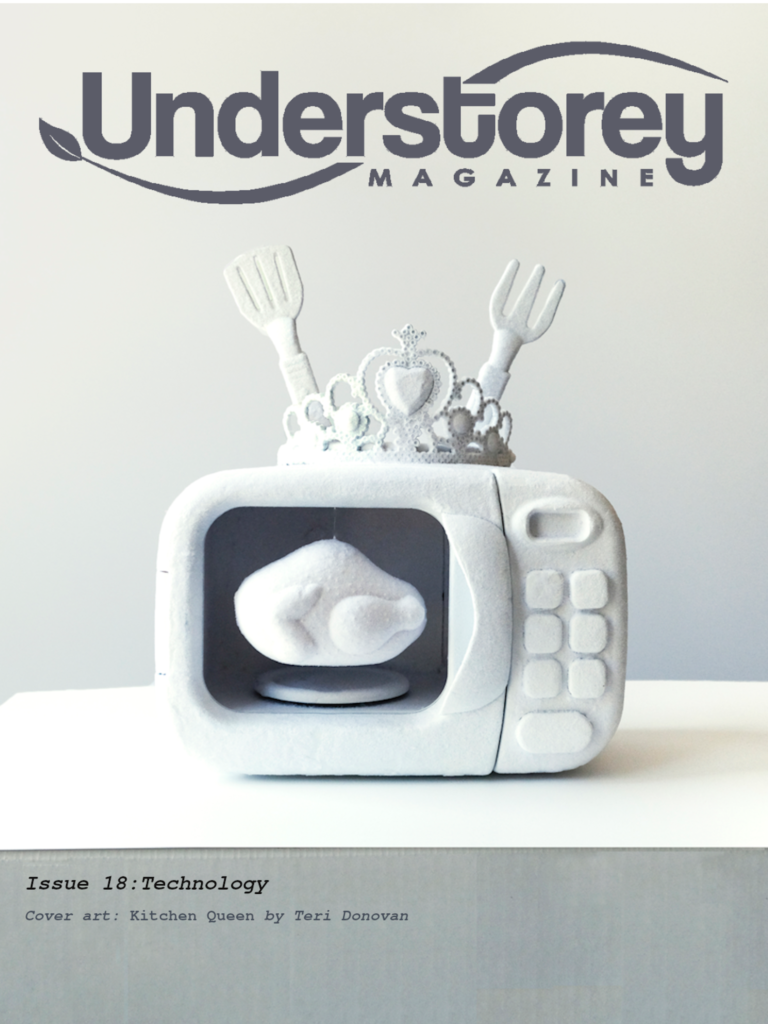
cover for Issue 18 showing art by Teri Donovan (fabric microwave oven with crown)

Thank you to our cover artist, Teri Donovan. Teri’s Kitchen Queen (plastic toys assemblage, spray paint, fishing line, white flocking) provides the perfect image for the many themes explored in this issue.

A special thanks to the Alexa McDonough Institute for Women, Gender, and Social Justice for their continued support of Understorey Magazine and for providing funds for this issue.

What Gets Measured Gets Managed

This entry was posted on by .


Physical fitness has always been important to me, though I never bothered to track how much or what I did. At best, I would make a mental note of the trails I had hiked or count laps in the pool. But after serious injuries sustained in two car accidents, tracking has become more pertinent. The physiotherapy and psychology clinics keep notes regarding my improvements, both physically and mentally, for my lawyer to review as he prepares the accident case.

With a chronic pain condition, swimming is the most comfortable sport. For many months, my ten-year-old, $12 stopwatch in its water-resistant plastic bag accompanied me to the public pool.

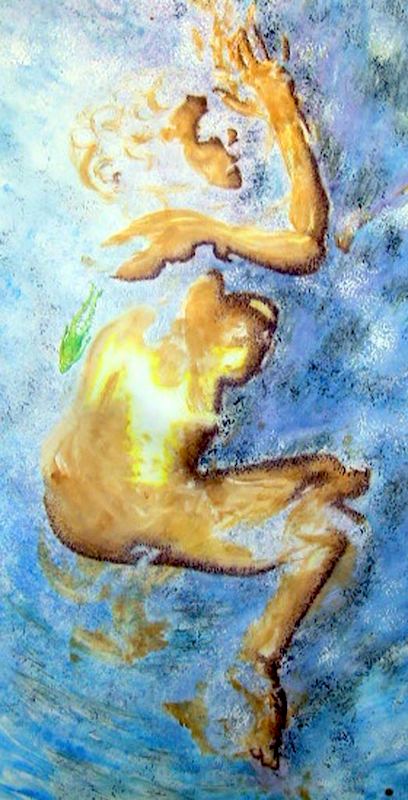
painting showing a woman floating in water

Spirit Stays Afloat by Rose L. Williams

As I started my laps one day, a man sharing my lane offered some advice about my choice of timing device: “You should get a watch.”

Taken aback, I replied, “I don’t have $200 for a watch.”

“This was a $330 Garmin fitness tracker on sale for $175,” he continued, clearly proud of his purchase.

I was annoyed with the criticism and moved into the next lane, where I received exactly the same speech from a different man sporting a $300 Tomtom fitness tracker–but he paid $180.

To be fair, I had considered a more expensive timing device before these conversations. Having heard the same speech twice in one day, I decided the time to upgrade had arrived. While I had no intention of paying $200 to do the work of my old stopwatch, I kept an eye out for a Boxing Day sale.

My new lightweight watch had myriad other features including tracking for indoor runs, walks, and pool swims. Outdoor tracking used GPS, handy for open water swims and hikes. In addition, it monitored sleep, steps, and heart rate, and included a cellphone finder, date and time, stopwatch, and could receive message notifications—all for $70 including GST.

My psychology team had concerns with the new purchase because I sometimes had trouble managing a proper pacing during my recovery, always attempting to “outrun my feelings.” Acknowledging that what gets measured gets managed, they worried I might push harder to continuously advance my performance rather than attend to my condition. I assured them that I only wanted to accurately keep track of my activities, especially my heart rate and sleep.

The fitness tracker came with minimal instructions, so it took a while for me to figure out how to track my heart rate, which inevitably shortened the battery life. When I started tracking hikes in the spring, the battery lasted only 8 kilometers as my heart rate fluctuated. By summer, my fitness had improved, and the watch could track up to 15 kilometers, if my heart rate remained steady.

Knowing my heart was stronger, on one occasion, I decided to lightly jog down a mountain trail. While I felt great, the fitness tracker kept alerting me that my heart rate was dangerously high. I breathed through my nose and slowed to a walk but the alarm continued until I stopped to eat. To my relief, trail runners have reported a similar problem with more expensive trackers. Another time, I thought my watch was broken, because it could not find my pulse, but everything else worked. I realized later my blood pressure was too low. With the timer feature, I sometimes take my pulse the old-fashioned way, more out of curiosity than concern.

Happy with my physical progress, the physiotherapy team complained about my poor sleep aggravating my brain injury. With stress and anxiety stemming from chronic pain, falling and staying asleep is difficult. Exercise from swimming and hiking induced a good night’s sleep, but on the days I didn’t do these activities, my fitness tracker recorded poor sleep patterns. By making a conscious effort to reduce my stress levels before bed, my fitness tracker has sometimes recorded a sleep score of 80, though I regularly score in the high 70s. The competitive edge never truly leaves; I never would have predicted that I needed to slow down to increase a score.

Insurance companies often incentivize people to use fitness trackers by lowering premiums or subsidizing the device cost. On the surface, these incentives help people become healthier. But because of long-term data storage, no one knows how the data might be used in the future. Premiums could go up if someone stops using the tracker–or companies could refuse to insure certain people based on their data.

I enjoy reviewing my exercise data at the end of the week, though the results often reinforce what my psychology team feared: I rely on the technology to help process difficult emotions rather than adopting a mindful approach to my feelings. I do find that tracking activities and seeing my progress makes recovery and goal-setting easier in many ways. At times, I worry if the insurance company can ask for my activity data. My lawyer warned me about insurance companies using social media posts against clients, but hasn’t voiced concern about my tracker. Maybe in the future, he will have to advise clients differently. And maybe in the future I will have some advice for the swimmers in my lane.

Algorithms

This entry was posted on by .


There’s a video that periodically haunts my Facebook feed under “suggested for you.” It’s of a hippo saving a helpless little impala from being attacked by a crocodile. The impala is stranded on a tiny island and is forced to enter crocodile-infested waters in a desperate attempt to make it back to shore. A crocodile catches sight of it and zips up from behind. Just as its jaws are about to snap down on the poor impala’s torso, a hippo intervenes. There’s a dramatic underwater wrestling match but the impala springs up and safely makes it to shore.

Sometimes I’m served different versions of this video, showing the same cast of characters but with ominous music, multiple camera angles, and an odd montage of stock footage. There’s nothing particularly troubling about the videos (the impala always makes it in the end) yet I flinch every time I see the videos in my feed. For some reason, the algorithms served up this story to me—knew that at some point I’d watch it when I was online late at night and searching for new ways to save my family.

*

Last February, when most people around me were going about their normal lives, I quietly began preparing my family for a range of worst-case scenarios. I had read articles about the mysterious virus causing pneumonia-like symptoms and although the odds of a global pandemic still seemed slim, I liked the thought of being prepared. I didn’t buy up all the toilet paper in town but after my kids were in bed, I kept busy with over-planning. I scraped together a two-week supply of canned goods, stayed up late blanching carrots and stuffing kale into small freezer bags, and kept tabs on social posts from friends overseas.

I ordered a cheap inflatable kid’s pool on a March night. Rational me was living in March but pandemic me was already five months ahead, in an imagined worst-case scenario where my family was quarantined during an unprecedented heatwave. I imagined the supply chain collapsed and the window air conditioner that cools our tiny apartment broken or not working enough to spare the kids from heat exhaustion. (As it turned out, our city did have a heat wave and there was a shortage of outdoor toys but our window air conditioner held on.)

I’m a journalist and trained to filter facts from fear and sift through mountains of information to find trusted sources. But I am also the mom who broke down in a Sobeys aisle on a Wednesday afternoon, when the grocery store shelves were bare and I was wondering if we would ever find diapers or carrots again.

*

About a month ago, I had a vivid dream. It was dark and I was standing on the deck of a marina near a lake where a few sailboats had docked. People were hanging off every part of the boat, drinking and wearing crop tops and just living their lives. Then out of nowhere, a massive, muddy wave swelled behind them and enveloped the boats. I screamed but when the water receded, I saw that the people had held on and continued as if nothing had happened. More waves crashed down yet they continued to emerge unscathed and the scene kept repeating itself as the waves got closer to me. I stood there desperately trying to figure out if I was the only one sensing the danger and if it was okay to feel this afraid.

*

By April, I knew of friends and colleagues who were sick. It was closing in on us and I scoured the internet for any new info I could find on COVID-19 symptoms, asymptomatic symptoms, how to spot COVID toes in children, the best face masks for kids, survival rates of people with asthma…. As expected, my social media feeds were filled with ads promoting everything from face masks to remote real estate to toilets (perhaps from my attempts to find toilet paper in stock?).

That’s when algorithms began suggesting the impala video and a stream of related videos, all showing various rescues: Animals saving helpless animals (like the hippo and impala), humans saving baby animals, dashcam footage of people performing CPR on a newborn baby. My stomach lurched each time—it was the last thing I wanted to see at a time like this—and I almost always scrolled past. But occasionally, a headline would hook me or I’d hover just long enough for the video to start playing and I’d know the algorithms would continue to find me.

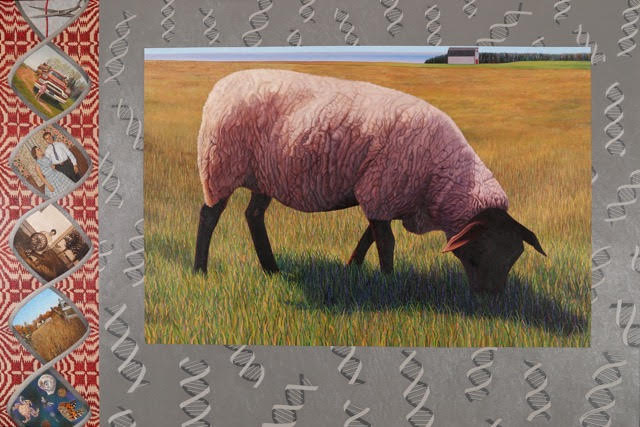
painting showing sheep with DNA strands and family photos

Fabric of Life by Brenda Whiteway

Algorithms are sets of calculations or steps that can solve problems and complete tasks. On websites and social media channels, they can analyze data, often drawn from our online behaviour and actions, to make predictions and play matchmaker. We see and read things that are more interesting or relevant to us (and hopefully stay a while or make a purchase). As we disclose information, read posts, and click on things, we kick up data about ourselves.

But sometimes it can feel like algorithms have a deep understanding of my needs, even before I do. Sometimes I’m no longer sure of when my actions are influencing the algorithms and when the algorithms are influencing me.

I watched a video where a young woman finds a baby shark on a sandy beach and drags it back into safe waters. In another video, a fox pup gets stuck between two fences, separated from its mother. A family rescues the pup and nurses it back to health but the mother fox knows her baby is there and comes back. She rips apart the backyard in a spectacular display of maternal rage—the remains of what looks like an inflatable pool strewn across the yard, arms ripped from dolls—as if to say, Give me back my baby now! Or at least, Don’t forget I’m still here! The human caregivers hatch an elaborate plan to reunite them and fuzzy footage shot at night shows the mother fox picking up her baby by its scruff. They run off together, reunited at last.

*

We were fortunate to be isolating during the pandemic yet I was buckling under the weight of trying to give my kids a “normal” life from inside our bubble. My daughter had ballet classes over Zoom and we played games, listened to records, and danced. We turned down the radio when the news updates came on but there was often too much worry to contain.

Rational me took comfort in the statistics and survival rates for kids but I still held them tightly each night. My partner and I had our babies a little later in life and have health issues. When the kids were fast asleep, I scoured online forums looking for answers to the one question I couldn’t find a statistic or scenario-plan for. But who will take care of the kids if we get sick?

One night, I assembled small packages of family heirlooms and memories for each of them, just in case. I thoughtfully divided jewellery, printed photos, and random things I’d tucked away in drawers, like their first scribbles and the tiny hospital bands we’d snipped from their wrists in the days after they were born. It was therapeutic in a way because I realized that I am not actually afraid to die—I’m afraid to leave my kids.

I tell my children I love them ten times a day but can never find the right words to describe the actual extent of my love. When I try to think of the words, I instead visualize random objects overflowing, like a flower vase left under a running tap in the sink. During a crisis, that overflow of love gets funnelled into over-planning. I perform a sequence of small actions, as if I’m spinning them a safety net made from random tasks they will never know about. I have always worked hard at keeping them alive. I hold their hands as we walk across swimming pool decks, slice their grapes into quarters, keep them away from unleashed dogs. I transfer a few dollars into a RESP each month. Rational me says this isn’t the right time but pandemic me is parenting a decade in the future, just in case.

*

In a latest dream, I am on the edge of a diving board above a public swimming pool and there is a long line of people behind me. Everyone’s telling me to go ahead and jump in with my baby in my arms, to not worry so much. I do jump but when we plunge underwater, I can no longer see him in my arms (or anything else for that matter). I start to panic and hold him as close as I can. I frantically kick my legs to get back up to the surface before he slips from my grip or tries to take a breath. As we burst out of the water, I look into his stunned little face and his wide brown eyes directly in front of mine and I’m certain he’s terrified. Then out of nowhere, he breaks out in the biggest smile—completely unaware of the danger that had just surrounded him.

 

Pretty Corners Catch the Eye

This entry was posted on by .

Pretty Corners Catch the Eye

there was no way to tell
before
just how
hard a floor could be
                     no reason to know
the hours one could zoom
through days
dazed, cross legged
seated posing
laptops on laps
tablets on tummies
work life balance

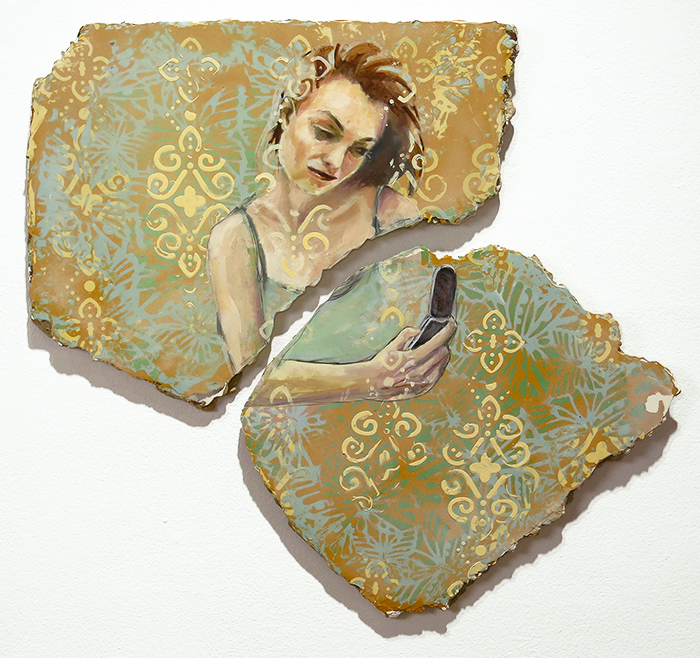
painting by Teri Donovan showing woman holding cellphone and decorative background

Circa 2008 by Teri Donovan

charging souls
previewing self
on mute
(unmute)
finding all the pretty corners

wanderlust in dusty corners

trying to seduce
nature onto shiny
plastic trees

                     editing myself
                     for myself

curating tiny boxes
for tiny boxes
moveable backstories involving art
or if they don’t they will

a teak lamp
an old typewriter
anything whimsical, whiskery
(Oh, the cats)
dressing to catch the eye and say

                     i’m happy here
                     i’m just fine
                     my minutiae tells you so


Karaoke Machines and Asian Pop Stars on the Prairies

This entry was posted on by .


In the early 1990s, I was in mainstream public elementary school in Calgary during the week. On the weekends, I was a student at the Calgary Chinese Public School in Chinatown. At the time, my father co-owned a Chinese restaurant. There were days and nights when I spent time in the manager’s office behind the reception counter after climbing a set of stairs from the street-level entrance. There, I worked on homework and played with office supplies.

On nights when there was karaoke and dancing, I sometimes got to peek out and watch as the evening progressed. In the darkened room, above a sea of heads belonging to diners, a projection screen was lowered. It hung from the ceiling just in front of the service bar that separated the dining room from the kitchen.

A karaoke hostess was hired on a weekly basis to lead the crowd in rounds of singing. The karaoke machine stood on top of a black, wooden cabinet. The hostess handed out the binders of songs to choose from. When someone in the audience had their turn, she opened the cabinet and selected a 12-inch, shiny laserdisc. As each restaurant guest took a turn at the microphone, music videos played on the projection screen.

One evening, a restaurant guest sang a particularly emotion-filled song, and the projection screen showed a music video that remains in my memory, though I do not remember what song it was or who performed in the music video. On the screen, a woman appeared to float in a landscape of darkened clouds as she walked among Asian male angels or ballet dancers. They stood at attention, their wings folded back and their muscular upper torsos exposed.

I think that was when my love of Asian music and pop culture began.

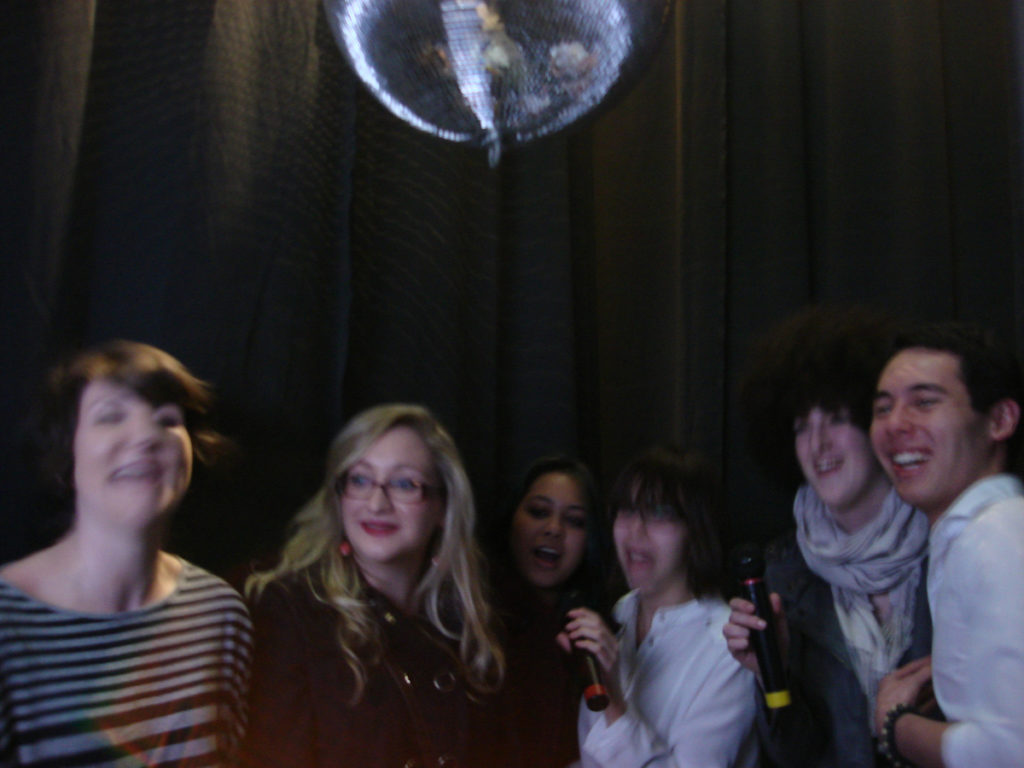
photo showing a group of people singing karaoke

Tcang Tchou Karaoke Lounge (installation) by Karen Tam

Over the years, from that time at the restaurant to the age I am now, in my late 30s, I have returned again and again to the music and musicians who made their names in Hong Kong in the 1980s and 1990s. It began with the music on the karaoke discs, but eventually led to music broadcasted on Fairchild Radio and discs borrowed from the public library, which had built up a collection of music in various languages and from different parts of the world. I have also bought my own CDs from Chinatown in Calgary, CDs filled with songs performed by musicians I learned about during junior high school when some friends collected trading cards of Hong Kong pop stars.

As I write this essay, I am listening to the songs of celebrated Hong Kong pop star Alan Tam, who was very popular in the 80s. I am trying to choose just one of his songs to play on the radio show I host on CJSW 90.9 FM, the radio station at the University of Calgary. I listen to Alan Tam regularly at home, but have yet to play any of his songs on the radio show. As I listen to his music now, I feel many different things.

The music, film, and television created in Hong Kong leading up to the handover to China in 1997 is a significant part of the cultural legacy of Hong Kong—and also has personal meaning to me. My family is from Guangdong, China, but my dad lived in Hong Kong before arriving in Canada, where I was born. My parents focused on work and had little time or money take us kids back to Hong Kong, so it was through music and television that I stayed connected to a place and culture that I felt drawn to as I went to high school and post-secondary school in Calgary and as I focused on becoming a writer and journalist.

After YouTube launched in 2005, the platform quickly became a place to view many of the Asian pop stars I had grown to love through music videos, karaoke videos, and concert footage. Since that time, the pop music and media industry has drastically changed in Hong Kong and China, with new artists promoted every year on new digital platforms. But I return to the same musicians again and again. Along with Alan Tam, I often listen to Faye Wong, Sandy Lam, and the late Leslie Cheung. When listening to pop music of the former British colony, and I feel a nostalgia I cannot quite explain.

Even now that I can easily access the music online, I have kept the discs, the ones I purchased in Chinatown, as well as the old 12-inch karaoke discs that remain in the black cabinet along with the karaoke machine in the basement of my home. I don’t know what will happen to the karaoke machine. The laserdisc format did not gain widespread popularity in North America; in Japan the company Pioneer bought the technology and manufactured the machines for home and restaurant use in Hong Kong and Southeast Asia. With the introduction of the DVD in 2001, the 12-inch laserdisc became less appealing. Over the years, it has become difficult to service the older equipment. Until our old karaoke machine is somehow repaired, the discs will stay inside the cabinet and serve as a reminder of the music of my childhood and where those late nights led me.

My father owned the restaurant for only a few years, and I would eventually leave Chinese school, as I had to focus on credit courses in mainstream public school. In university, I took one class in Mandarin for beginners. It was—and continues to be—through television, music videos with Chinese subtitles, and karaoke videos that I have kept up my reading comprehension and listening skills in Cantonese and Mandarin.

While attending journalism school in the mid-2000s, however, I found myself part of the art and culture scene in Calgary. I became involved with CJSW radio and went to spoken-word poetry events to record them for broadcast. I became a host on the feminist radio program “Yeah, What She Said,” which lead me to attend and cover Take Back the Night marches. I also volunteered for music festivals, signing up to be a venue manager.

I sometimes sing karaoke, too, but not very often. When I do sing, I usually choose “Heart of Glass” by Blondie or “Don’t Speak” by No Doubt. I have also sung songs by Shania Twain. After all this time, I do not have the confidence to sing in Chinese. But whenever I want, I can take out the 12-inch karaoke discs, search for the songs online, and practice.