Archives

Animal Kingdom

This entry was posted on by .

Richie and I were almost finished our morning constitutional, once around the lake, when he sprang it: “Why don’t we have a baby?”

The call of a passing loon muzzled my response as I stooped to pat a French bulldog, a veritable blob of lard on the trail. These pre-work strolls are one way of fighting our middle-age spread. More importantly, they’re a chance for me to see dogs. Richie isn’t a dog person.

Straightening up, I brushed a pine needle off his jacket’s Why sleep with a drip? logo.

“That is so juvenile.” I laughed and sipped my Timmy’s—double-doubles also part of our routine. Richie gripped his cup in his teeth, felt for his keys. A plumbing contractor, he’s always feeling for something. Likes a bit of fresh air before facing the day’s “sore” gas, as he pronounces it.

“I’m serious,” he said.

I listened to a squirrel nattering, gathering acorns for winter though the leaves had only just started to drop. A Shih Tzu charged after the bulldog. Neither breed makes great petting material, as I prefer larger dogs. Given the slim pickings, I might as well have been at work, getting ready to open the shop. Then Richie blindsided me again: “Here’s the deal, Cher. I’ll give you a dog if you give me a baby.”

Like being laid into by a Bullmastiff, I nearly fell out of my flip-flops. Next, it was as though some pricey shop swag had tipped over and smashed: we both went mute as if gauging the damage. Birds and squirrels alike shut up. You could’ve heard a salamander scoot for cover. Richie was serious?

“I mean, hon—you’re not exactly a teenager.” He shrugged helplessly. “Piss or get off the pot, right?”

“A baby? Really? For starters, you have to take classes, learn to breathe and that.”

“You can’t just get that on YouTube?”

“Drive me to work.” I centred my thoughts on the relaxation CDs collecting dust in the shop. Would pairing each six-disc Call of Nature set with a pine-scented candle help move them?
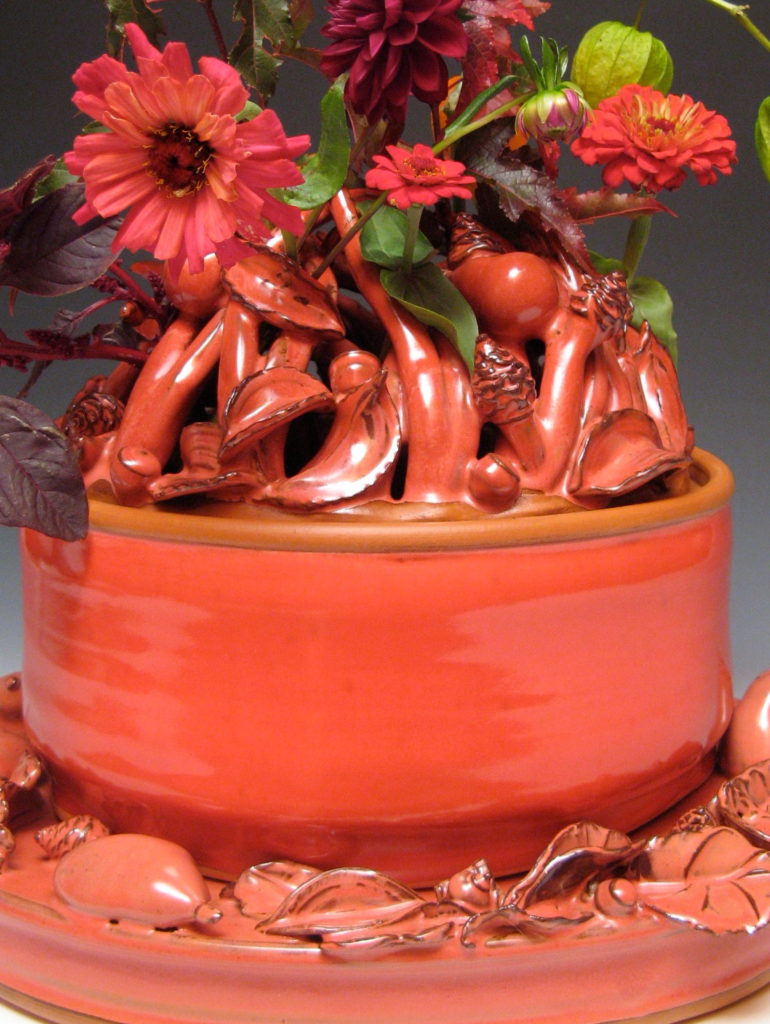
 

ceramic flower brick by Joan Bruneau with many flowers and creatures

Autumn Flower Brick by Joan Bruneau


Richie didn’t speak again until we got in the truck. “We’ve been together three years. Isn’t a baby the next step? I mean, where else can the relationship go? Think of the fun we’d have making it.”

Fun. My libido was a twinge roughly in the vicinity of the IUD I hoped to have removed someday before I expired—and not in hopes of pregnancy. “No, you piss off. I’m forty years old!” He also knew I’d wanted a puppy since forever, long before he’d entered the scene. “Besides, I know you’re not serious. I see that look you get watching people’s dog videos.”

“Right, I get it. You’re too busy. Scared of being a shitty parent.”

“Sure, okay, whatever.” I took a hasty swig. Lukewarm coffee dribbled down my blouse better suited, perhaps, to a nubile teen. I was happy to have reached the stage where of the three Bs—business, boobs and babies—only the first rated.

“Really, Cheryl. I’m not kidding. You’d be great.”

“You’re being an ass.” I shook his empty cup. “Never wanted a kid before, why now? Feeling your age?” Age was something we skirted, his being four years younger.

We gunned it out of the gravel lot. “Like, all this time building up the plumbing business. Who’ll I leave it to?”

“That’s just BS.”

Yet, dropping me off, he sounded hopeful: “You’ll consider my offer?”

I jumped out of the truck, gazing at the portable sign I rent by the month and have outside the shop. I retrieved a half-eaten burger from underneath it. What every woman doesn’t want: picking up after littering arseholes.

A relief letting myself into the shop. A place where a gal can be at home with her thoughts and feelings without some guy inflicting his: this describes my business plan. Bed to bath décor and self-pampering items for the woman who has everything. And feeling in need of something right now, I bee-lined to the handbags I’d brought in for fall, the best Prada knock-offs available. Faux python, fringed pleather. I selected a rust-coloured one, admired its proportions against mine in the mirror. What I saw was a person in command of her likes and dislikes, of life generally, and not shy about letting anyone know. The purse complemented some other fall merchandise: cinnamon and pumpkin spice candles and marsh heather wreaths decorated with red, orange and gold silk leaves. The comforts and joys of post-Back to School, anticipating Thanksgiving. Shelves of summer stuff hadn’t sold though: beach bling, fairy figurines, tole-painted garden accents, the whole nine yards. But any luck, with kids out of their hair my regulars would have more time to shop.

First things first though, I rustled up the letters to re-jig the signage. What Women Want!!! Endless summer. B.O.G.O.!! Richie deserves credit for coming up with the store name: What Women Want. Not babies, at this stage in life. His oversight stung me. Here’s a man who, at petting zoos, lets goats eat from his pockets but won’t allow a dog in the house. A guy who thinks nothing of unclogging condoms from septic systems yet balks at using one.

I dug for my phone, punched in his number. When he answered, his voice echoed as if trapped in a closet. A trickling sound triggered my need to pee. “You know how I feel about children. How dare you raise it?” I said, and hung up.

Busying myself, I ran the feather duster over some crystal elephants, pigs and rabbits, all sweetly displayed on mirrored shelves, and tidied some hand-painted rocks. I rearranged bath bombs and cupcake soaps so realistic-looking that someone’s toddler had taken a bite out of one. As I orange-stickered the summer clearance stock, a sudden gloom descended: my entire adult life I’d made a point of avoiding exactly what Richie had suggested, starting a family. Though I’d always wanted a puppy, I’d never had space for one. It didn’t seem fair to get a dog then leave it crated all day.

My phone tinkled. Richie. I let his call go to voice mail. I put on a squirrel CD, lit a balsam candle. Composed a pitch: Bring the outdoors to the bedroom, let him take you glamping not camping. The trick, I told my clientele, was letting your man think you were doing it for him: bubble baths by candlelight, juniper and jasmine perfuming the sheets. I dusted the angels by the cash, re-arranged the plaques. My favourite salad is a G&T. Every hour is wine o’clock. Taking a break, I watched a talking dog on YouTube. Maybe I could start a sideline in canine accessories, do for dogs what others had done for cats—but not until the summer merch cleared. I visualised a promotion, Queen For A Day, raffle tickets on patioware with a dollar-store tiara thrown in. Treat yourself!!! If necessary, the beach bling could be stored, cruise season was just six months away. The season of legal abandonment, a mom called it once, juggling twins while she hunted for dragonfly earrings.

Until meeting mothers at the shop, the most exposure I’d had to kids was driving past the daycare. Most people know better than to bring children into the store, thanks to the Break it, you buy it reminders posted everywhere. Fair warning. Still, ladies with babies and toddlers sometimes slip in, quilted diaper bags slung over their shoulders. The awful pastel accessories. Wipes, bottles, diapers, formula. Imagine leaving the house with all that crap. I draw the absolute line at strollers. The stroller stays outside, I’ve said on several occasions. What would I do with a baby? Then there’s the crying.

Fighting my gloom, I imagined Richie’s bribe. Visualized a panoply of breeds. Shepherds, huskies, collies. Sheepdogs, doodles. Beagles, pit bulls, basenjis, rotties, barring schnauzers, cockapoos, spaniels. In a welter of imagined yips, visions of pink and blue suddenly swarmed my brain, a Walmart’s worth of baby stuff. And it hit me squarely, honestly, how wanting things is what makes the world go around.

Things you didn’t even realize you wanted until someone planted the seed.

Especially things that might be harder to get with age.

Something you unexpectedly decide might not be such a bad idea after all.

A baby.

The phone rang. Richie, again. This time I picked up. His voice was a freight train: “You won’t believe this morning’s job. Kid flushed a dinosaur down the john, the mom flushed a diaper. By accident. What was I thinking: a kid?” He was on a break, would see me in a sec.

When he walked in, he was all “Whatcha saying, Cher?” Like the deal had never been proposed and nothing had come between us. His coveralls were stained and he smelled a bit bad. Oddly, he went straight to the purses too, chose my fav.

“You should be home taking a shower.” I waited for him to bring it up. Knock me over with a feather. I wanted him to bring it up.

“Kids running the show at this place. Total animals. The parents, nice people but useless. Epic failures. If I ever mention a baby again, shoot me. No wonder they make you take breathing lessons. Fuck.”

Only then I noticed something moving under the top of Richie’s coveralls. When he tugged down the zipper, a tiny head squirmed free. It was a teacup Chihuahua that just fit in his palm, smaller than a wallet.

“Who knows what got into me, springing that on you? Must’ve been something I was smoking. Us having a kid!? Craziness. Don’t worry, it’s passed.”

Gentle as could be, Richie slipped the pup into my favourite purse. “There you go, babe. Accessorize. ‘Pimp yo’ puppy.’ Like her?”

I held the purse tight. The pup was like a baby kangaroo inside its pouch.

“Looks good on you, Cher.”

It did, and, short of Timmies becoming some magic elixir of youth, I had what I wanted. Sort of.
Blood

This entry was posted on by .

Many moons ago, when I first started reading books about feminist theory, I ran across a chapter on menstruation and oppression. Like all young women I knew at the time, I’d hidden pads and tampons to make furtive trips to the washroom. I’d smiled and carried on through period pain. I’d spent far too much of my student budget in the “feminine hygiene” aisle. So the words menstruation and oppression seemed a logical fit. I kept reading.

The chapter suggested ways to free ourselves from the stigma and confines of the period. Quashing stereotypes and jokes about PMS was a good start. Advocating for reasonable prices and tax-exemption on menstrual products—I’d buy that. Giving up wasteful industrial products completely and sewing our own. I wasn’t much of a sewer, but sure.

The arguments made a lot of sense—right up to the final suggestion, a recommendation sufficiently ludicrous and thought-provoking that I’ve remembered it for decades. Forget “managing” your period, the author said. Just bleed freely.

The idea that women should not try to stem blood flow was new to me and I failed to see how it could possibly be liberating. Who would haul all that extra washing to the laundromat? Who would hire a free-bleeding chef or housekeeper or surgeon? Who wouldn’t stare at a free-bleeding shopper in the check-out line?

And yet free-bleeding isn’t new—or old. Or even that ludicrous.

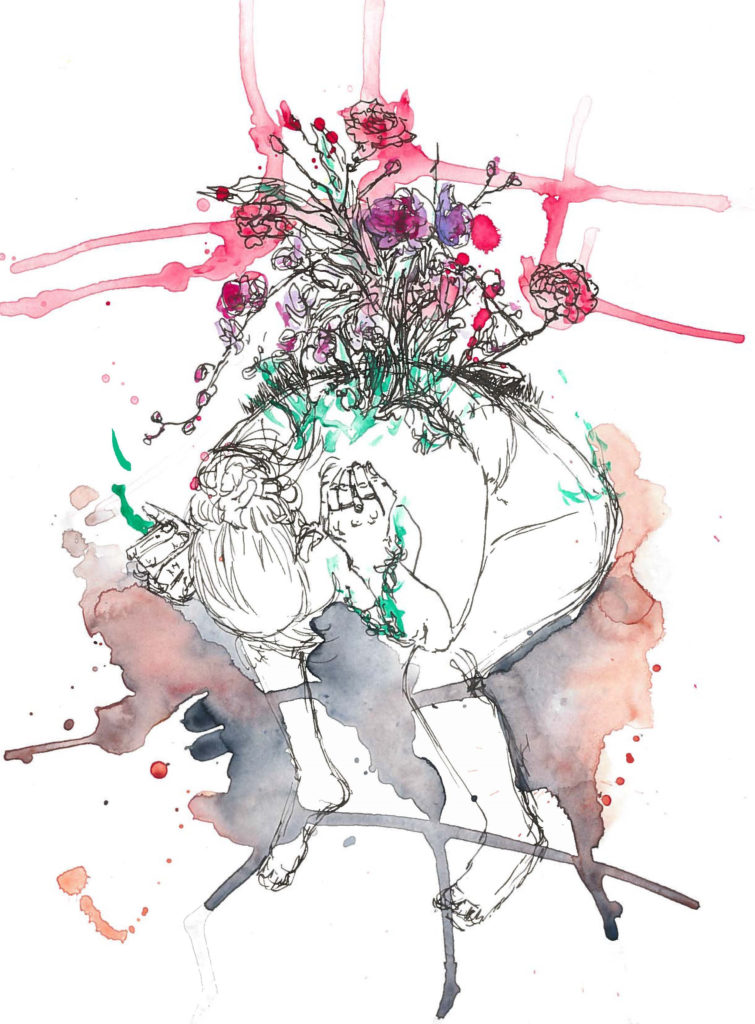
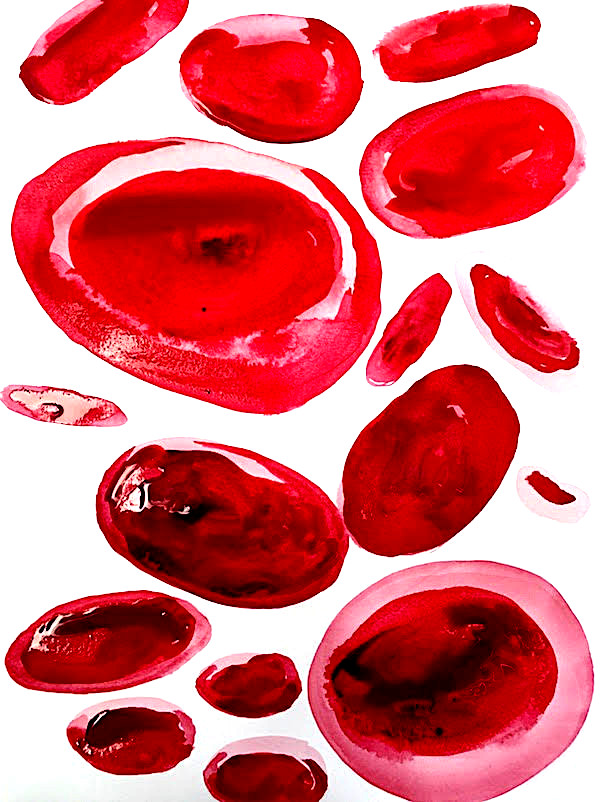
Blood Red by Michelle de Villiers

The historical record on menstruation is, shall we say, spotty (most history is recorded by men), but it’s believed that women have bled into layers of clothing for centuries, simply because they lacked the time, resources or pressure to do anything else. Pads and tampons were developed in the late nineteenth and early twentieth century, but a short and more overt free-bleeding movement arose in the 1970s, partly in response to toxic shock syndrome. The more recent revival of free-bleeding is sometimes attributed to an infantile, anti-feminist hoax but is more accurately a serious and conscious decision by some women to compete, practice and create art while bleeding.

So, yes, voluntary free-bleeding was—and is—a thing. These days, it’s not the norm but the women who practice it, whether for personal, environmental or political reasons, have helped to start a discussion, made a point. And for the rest of us, that discussion is the point. I may never be ready for free-bleeding but I’m most certainly ready for free-speaking.

There are over 3.5 billion women in the world and most menstruate throughout their adult lives. That’s a significant part of human history, society and culture currently confined to the bathroom stall. So can we talk about the cashier who is given a four-hour shift without a break? About the student who can’t leave the room during a three-hour exam? Can we talk about how displaced or homeless women can maintain dignity when society pretends periods just don’t happen? Can we recognise conditions such as endometriosis (my spell-checker doesn’t even know this word) as nothing less than a chronic disability? Can we stop disguising pads and tampons like some sort of contraband and aim for open-carry?

This issue of Understorey Magazine is all about blood—free-speaking about its many forms and the many ways it affects women’s lives. Through literary writing and powerful visual art, we share stories about the blood of the uterus and the blood shed, both literally and figuratively, during conception, miscarriage and childbirth. We hear of the blood that flows throughout our bodies and how that flow may be interrupted by something as tiny as a “delinquent” valve or as looming and eternal as illness and death. Several authors write of blood unleashed by intolerance and hatred but also through love and friendship. And we look beyond individual bodies to explore blood shared across generations, how bloodlines carry secrets, and how secrets revealed—secrets spoken—can empower.

Please enjoy, reflect and share.

Behind the Door

This entry was posted on by .

Behind the Door

The ache wakes her,
her breasts so hard and tender.
Something wrong with the nipples.
How they pull inside her
when she’s cold
like fists.

If it isn’t breasts, it’s hips.
Femurs lengthen in the dark hours.
At times, she limps.
The socket
no longer fits.

Changeling.
Legs so long, she sees
into the eyes of the elders,
combs hair across her face.

Tears and blood,
she hadn’t asked for this.
Childbody lost
as if the fairies came in her sleep.
Left her with this stranger.

At night, when bones grow,
when fur spreads
like moss over crevices,
when secrets bleed
into sheets, she presses
an edge, just here,
sharp, against
her own absence.

Rose by Larissa Monique Hauck

Africa: An Apology

This entry was posted on by .

Dear Africa,

I want to apologize. I had no reason to abandon you. I had no reason to push you away. I wanted to hide from you. I wanted to pretend that you didn’t exist. But I know you have always been in my blood. Rushing, pumping, flowing.

As a child, I remember enjoying the uniqueness of my family. My mother was an Afrocentric, biracial woman with a strong desire to expose her children to diversity and equal opportunities. My father was a tall, dark Angolan man who was funny and spoke to everyone with a natural grace and fluidity. Our home was filled with beautiful African décor. Our dinners consisted of traditional Angolan foods that stuck to our bellies. The rhythmic sounds of Semba and Kizomba bounced off our walls and I would bask in its comfort. Occasionally, we would get together for parties with other Angolan families in Toronto. There was laughter. Dancing. Music. Food. This was one of my first experiences of community. I was proud of my family and what we represented in our small, southern-Ontario town.

And then, suddenly, I wasn’t. I wasn’t proud of my culture. I wasn’t proud of who I was and where my ancestors were from. I didn’t want to be associated with Angola or known as African. For a long time, I disconnected myself from my African bloodline. To this day, I am unsure why.

There was shame; maybe I thought you were not good enough. There was ignorance; your standards of beauty didn’t seem to measure up. There was embarrassment; your history hasn’t been victorious. You were the defeated land, the place that had lost every battle. So please understand that a part of me also felt lost and defeated.

I wanted to escape our connection, relinquish our relationship, cut all ties. Almost instantly, I removed you from my life. I told myself I wasn’t African. I told others I wasn’t African. I omitted certain details from answers to questions about my family. The process of removal was not elaborate or complex—I simply decided one day that I no longer wanted to be connected. I pushed you into a dark closet, locked the door and threw away the key.

It took a lot of growing, heartache and inward reflection to accept that my blood is my blood and nothing can change that. I started with forgiveness. To change the lens through which I saw you, I needed to forgive the person who represented you: I needed to forgive my father for his growing absence in my life. With time, Africa, you no longer represented an estranged relationship. You were part of me that I had neglected for years.

Today, I see your beauty. The face of my grandmother. The faces of the Mandume women whose tribal blood runs through my veins. The faces of the Mwila women whose dreadlocked hair resembles mine. When I catch my own reflection, I see your details in my face. My eyes, nose and lips resemble that of your beautiful warrior people. I share their blood. My daughters share their blood.

Africa, I now long for the opportunity to meet you. To step onto the lands my father called home. To smell your air. To touch your roots. To feel your sun. I admire you. In a world of constant flux, you continue to prove your resilience. I stand still in your waves of strength. At last, I stand still in your undertow of tenacity. And I no longer run.

You make up everything that is great within me. My blood is thick with your culture and rhythm. My blood pulses with your wild tenderness; your mysterious softness. An unstoppable current of unchangeable identity. I am grateful to have finally found peace in your arms.

With love,
Ciana Paulino

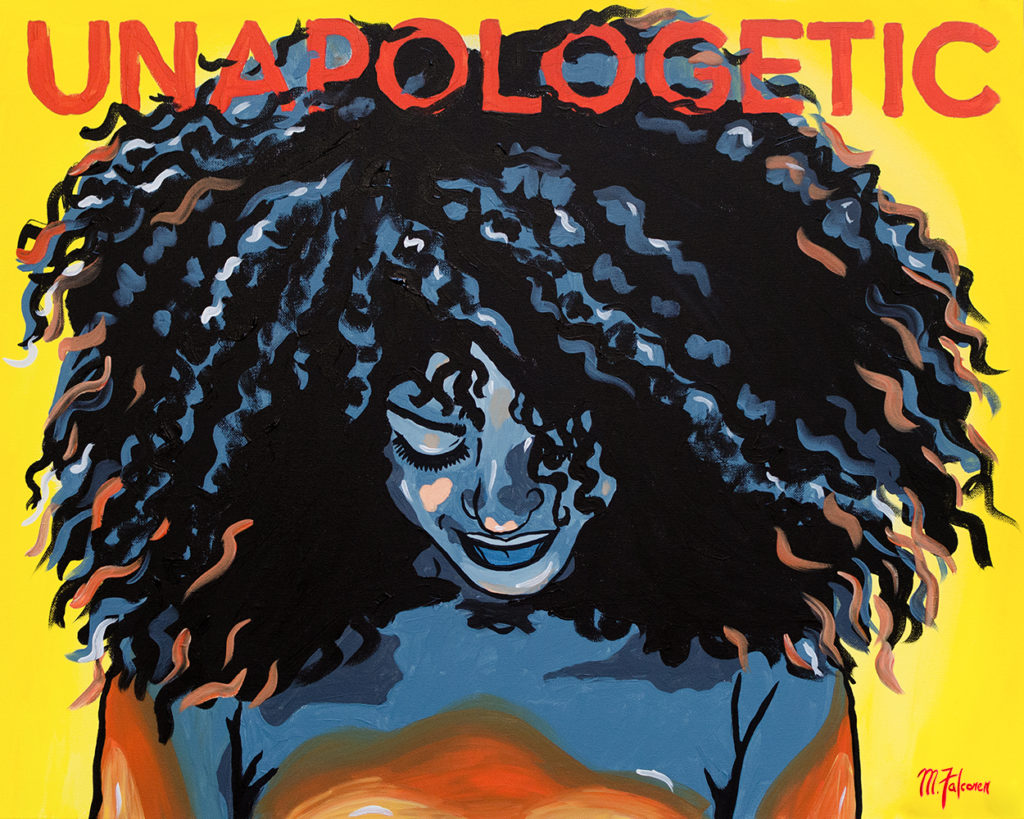
Unapologetic by M. Falconer

Mabel’s Fable

This entry was posted on by .

1:1

Once upon a time on a warm autumn night, a girl was born on a farmstead in Craigleith, Ontario.
Orchards surrounded the farmhouse and the air was ripe with the scent of blood and fallen apples.

The doctor observed the baby lying in the palm of his hand. Said, “Best not to feed her. Just leave her on a pillow near the open window. She’s much too tiny to live through the night.”

But the baby didn’t die. She grew into a woman who was small, but mighty. When she turned sixteen, she left the farm for the city to find work. She waited on tables in a café where she could watch the ships come in as she poured re-fills of thick, black coffee. She had a child. Years later, her child would have a child. Me.

This much is true.

1:2

Both Cinderella and Snow White are victims of wicked step-mothers: sharp stab of poisoned apple in the throat, the burn of lye on red-raw hands.

Step-fathers or step-grandfathers (even secret ones) rarely figure in fables. We therefore don’t know how they would relate to the main character. Good or evil? Divine or dastardly?

1:3

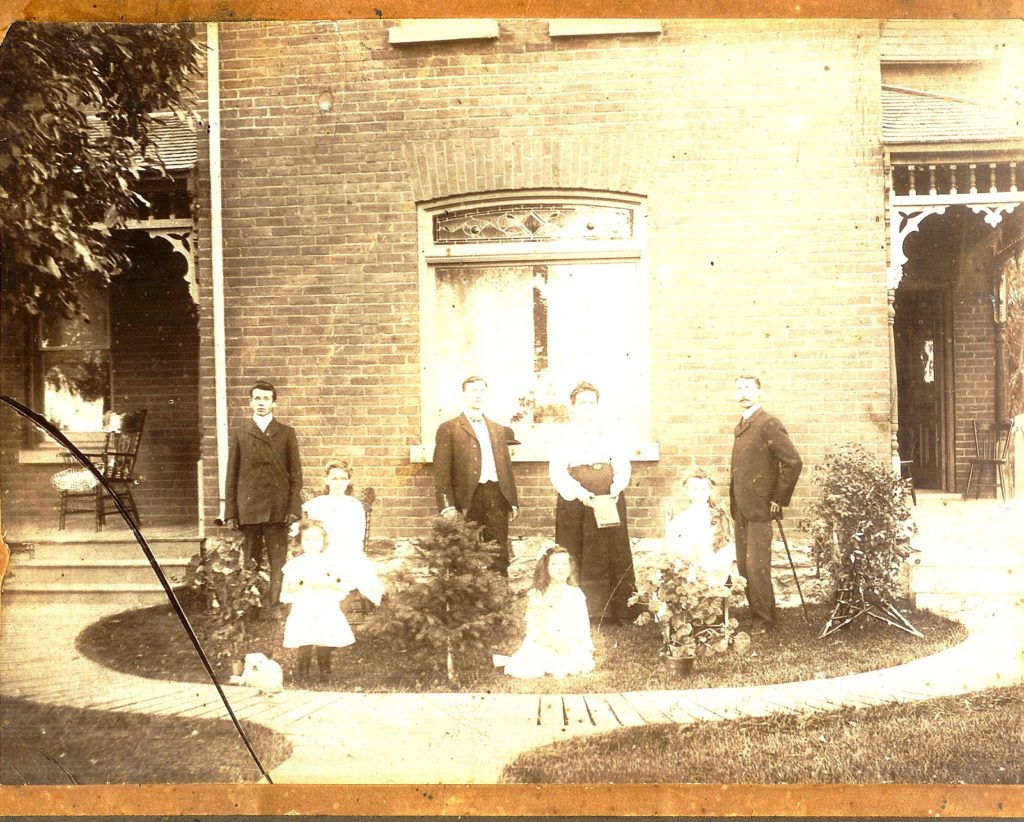
Gill Road is named after my great-great-grandfather, Perry Gill. He begat Whitford and Ermiza who begat Anne who begat Clarence, Howard, Alberta and Mabel. There’s a pioneer cemetery down the hill from the farm. I play among the weed and wildflower, reading the tombstones like braille. Grandma says she has a little sister sleeping under the moss. There’s no marker because she died before she was baptized.

Didn’t God want her?” I ask.

1:4

In the farmhouse kitchen, molasses drips thick from the measuring spoon into the broad-brimmed bowl. Outside, barn swallows chatter and help hang laundry on the line. Grandma, in her mint-green dress and daisy print apron, shows me how to measure the bran, sift the flour, fold in the buttermilk. I run my finger along the side of the bowl and lick the batter from sticky fingers. She says, “I had four marriage proposals you know. One of them was from a millionaire.”

Grandpa sits at his desk while we bake, Bible open, scratching out his Sunday sermon.

1:5

“Fewer than one in four Americans now believe the Bible is the actual word of God and should not be taken literally word for word. Similar to the 26% who view it as ‘a book of fables, legends, history and moral precepts recorded by man.'”
—Gallup Poll 2017

1:6

In 1969, with the slogan “The state has no business in the bedrooms of the nation,” Pierre Trudeau’s government introduced the Omnibus Criminal Reform Bill, legalizing abortion, divorce and birth control.

But in 1949, section 251 of the Criminal Code implied that women who have abortions could be charged with breaking the law.

This didn’t stop Grandma from trying. Twice.

1:7

Mabel’s lover visits her in hospital, a wave washed to shore only to pull out again on the next tide. The baby begins to wail, scared of the man’s faceless shadow silhouetted against the wall. He ignores the girl, says, “I’d marry you Mabel, but I don’t want a child.”

After he leaves, two different nurses offer to adopt the baby, so Mabel could be free to run away with the handsome Irish? Greek? Italian? man who had come to visit. The faceless man hadn’t begged, and he only asked once, and this was not enough for the woman who survived her first night on earth being left on a pillow to die.

1:8

Birth Certificate

Name: Violet Alberta Gill
Place of Birth: Etobicoke, ON
Date: November 12, 1949
Sex: F
Father: ________________

1:9

A bastard shall not enter into the congregation of the Lord.
—Deuteronomy 23:2

2:1

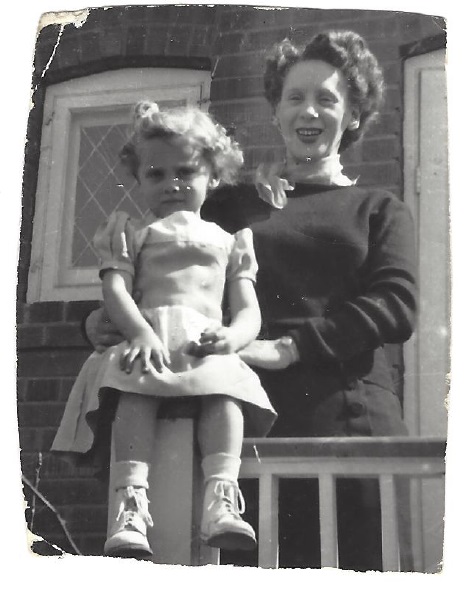
Once upon a time, there was a young man named Arthur, who was engaged to be married. He lived with his mother in a bungalow in Etobicoke. A woman and her six-year-old daughter rented out the basement. The little girl’s father never came around and the woman, Mabel, didn’t wear a ring. Even though the woman was ten years older, and his mother thought she was a loose woman, Arthur knew he’d never love anyone more, so he broke off his engagement and asked Mabel to marry him.

Adopting my mother, Violet, would be a small price to pay for true love.

2:2

Mom,” I asked, “Why do Grandma and Grandpa both have blue eyes and you have hazel?”

2:3

The laws of genetics state that eye color is inherited as follows:

1. If both parents have blue eyes, the children will have blue eyes.
2. The brown eye colour gene (or allele) is dominant, whereas the blue eye
allele is recessive.

Therefore, if a child born to two blue-eyed parents does not have blue eyes, then the blue-eyed father is not the biological father.

2:4

Marrying a family is not a bad thing, but can be a beautiful thing. I wish this blessing for you.
Of Human Bondage, Somerset Maugham

2:5

Some believe the expression “Blood is thicker than water” originally derives from the biblical phrase “The blood of the covenant is thicker than the water of the womb,” implying that the currently accepted meaning is the opposite of the original intention.

2:6

My mom snuggles into my dad’s shoulder as we walk from the farmstead along Gill Road to the general store. “I want an ice cream daddy,” she says to him in her little girl voice. I am eight years old and quiet for my age.

2:7

Urban dictionary: Daddy Issues

What a girl has when she is rejected by her father. Often results in her having trouble finding a significant other and trusting people. Girls with Daddy Issues will sometimes marry older men.

2:8

My mother carried the secret of her faceless father like a slow-growth cancer. She burned the paper trail to the blood truth. I sift through the cold cinders till my fingers are grey with soot, knees red and raw.

2:9

In the orchard, I climb into the gnarled arms of an apple tree and pluck a piece of ripe, red fruit. A snake drops down from the branch above, flicks its forked tongue and hisses, “Tasting of its flesh won’t give you the answers you seek.”

I ask, “Do you know who the faceless man is?”

He moves in and out of shadows. He swims in your blood, and that’s all you’ll ever know.”

“But if I eat of the fruit, won’t I know all things good and evil and all that lies in between
?”

The snake laughs, “You’ve been reading too many stories.”

2:10

Fable is a literary genre that illustrates or leads to a particular moral lesson; however, this style of story-telling has gone out of fashion.

2:11

Grandma at ninety-two taps the bedcovers, her body cradled in a field of polyester violets. She beckons for me to lay down beside her. She’s grown tinier still, but heavy with secrets. Her skin smells of lavender and talc. We curl around each other, fetal. A story with no moral and no neat ending, waiting to be born.