Archives

Tonic

This entry was posted on by .

Growing up in Newfoundland, long before the ubiquity of flu shots and antibacterial hand gel, my siblings and I went through more than our share of winter sickness. My mother took care of us. Mild colds and regular flus to more serious illnesses like chicken pox or measles—all were indulged in the same manner: a steady regimen of lying on the living room couch, cozy under a blanket, with the TV on and a glass of flat ginger ale and stack of saltines on the coffee table.

But before the couch was made up and ginger ale brought from the kitchen, my mother would kiss our foreheads to check for fever. We didn’t own a thermometer; if you were sick enough to have your temperature taken with a thermometer, you were sick enough to visit Outpatients. Besides, that gentle forehead kiss told my mother everything she needed to know.

The whole routine, from kiss to crackers, was comforting—so comforting that now that I’m a mother myself, I sometimes find myself wishing for a slight cold or flu, a strange rush of nostalgia brought on by the taste of Canada Dry and the sight of a blanket-covered couch. But my mother doesn’t look after me anymore. She just dispenses advice when my children are sick, despite the fact that I, too, believe in the power of the glass of ginger ale with a bendy straw.

“Can’t the doctor give him something to keep him healthy?” my mother asks, worried about both of my kids but particularly about our little boy, who seems to be more vulnerable.

“He’s already had his flu shot,” I tell her.

She worries about every possible head cold and ear infection, though underneath I suspect a dark fear that something else might go wrong. Maybe it’s the memory of her older sister, Bessie, who died at eighteen months old. My mother never knew her sister, but her father told the story many times: the doctor taking little Bessie away while she waved bye-bye over his shoulder. So Mom always took our childhood illnesses seriously and remembers the tubes in my ears and my brothers’ measles, strep throat and tonsillitis vividly. With her grandchildren, she’s doubled down on maternal concern.
penobscot

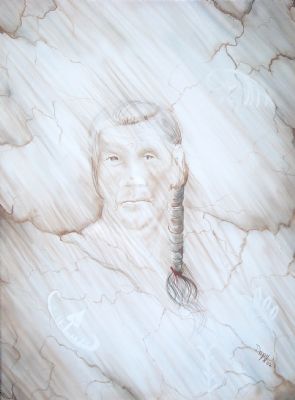
Penobscot by Arlene “Dozay” Christmas. This piece honors Penobscot women who are resilient healers and teachers of their People.

“I’ve asked the doctor,” I reassure her. “She said it’s just part of life. Germs go around, especially in school. Kids get sick.”

“She must have something to give him. A tonic maybe?”

“A tonic?”

“Yes, a tonic. When you were small, the doctor would give you a tonic all winter long.”

I don’t remember this at all. I checked with my brothers and sister and they don’t remember either. Whatever those tonics were, they couldn’t have been all that frequent or vile-tasting; my father still talks about the horrible taste of the cod-liver oil they were forced to swallow every morning at school. Bad tastes stick in the memory as well as in the throat.

When was the last time the doctors gave out “tonics”? I did some digging. In Newfoundland, the practice of giving healthful tonics continued into the ’60s and ’70s, bolstered by belief in the benefits of cod liver oil and preparations like Infantol, guaranteed to help your baby grow. The tonics, with a few exceptions, were mainly vitamin water with other ingredients ranging from minerals to caffeine, wine, and yeast. While most were probably harmless, and some may have done some good (particularly in the days when rickets was common), they couldn’t have helped us much, given our regular bouts of illness.

Besides, compared to the promise of a flu shot, updated every year for new viruses, a tonic sounds outdated, like arsenic to effect a “healthy paleness.” So instead, I teach the kids to wash their hands before they eat. I encourage them to get fresh air and exercise and stick to their bedtimes. I try to keep them as healthy as their picky appetites allow.

No doubt these things will also seem outdated if and when I’m fortunate enough to have grandchildren. Maybe by then, studies will show we’ve been washing our hands all wrong, spreading germs around for maximum coverage. Maybe super-effective and modernized flu shots will be delivered to our front door by drones that inject the whole family via needled appendages, slapping an identical “I Was A Good Patient” sticker on both adults and children. And maybe I’ll say to my son or daughter, “Can’t you get a real nurse to check over the kids?” or “Can’t they soap their fingers more?”

For now, I’ll keep my faith in hand washing and flu shots, even though nothing will completely prevent the yearly incursion of colds and flu. Viruses and bacteria will piggyback into the house on any one of us; it really is just a part of life. And when the inevitable happens and the children get sick, it won’t be any modern idea or product that gets them well again. Instead, I’ll do the same things my mother did: the efficient tucking-in of blankets on the couch, the TV, bendy straws and ginger ale, and the comfort of a gentle kiss to check for fever in the middle of the night. As remedies go, these things have been one hundred percent effective. In fact, I think my mother and I have used the best kind of tonic all along.

*

Understorey Magazine is a project of the Second Story Women’s Centre and a registered charity. If you like what you see here, please share with friends and consider making a donation. Thank you.
Sunday Night Bingo

This entry was posted on by .

Sunday Night Bingo

— For Mom

All grief, anyone’s grief,
is the weight of a sleeping child
— Anne Michaels,
Fugitive Pieces

Your first born sleeps eternal—
A whisper in the ear
A bundle swaddled
at the bottom of the breath.

requiem exp

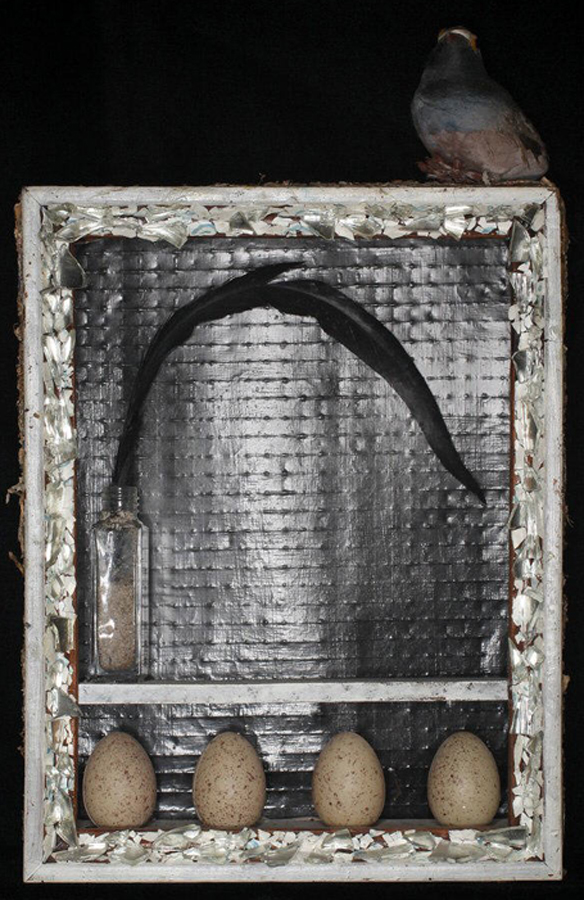
Requiem by Jennifer McLeod


I, alone, am the promise;
The fountain of youth,
the only ovaries left.
All the eggs in one

basket-case who tosses back Fireball
in the bathroom stall
of the Kinsmen, while you
organize sheets, situate charms.

Each clinging to our rituals
of comfort, our gimmicks
for chasing down luck.
I grow careless with my numbers,

uninvested in the cards
I’ve been given.
Oblivious; omnipotent,
the bearded caller continues,
I sense without looking,

your eyes
over my shoulder,
searching, as always
for what I may have missed.

Having learned in the most
unfathomable way
that life is a gamble,

you give yourself

to these games of chance—
addicted to beating odds,

chasing jackpots.

Jennifer Raven: Cancer Girl

This entry was posted on by .

cancergirl

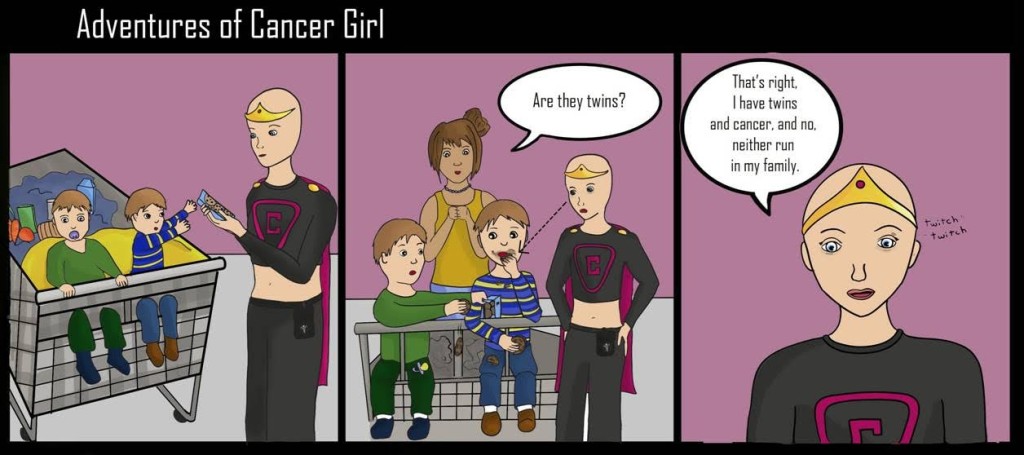
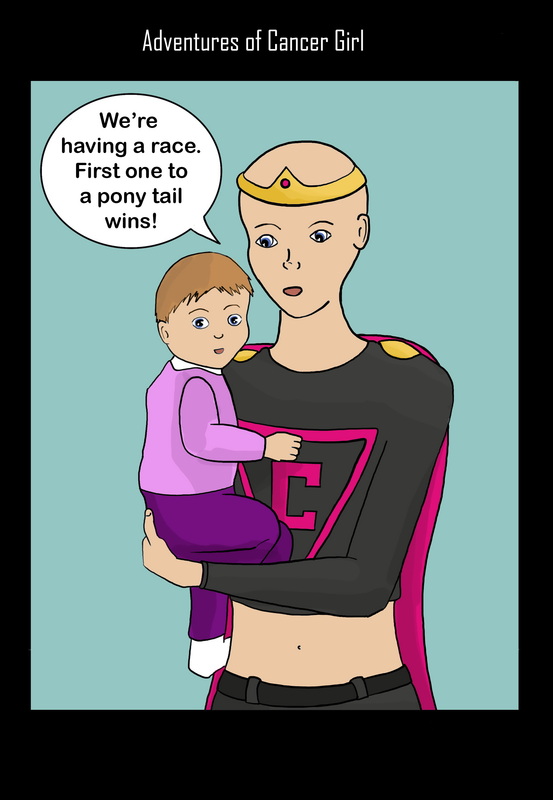
Jennifer Raven is a photographer, writer, teacher, single mother of twins, and cancer survivor. Her photography show Metamorphosis~body of work includes self-portraits before, during and after treatment for stage three invasive breast cancer. Metamorphosis was exhibited at the Afterglow Arts Festival in Bridgewater, Nova Scotia, in 2013. Two years later, Jennifer turned to comics to tell her story. Adventures of Cancer Girl, illustrated by Denise Gow-Morse, portrays the daily life of single mother with cancer. As Jennifer writes: single mother + cancer = superhero.

Understorey Magazine: Why did you move from photography to comics to tell your story?

Jennifer Raven: I think photography and comics engage different audiences. Metamorphosis may be my life’s work. I don’t know how I will ever be able to create a more complete and powerful group of images. But while a picture might be worth a thousand words, it doesn’t allow me to talk directly to my audience. Comics were a strange choice for me; in general, I’m not much of a fan. But Cancer Girl allows me to explore the very bizarre lifestyle one slips into after a cancer diagnosis through the lens of my own dark sense of humour. I hope it will help de-stigmatize breast cancer and contribute to greater awareness and dialogue.

UM: As a single mother and cancer survivor, do you actually feel like a superhero?

JR: Going through cancer treatment, I felt like anything but a superhero. My cancer coincided with an emotionally abusive relationship, which ended soon after I finished treatment. At that point, I felt like I had survived a war. Looking back, it hardly feels real and sometimes I think I forget, until I look down and see my own scar. I still can’t imagine my daily life in the months before my diagnosis: getting “twinfants” up, diapered, dressed and fed; getting my six-year-old ready for school; commuting work three days a week; grocery shopping on the way home; picking up the kids; making supper; and getting everyone to bed. Two years after treatment, I thought I was fine until one day when I had a mammogram. Staring down that machine again, I had a panic attack and started to cry. I was shell shocked. It has now been more than three years since my last treatment and I still experience post-cancer fatigue. But when I look back at what I lived through, I feel like only a superhero could have done all of those things. I think all single mothers deserve the title of superhero. My mom certainly does.

UM: What can be done to help other women, especially single mothers and women battling cancer, to feel more heroic?

JM: Connecting with others who are going through the same thing. I didn’t really do that until quite late in my treatment, and that left me very isolated. One thing I did do was make a point of dressing well and looking my best whenever I left the house, even if I was just going to the Cancer Centre. I may have spent eighty percent of the time in my pyjamas, but I tried not to let the fatigue show on the outside. I think it gave me back a bit of my dignity and sense of control. I think all of us need to search inside ourselves for our inner superhero.

UM: Where do you get ideas for Adventures of Cancer Girl?

JR: Most of the strips are autobiographical. Those that aren’t from my own experience are mostly things I wish I’d thought of when going through treatment.

UM: Tell us about your collaboration with artist Denise Gow-Morse.

JR: When I was first diagnosed, I had just written a children’s book, Boo-Boo Baby. It had received a number of rejections so I made a decision to self publish and went on a hunt for an illustrator. I was blessed to be introduced to Denise through a friend. We work very well together and had actually completed a second project before I asked her if she would be interested in bringing Cancer Girl to life. She has her own web comic called How My Mom Sees Things, which I really enjoy. She was a natural choice.

UM: How has Adventures of Cancer Girl been received so far?

JR: We’re still very new so we don’t have a huge audience yet. But it is growing. I am truly gratified that other cancer patients and survivors have related to the strip and have given a lot of positive feedback.

UM: What do you hope for Cancer Girl, both the comic strip and the woman in it?

JR: I don’t see Adventures of Cancer Girl just as a strip about cancer, although that part is always there. Cancer never happens in a vacuum: it comes unannounced and invades our ongoing lives. Thankfully for many, cancer is a temporary condition but, like a divorce, you are never the same afterward. As a comic, I hope for wider syndication and I see that happening already. I am hopeful we will have Cancer Girl at the next Hal-Con, and I will be making an appearance in an upcoming issue of a national breast cancer magazine. We definitely need Cancer Girl t-shirts! As for Cancer Girl herself, unfortunately, I don’t think she will ever be cured, but I hope she can show us ways to laugh in our darkest moments and make it through the most stressful events in our lives with dignity.

Read more of the Adventures of Cancer Girl.

cancergirl2

What to Read Next

This entry was posted on by .

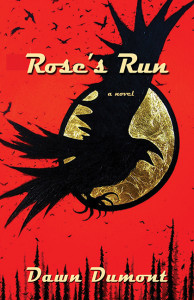
Rose’s Run, by Dawn Dumont (Thistledown Press, 2014)

rosesrunDawn Dumont is a professional comedian, so you might expect Rose’s Run, her second novel, to be funny—and it is. But the book has a serious side too, tackling women’s issue and both daily realities and ingrained stereotypes of native life in Canada. Rose Okanese is a mother of two young girls on a fictional reserve in Saskatchewan. Although she’s been to university, Rose works at a pig farm and spends her evenings at the bingo hall. When she returns home one evening to find her husband in bed with her cousin, Rose throws him out and resurrects old running skills to chase her cousin down. The following day, Rose loses her job. She applies for welfare at the band office and meets the alluring and athletic new Chief, Taylor. Through attempts to impress and maintain dignity, Rose lands a job as social administrator and (much to her horror) commits to running a marathon. But as she juggles mothering two girls, caring for a pregnant friend (whose husband has also strayed), her new job, and a punishing training program, another problem arises—literally. Rose’s teenage daughter, Sarah, along with a pot-smoking friend, unearth a mysterious Dream Woman from an unmarked grave. The woman, a sort of feminist wihtikow, begins to possess local women, compelling them to take revenge on their wayward men. Rose must put her newfound strength—physical, mental and spiritual—to the test. Like a swift morning run, Dumont’s book is both challenging and exhilarating.


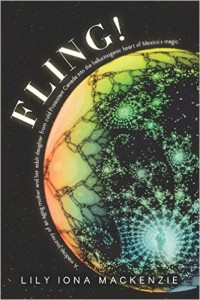
Fling! by Lily Iona MacKenzie (Pen-L Publishing, 2015)

flingFling!, Lily Iona MacKenzie’s debut novel, spans two continents, three generations of Heathers, and multiple layers of reality. In 1906, Heather McGregor is born in the Isle of Skye—or is not born, exactly, but dances off a painting and into a potato patch. Heather grows (more robust than the potatoes), marries a MacDonald, and moves to Calgary. There she gives birth to another Heather, later known as Bubbles, who in turn gives birth to her own Heather, known as Feather. But Heather Number One doesn’t stick around “cold Protestant” Canada for long. She flees with an employer to a wild and mysterious life in Mexico. Many years later, Bubbles, a sprightly ninety when the novel opens, decides she and Feather must follow in Heather’s footsteps—not vanish into Mexico but simply retrieve Heather’s long lost ashes and perhaps discover what tempted her mother to leave family behind forever. Of course, Feather and Bubbles discover much more: sex, drugs, shamans, a very vital statue, and living, dancing long-dead relatives—including Heather, still wild and spry and generous with motherly advice. With a light but practised hand, MacKenzie weaves the rich traditions of Skye with the myths and magic of Mexico (and a rather modest portrayal of her hometown Calgary) to explore motherhood, the ties that bind generations of women—and perhaps the secret to happiness itself.


Shallow, Selfish and Self-Absorbed: Sixteen Writers on the Decision Not to Have Kids, edited by Meghan Daum (Picador, 2015)

shallow“Why’d you decide to have kids?” We rarely hear this. More often, women—and some men—who do not have kids must account for their childless status and fend off the “standard barbs” that give this collection of essays its title. Editor Meghan Daum aims to show, however, “that there are just as many ways of being a nonparent as there are of being a parent. You can do it lazily and self-servingly or you can do it generously and imaginatively.” Indeed, several contributors make little effort to dispel the selfish label. Staying out late, sleeping in and travel are cited as benefits of the child-free life. But the notion that childless equals freedom while parenthood equals drudgery, “trekking in Bhutan” versus “folding onesies,” as Pam Houston puts it, seems far too tidy. Many contributors explore more nuanced, diverse and compelling reasons for their choices. Lauren Kipnis, among others, tackles the notion that human reproduction is biologically or socially necessary, that we must have kids to be fully human. If this is not the case, and surely it isn’t, positions like Geoff Dwyer’s—I don’t have kids because I’m not interested in kids—seem valid and sufficient. Yet most contributors have thought long and hard about parenting. Some wanted children but never found the right time, place or partner: more childless by circumstance than childless by choice. Perhaps the most poignant essays are from writers who have examined their own lives and decided they simply cannot be a parent. Paul Lisicky writes beautifully of a time when gay men like him died in their twenties and thirties. On parenting he says: “It is easier than you think to be indifferent to what you’ve been told you can’t have.” Sigrid Nunez begins her essay: “There was a time during my childhood when I believed that all children were unwanted.” She writes of her own mother and the parents she knew growing up: their dominant emotion was anger; hers was fear. Nunez says she could not be a real mother, “not the kind I would have wanted for my child.” No one reader could empathize with all views presented here; some are even hard to like. But Daum succeeds in presenting both diversity of experience and fabulous writing, and the essays will no doubt evoke deep feeling—anguish, rage, camaraderie, surprise—in parents and nonparents alike. What more could one want from a book?

*

Understorey Magazine is a project of the Second Story Women’s Centre and a registered charity. If you like what you see here, please share with friends and consider making a donation. Thank you.
Why Tell Stories?

This entry was posted on by .

Once upon a time, I worked in a research laboratory. I tapped test tubes, swirled flasks and, when strictly necessary, wore goggles and a boxy lab coat. My project, on the genetics of plant disease, offered an intellectual puzzle and plenty of time to tinker with cutting-edge technology. Should I discover it, the answer to that puzzle would intrigue the scientific community, benefit farmers—and afford me a graduate degree.

And yet, this wasn’t enough. I needed something more. So I’d often start an experiment, set a timer and leave the lab. Sometimes for hours.

I’d head to the basement of the student union building, to a scuffed white door with an unassuming sign: Photography Club. There I’d develop and print my weekend shots of birds and trees and graffitied back alleys until I had to rush back to the lab. This was well before Instagram. Photography was messy and magic: an image captured in a blink released into a pool of liquid and slowly nurtured into story. Yes, it felt like pure creation and I was hooked. Throughout my science degree, I developed hundreds of artsy photos. I marvelled at every story that emerged, packed the growing pile of eight-by-tens into black binders and used paper boxes—and printed more.

Then, one day, I stopped. Most of these photos would never be seen. They would not be displayed next to my name and biography. They would not change the world or the way people understood it. They would certainly not help pay my student loan or find a job. Why do it? I’d never asked myself the question and once I did, I found no reason at all.

Why make pictures? Why chisel form from stone? Why assemble words into lines and verse? In one sense all art is storytelling. But why do we tell such stories, especially when we’re busy, broke, stuck, tired or criticized?

landscape-illuminated2_cropped

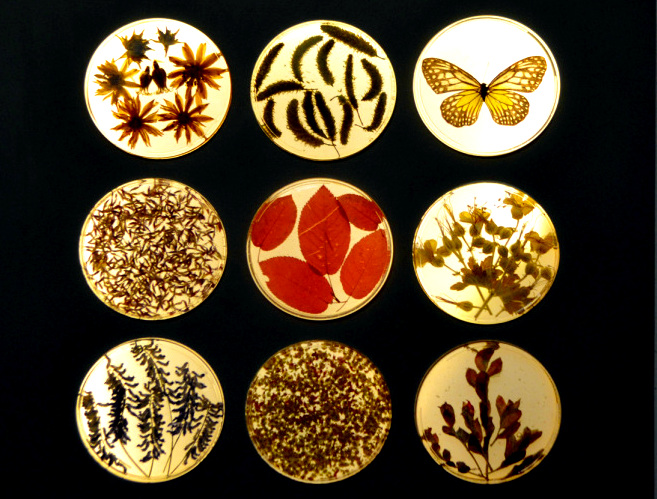
Landscape Illuminated 2 by Philippa Jones

Elizabeth Gilbert, author of Eat, Pray, Love and Big Magic: Creative Living Beyond Fear, notes that our ancestors began painting almost forty thousand years ago but started cultivating crops only ten thousand years ago. This suggests a strong, perhaps hard-wired, urge to create art, an urge even stronger than ensuring a steady food supply.

Curiously, it seems most cave artists—up to three quarters—were women and girls. We don’t know why they did it. We don’t know why we continue to paint, sculpt, choreograph and compose. But we have theories.

To make sense. Tracy Chevalier, author of The Girl with the Pearl Earring, says storytelling puts a frame (real or metaphorical) around everyday incidents. That frame allows us to focus on and make sense of our personal dramas. Research shows that our brains actually crave stories and will construct story-like patterns from almost any event. In a complicated, changing world, we simply think best in stories.

To purge. Aristotle believed theatre, especially tragedy, purged us of negative emotions. We still use his term catharsis to describe cleansing through art. It’s possible our ancestors painted caves as a purgative ritual. Recent evidence suggests writing that vents emotion—mommy blogs, for instance—offers a similar kind of therapy.

To feel better. Storytelling has more specific and measurable health benefits, too. Studies have shown that regular writing and other forms of art can help injuries heal faster, boost immune function, alleviate symptoms of cancer and depression, boost working memory, increase motivation—and even “turn lives around.”

That’s a whole lot of reasons to create stories—and a fair excuse for my stealing away from the lab to craft images of seagulls. So why did I stop? Perhaps because in packing those photos so quickly into boxes and binders I dismissed a further reason, perhaps the reason stories have endured for tens of thousands of years:

To connect. Storytelling, whether through writing, performance or visual art, means forging a relationship between teller and audience. A story is never air-tight and self-contained. Good stories leave blank spots, spaces to be filled through the active process of reading or viewing. It takes both to complete a story. Creating art may empower the artist but filling in those spaces empowers the audience.

In fact, Aristotle’s original notion of catharsis applied to the audience, not the actors and playwrights; he believed theatre purged negative emotions in viewers. Present-day research tends to agree. A study published last year showed that attending live theatre increased “literary knowledge, tolerance and empathy” among students. This one of a growing number studies on the power of stories for the audience. Collectively, they show stories are easier to remember than facts—stories help us learn. More than that, reading, viewing or listening to stories can increase our understanding of others. It can alter deep-seated biases and foster empathy. Look at the phenomenal success of Humans of New York: a twenty-line personal story can stir millions of readers to action.

That’s one gigantic reason to tell stories. But it means actually telling the story. It means embracing the creator-viewer relationship, taking the photos out of the box, the canvas out of the studio, the story off the laptop. It means honing our craft (there’s no way around practice) but, eventually, at some point, sharing our work.

Which is hard.

Most of my photos are still in boxes. I never went back to photography: I graduated, my cameras were stolen, the technology changed. I moved on to writing and again found that thrill of pure creation. And although I’ve posted and published my work many times, that old urge to hoard and safeguard remains. It’s not ready. It’s not original. It will only be rejected.

Putting yourself “out there” is hard, no question. Traditional routes to building an audience—through publishers, agents and galleries—can be particularly tough. Until that fabulous and elusive acceptance letter, it may feel as if no one is listening, that you really aren’t sharing work at all.

But there are other ways to cultivate a vital two-way relationship with viewers.

  • Find a writing group or start a new one.
  • Take a class, in person or online.
  • Open a pop-up store (this works best for visual art, but why not pop-up poetry or performance art?).
  • Join an online peer group like SheWrites or Wattpad.
  • Write micro-stories on social media.
  • Start a blog or post on open sites like Medium or StoryCorp.

You may not want to share everything, and in some cases you shouldn’t. You may still encounter criticism, especially if posting online. But as Brandon Standton of Humans of New York says, telling stories with “a spirit of genuine interest and compassion” tends to bring out the same in viewers. And sharing just some of your work, nurturing even a small audience, may keep you going through moments of doubt.

I said most of my photos would never be seen; most were still in boxes. There are some exceptions. Four are framed and decades after printing still hang on living room walls, two on Canada’s east coast, two on the west. They capture a singular place and time. They’ve been viewed by a few dozen friends and friends of friends. Over the years, they’ve prompted questions, stirred memories, started conversations. Is it enough to build a career? No. Is it enough to keep telling stories? Yes, I think it is.

Many thanks to Scotiabank (Bridgewater, Nova Scotia, branch) for funding this issue of Understorey Magazine.