Archives

The Pickers

This entry was posted on by .

The Pickers

farmer blood, peasant blood,
managing-to-hold-on-by-a-thread blood
seeps from veins into deepening soil,
willing things to grow in desolate places.
we’ve always picked things,
soft things and hardened things —
bajra, jowar, rice, sugar cane, and cotton
that made our hands bleed for days, for years.
transplanted to far off soil,
from rich earth and fertile loam,
we pick foreign things,
luscious things and beautiful things —
strawberries, raspberries, blueberries, and sometimes
late-summer blackberries just for fun.
transplanted to not so far off soil,
we pick newer things,
hot desert sun things and prickly things —
peaches, apricots and grapes of wine we will never drink,
grapes that sparkle hard
before they’re crushed and dissolve
into liquid or vapor.

photo of a person picking herbs in a field

Never Enough photo by Moni Brar

Essential Workers or Essential Work?

This entry was posted on by .

It’s estimated that, in Canada, our food travels an average of 2,500 kilometers before arriving on our plate. That slice of holiday chocolate—cocoa, sugar, palm oil—likely travelled much further, almost 50,000 kilometers according to one study.

With initiatives like “food miles” and “buy local,” we’re learning more about the distance our food travels and the advantages of choosing food made closer to home.

But the idea of food “travelling” is still abstract. Food doesn’t move by itself. Chocolate, for instance, requires growers, harvesters, processors, packers, transporters, manufacturers, marketers, retailers, shoppers, and sometimes servers to “arrive” on our plate. These general categories hide many more people who bring us food: cleaners, chemists, mechanics, logisticians, cashiers…. Hundreds of people as well as the families that depend on them.

Throughout the coronavirus pandemic, we’ve become more aware of these complex supply chains because glitches have made the links visible. When grocery stores ran out of Robin Hood flour last spring, it wasn’t the flour that was in short supply. It was the iconic yellow packaging. When did we last consider where those familiar yellow bags come from?

In realizing the many critical steps of food production and distribution, we have have started talking about essential workers. We’ve started praising essential workers. Thanking essential workers.

Or have we?

Have we really thought about these workers—the woman at the cash, the dishwasher in the restaurant, the trucker on the highway—or have we only thought about the work that needs doing? Flour bags that need to be made. Check-outs that need to be staffed. Chocolate that needs to be shipped.

Do we value essential workers or just their essential work?

In this issue of Understorey Magazine, we share stories of the many workers who bring food to our table. We share small details of their everyday lives in the hope of better seeing them as individual people who contribute enormously our everyday lives.

The writers and artists published here show us the tired but still playful hands of production line workers; the clenched, hesitant hands of a livestock farmer on culling day; the shaky hands of a veteran restaurant server; the knowing hands of a decades-long canner; the nimble hands of a food-cart cook; the scarred, strong hands of a butcher; the grieving yet giving hands of a community-kitchen worker.

So many hands. And so often women’s hands. Most food work done in the home and garden, in the “front of the house” in restaurants, at the cash register in stores, at the bedside in hospitals—the lower-paying or unpaid work—is done by women, very often women of colour. This is one reason why rates of Covid-19 infection have been higher for women than men during the second wave of the pandemic: more women are on the front lines, not just of health work but of food work too. In higher-paying professional and management roles—chefs, owners, CEOs—and traditionally male work like farming, fishing, and transport, women remain vastly underrepresented.

Perhaps in addition to “food miles” we need to consider “food hands” when choosing what we eat.

We hope this issue of Understorey inspires us all to take a moment to appreciate the often-unseen hands that bring us food. And then take another moment to appreciate the hands we see every day, those of family, or housemates, or partners—even our own—that plan, buy, harvest, cook, and clean up the food that keeps us going, from one year to the next.

Here’s to a brighter and more joyful 2021.

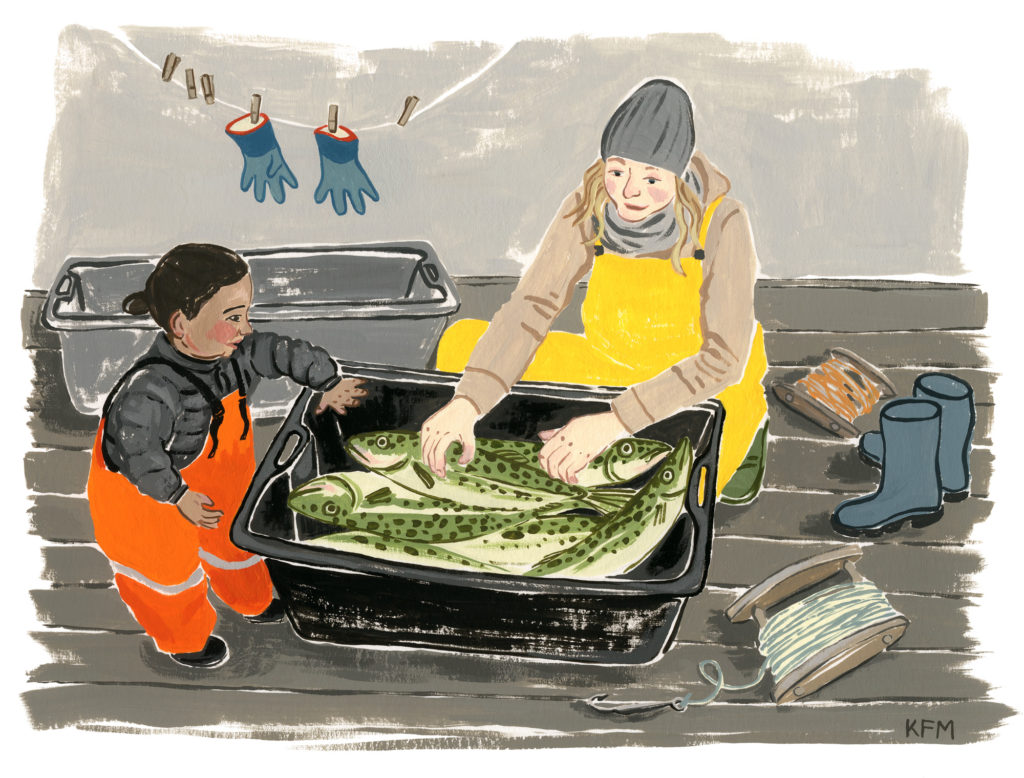
painting showing two women sorting fish on wharfWe Still Return for the Cod by Kat Frick Miller


Thank you to our cover artist for Issue 19, Kat Frick Miller. Her painting We Still Return for the Cod was originally created to accompany the article “Cod Haven’t Fully Returned, but We Still Return for the Cod” by Jennifer Thornhill Verma, published in The Independent NL in October, 2020. You can see all Understorey Magazine covers here.

Canner

This entry was posted on by .

To everything there is a season and fall is Canning Season. Surplus in the summer garden goes into jars to nourish us through those long winter months. The pop of a well sealed Mason jar brings a smile, a taste of work accomplished, a memory of warm soil between the fingers, bird song and sunshine, in those barren months to come.

I am a compulsive canner. If it is edible it must be eaten. If not eaten immediately, it must be preserved for future consumption.

Is this a hereditary trait? I stem from a long line of farmers but are we not ​all ​the progeny of hunter-gatherers? Of course we are—or humankind would not have survived. Yet so few today, here in Canada, have knowledge of the growth and source of our daily food.

For example, our cottage property on a river bank beside our farm was rented one summer to a family for their weekend retreat. Highly educated were they: she a professor, he a lawyer. My kitchen garden, between the cottage lawn and riverbank, was large and highly productive that summer.

“Help yourselves to the green and yellow beans and some carrots,” I said on their arrival one Friday evening in July. On Monday, it was apparent nothing had been taken. The following weekend the couple admitted they did not know what beans looked like.

“Do they grow in the ground or above?” asked the wife. “The carrots, I did recognize them, they sometimes leave the tops on in the grocery store, but I found them too hard to pull from the ground.”

Astounding, I thought, not having the strength to pull a carrot, not knowing beans grew above the ground! It is true, beans are shy, one might say. Shy of the pod bursting in the sun. That is why they hide behind their leaves. Mine, now overripe, had to be dried and shucked from their pods to save for the winter soup pot.

In the late eighteen hundreds, my maternal grandparents had to move off the farm, due to my grandfather’s allergies. They bought a hotel in Guelph, Ontario, and purchased their dining produce from relatives back on the farm. There were no freezers in those days so my grandmother preserved. She made all the pickles, jams, and jellies for the hotel, put down peaches, applesauce, rhubarb, apple butter, chutney and the like.


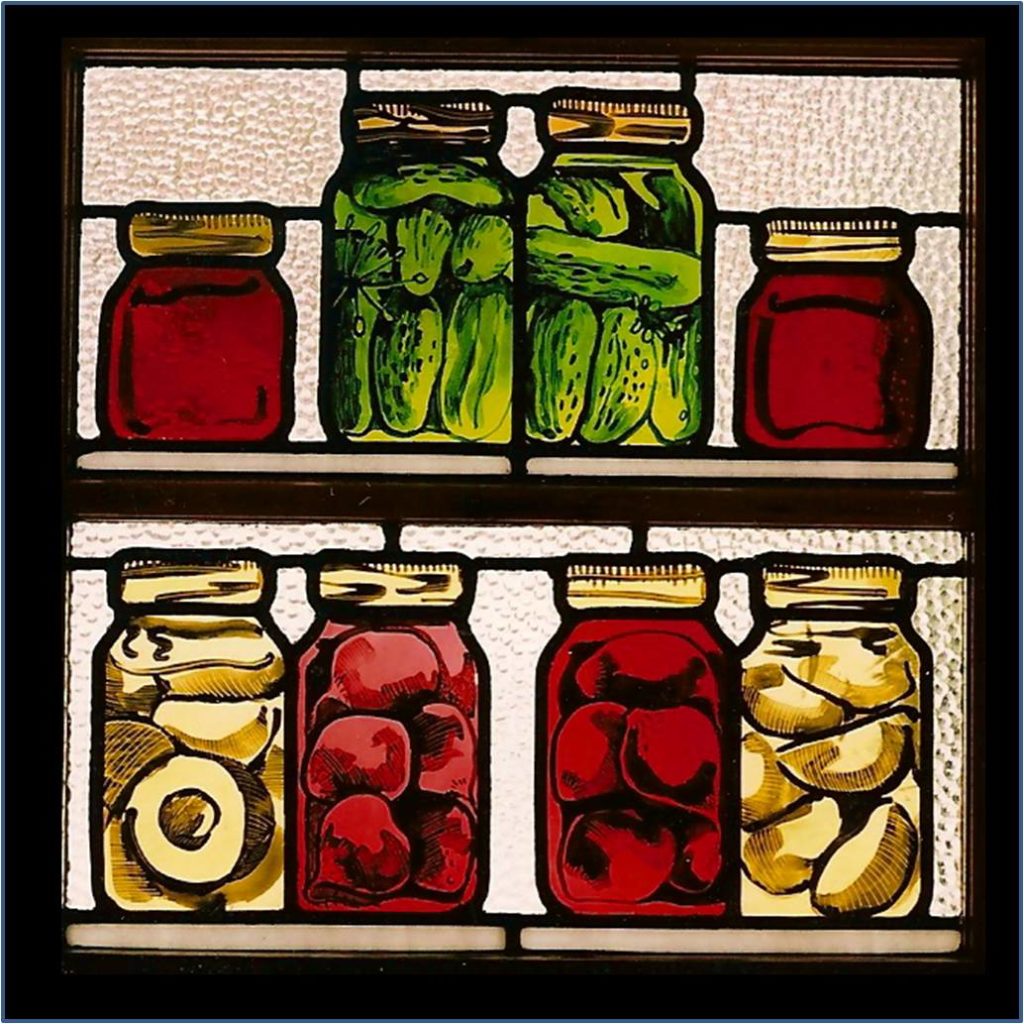
stained glass show jars of preserves

Pickles by Lynette Richards


Winter found apple, cherry, pumpkin, and green tomato mincemeat pies on the hotel menu, along with baked beans, cabbage salads, sauerkraut, headcheese, heart soup, smoked sausage, chops, and hams. Apple and tomato juice was bottled and capped. When the hotel was sold and my grandparents retired, my grandmother still preserved: stirring, tasting, adding to the vegetables simmering in giant cauldrons; bottling, capping, and stocking shelves in the basement. The surplus was always given by the box-full to the church for distribution to those in need.

In the 1940s, when we visited relatives in Burlington, we always stopped for dinner at the renowned restaurant The Estaminet. Why, one might ask? For the preserves made by the establishment’s owner, Mrs. Byrens. Unique and spicy they were and done down every year for the pleasure of her guests. Too much unnecessary work one might think, with a cannery short blocks away. But no, that extra effort, that special taste is never too much work. That is what moves food from mere need of sustenance to pure delight.

During the Second World War everyone had a garden, a ​Victory Garden they were called. The whole family participated. It was fun and a way to feed ourselves and store for the future, whatever that uncertain future may be. No matter how small the yard there was always room for herbs and vegetables to grow.

As an adult with my own home and garden, I preserved to feed a growing family. There were wild strawberries in the fields, raspberries and blackberries in the fence lines, leeks in the woodlot, all free for the picking. I purchased Mason jars by the case load, filled, capped, and sealed in the copper boiler my grandmother had once used. Vegetables were pickled or stored. Nothing was wasted; overproduction was given away as grandmother had done.

Once, during a renovation in our farm home, a plumber asked me to stay in my kitchen while he went to the basement. He would call to me when I was to turn on the kitchen faucet. I waited and waited and waited for that call. When none came I stood at the head of the basement stairs and called to him: “Is something wrong down there, it’s been a long time….”

His reply, “Do you know you have 149 jars of jam down here?”

Breaditations

This entry was posted on by .

Breaditations

I. MEASURE; MIX

two cups of lukewarm water
                        the temperature of our beating hearts
two and a half teaspoons yeast
                        dropped without warning
one teaspoon of sea salt
                        since we could not cry for fear
a quarter cup of oil
                        we learned to count it out

one cup of wheat flour
                        fourteen days self-isolation
two cups of wheat flour
                        sudden rising unemployment
three cups of wheat flour
                        countries closing borders
four cups of wheat flour
                        all those days inside the house
five cups of wheat flour
                        hospital capacity and ICU beds
one last half-cup for good measure
                        untested, infected, transmitted, dead

my hands are sticky with dough
                        their throats were choked with tubes
my hands are sticky with dough
                        the crematoria ran day and night
my hands are sticky with dough
                        we were not prepared for this
my hands are sticky with dough
                        mercy, lord, have mercy on us

II. KNEAD

We read the news from Wuhan, from Italy,
tuned in faithfully to Angela, Boris, Donald, Justin,

while the county health units counted bodies.
We learned what the bakers have always known

about rough handling, the imputation of strength,
how the dough only becomes resilient

after it goes through a painful surrender.
The news pummeled us with statistics and warnings.

We learned to absorb the shuddering blows
as our souls became windowpane-thin.

III. RISE

Wear your mask
out on the street.

Beware the leaven
of the Pharisees.

Activate, foment,
incubate, rise.

Rise up, rise
up—

Uprise.

IV. BAKE

What the bread gave us back was time:
carte-blanche permission to stop, to rest,
to relish the impossibility of rush or hurry.
We could spend our minutes kneading dough,
shaping loaves, carefully feeding a starter
we had given an improbable name.
We sat on kitchen floors and waited
while it rose, waited while it baked,
while it cooled, letting the time run out
between our fingers like sand.

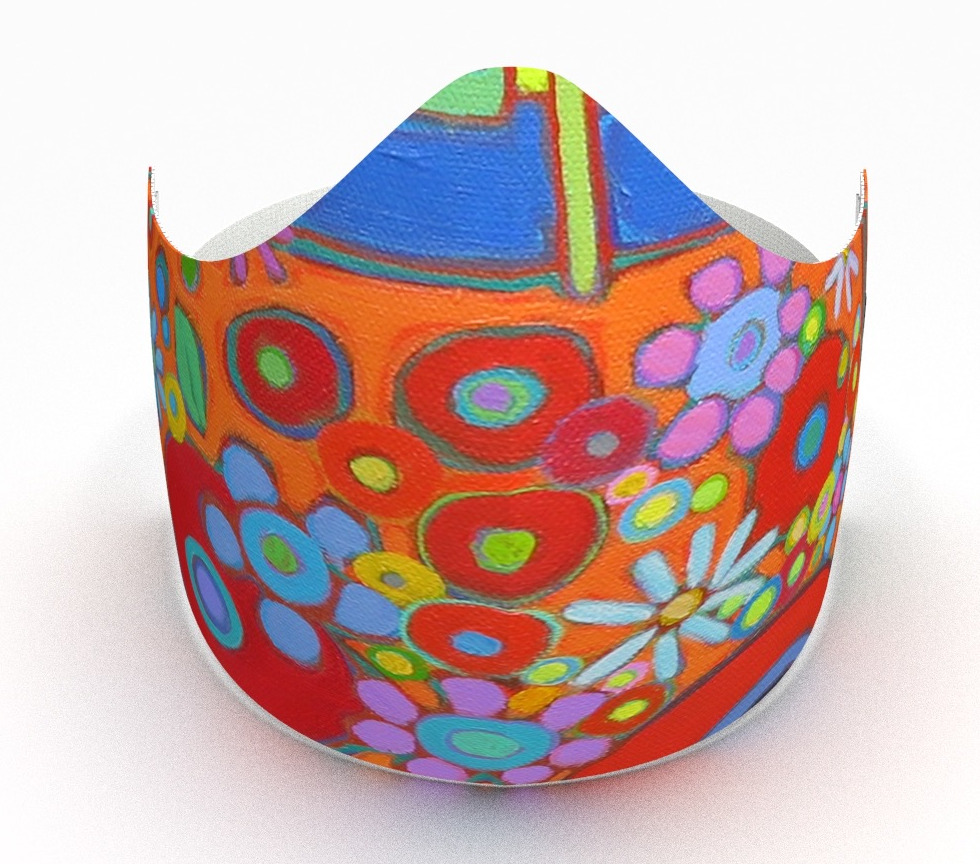
non-medical face mask painted with bright flowers

Flower Power (non-medical mask) by Darlene Kulig

A Nice Pair of Stilettos

This entry was posted on by .

Fifteen years ago, my first job—real job, not babysitting. A shift at John’s Steak Place.

“Keep the tray in one hand. Make it effortless. And you’ll need new shoes.”

The shoes, black and worn, chunky in the heel. Sturdy enough to get me to high school and back. And Deb, the woman giving orders, dark hair fading to grey, permed to loose curl, early wrinkles around the eyes and a lingering smell of menthols buried in her skin.

“You’ll make enough in tips tonight. Get a nice pair of stilettos, used if you have to. I expect them next shift.”

The tray didn’t balance, wouldn’t balance. My right hand constantly darting out to steady gin and tonic, rum and coke, plates of Caesar salad and dry ribs, whatever soup was on special. The next night, new shoes made it worse, ankle twisting left and right, Achilles taken to the limit, trying not to show my weakness while Deb laughed and walked in heels like she was born in them, confident, steady, like a swan on a lake.

It took two weeks to get it right, my wrist tight, aching with new use. Fingers strong enough now to hold back the hands of my grabby boyfriend, twisting his arm away, driving ‘no’ home.

I dumped him. Like the tray. Five times in the first week.

*

You only get stronger, better, the longer you do it. Deb was a riot. Friendly. She never gave me any pointers after the first week, just little winks when she saw me watching, listening, admiring. They ate out of her palm. New customers, regulars, the repeats. The smile, free hand on jutting hip to playfully scold a customer. Men loved her because of that smile, that laugh. Women liked her because she was caring, inquiring, but never at the wrong time, never when they had a mouth full of food. Even John liked her. And she didn’t seem to mind him. At any rate, she never let John get to her.

The restaurant had been John’s for twenty years. He was fat, getting fatter. Stingy, getting stingier. Never slapped our asses though. New girls would start and rave about their luck. Worth tipping out, they said.

Once I started at John’s, I didn’t leave. I liked Deb, liked the food, liked the location near my house. Liked the checkered white and black floor, the fake-gold gilded mirrors on the walls and the plethora of plants. I loved being able to sleep in, to get ready for work only after I was over my hangover. I liked staying late with the staff, having a few drinks at our own private bar after close.

About a year in, I dropped a tray, first one in months. John pointed at me with his that’s-coming-out-of-your-paycheck finger. Deb slipped me her twenty-dollar tip from table three.

After we closed up that night, Deb and I were cashing out with rum and cokes, a plate of poutine set between us, stilettos on top of the bar, shining under the lights.

“You’re young,” she said.

I shrugged, letting shoulders do the talking.

“You could do better.”

“I like restaurants.”

“Didn’t say you couldn’t. But you have time. Think about aiming high.” She nodded at the shoes, laughed, took a break to refill her glass. “You can be bossed around your entire life, or you can become the boss. You really want to spend your life like I have, flirting with men you couldn’t give two cracked glasses about?”

I didn’t answer, just counted out the bills. Counted my tips. Waved them in Deb’s face. “Cash in my pocket. That’s what I like.”

“Just pay attention to the small things,” Deb said. “That’s all I’m saying.”


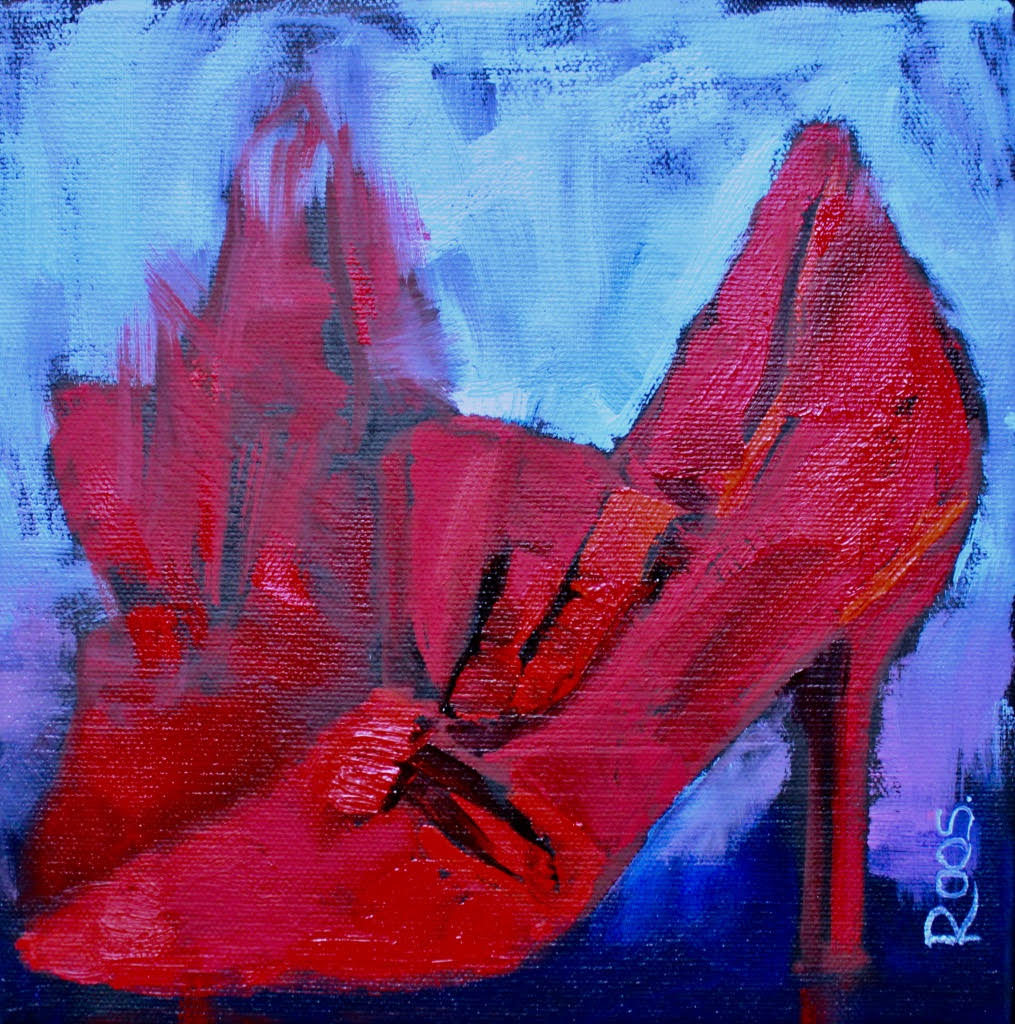
Oil painting showing two red, high-heeled shoes

Ruby’s Shoes by Lisa-Maj Roos


Not long after that, Deb started dropping trays, first one, then another. I’d never seen Deb drop a tray. Found her in the washroom with wet eyes. Red cheeks.

She’d had a diagnosis.

“You’ll get through this. If you drop a tray you pick it—” I started.

“Don’t give me bullshit. What the fuck am I supposed to do if I can’t do this job? You see what I was telling you. I got nothing other than this job. Nothing easier. You go to secretary school, at least you get to sit down once in a while. You become a teacher, you get the summers off. You go to business school, you can run the fucking world. That’s what I should have done. My smile could have ruled the world.”

She was right. Everyone at the restaurant did what she asked. And she never asked twice. Even stingy John was convinced to put on a large party for the staff every holiday—not just Christmas.

But the slipping started, didn’t stop. Deb’s hands shook, sometimes they’d go numb. I offered to carry her trays for her, but then she’d feel bad and slide me some tips under the table.

The only thing I could think to do was reinvest that money. Like Deb said, I had begun paying attention. One night, when I wasn’t feeling up to smiling, a man asked me, “What do I have to tip for a smile?”

Another day, when my good skirts were in the wash and I was wearing one just a little shorter than usual, I stood taking an order and felt a fork slide up my leg from behind. The guys seated at table three just laughed. Deb took over serving them. I kept hoping she’d drop their drinks, tip the spaghetti onto one of their shirts. But she was too great a waitress for that, even with her illness.

Then one day she wasn’t. She did drop the spaghetti. She fell and couldn’t get up. And I wasn’t even there to help her. By the time I came in, she was gone.

Just gone.

“It was a mess,” John said. “A fucking mess.”

I’d never been to Deb’s house before. Had to get her address from John’s filing cabinet when he wasn’t looking.

“I’ll get disability,” she said. “I’ll be alright.”

She lived in a tiny little bungalow. Two small windows in the front, a neat but plain lawn around it.

“You have someone here with you?” I didn’t remember her talking about anyone, was sure she didn’t have anyone.

“There’s Rob. He’s not great, but he’s here for me. We split for a bit. Got back together and at least I have his guilt now. And you’re here. Tell me it’s because you want to know more about my great plans for you.” She smiled and slowly fixed us some tea. She was shaking but she still had the smile and the charm. I couldn’t say no.

*

My fifth job, maybe my last one. A picture of Deb on my desk. Everyone asks if that’s my mom. I don’t tell them who she is. How do I explain? Can you explain in a few words the person who shaped your life, who made you grow beyond the bounds you thought you were given? Even if I could, I’d choke up. Too hard, talking about her to strangers now that she’s gone. Too easy to miss her gentle push.

I kept on at John’s for a while. Became his favourite waitress. Whenever a new girl would mess up, a tray would drop, I’d think, Deb would have straightened her out. Taught her to balance the weight. Instead, I did it.

Whenever John got that pinched face, the permanent scowl, I’d mention something about Deb’s laugh. She never came back. She never could. And of course John never said anything about missing her. But the whole place did. The mirrors less golden, the plants less green. A good business owner would have seen it, but John was just in and out, push push push. He didn’t even see me heading out the door, didn’t see me angling toward something better.

The other girls all said, “Good for you. I could never do that. How do you work and go to school?”

“Did you ever meet Deb?” I’d ask them. Make it effortless. Buy the shoes. No one likes the shoes, but they teach a good lesson. They show you that you can walk on a bed of nails, you can work through discomfort, you can put up with bullshit and turn it around. If you can work an eight hour shift in high heels, you can do anything. Just like the tray. If you get the balance right, there’s no limit to the load you can carry. You can hold the whole world on the tip of your fingers. It takes practice but, eventually, you’ll get it right. Eventually, you might even defy gravity.