The lump rises innocuous from pale flesh just below
your collarbone. A gentle swell, almond shaped, firm
but not hard. You insist I touch it, want me to feel proof
that it’s real. I can’t refuse, you ask for so little.
I search for words, find none and cannot remember those
that used to be there. It doesn’t matter, quiet is soothing and
somehow, enough. Robins sing and we can see your humming
birds flicker at the feeder, this foggy July morning.
Next, you lead me up carpeted stairs, fling louvered doors,
and start sorting through orderly closets, without hesitation,
as though you’ve done this many times before. We even laugh
as you remember the soft pink dress that was almost too pretty
to wear. I hold out my arms, you pile garments in jewel colours
for the clothing donation bin in the mall parking lot.
Later I make tea, yours like dishwater, and mine strong and
so bitter I can barely swallow it. You sink into your favorite chair,
a faded Magic Bag pressed to the small of your back, wheeze,
“A good job done,” and I agree as I pass the dainty mug patterned
with fruit that matches your kitchen wallpaper. I try but fail
to filter the sound in my head. It is the beginning of your breathlessness,
the sound that leads to the swish and gurgle of bedside pumps,
IV poles and oxygen masks, morning visits with Sobeys bags full of clean
underthings and familiar whimsies from your bedside table. I try harder,
ignore the images: “Thinking of You” cards, helium balloons, and
all those bouquets of roses, their silky petals, red as blood,
drifting to the sill.
She Tried to Put a Brave Face On It by Leah Dockrill
Spirals
On the day of your leaving I studied
the tangled spruce in the yard, all
leeched marrow and trails of glistening,
dark as blood. Withered fists unfurled,
dropped aborted cones into an obscene graffiti
of closed eyes on the ground while I played
the unwilling voyeur, watching blind
fetuses expel from a womb weary of holding on.
I am not this way!
I wanted to shout the words but
my voice had become a smoky sky:
nothing good could come of it.
How can it all funnel down to this? Spirals
on a tree trunk, whorls on a thumb pad,
cartography of an infant’s palm and
the knowing: ingrained and awful.
We can never go back; not really.
I searched in vain for a supple, lively flicker
in leaves, hoping to discern the persistent warble
of a brave, unwavering song.
My name is Abshiro Abdille. I grew up in the Dadaab refugee camps in Kenya after my family fled Somalia during the civil war in 1991. Growing up in Dadaab was hard. The temperature sometimes reached forty Celsius and we walked more than five kilometres to and from school, passing burning dumpsters that reeked of goat manure and then through the public market that smelled of fresh mangoes and bananas, which only made us more hungry. At times it was unbearable. But my parents were hard-working and resilient people. They put up with many difficulties to send me and my three older sisters and brother to school because education was what kept us busy and eventually paved our way out of the camps.
These students had hopes higher than the mountains and so did I.
One year after my high school graduation, I applied for a scholarship through the World University Service of Canada (WUSC), a Canadian non-profit organization that sponsors a number of high school graduates from Dadaab each year. In the camps, it was common to visit the notice board, which was the main news post, to see who was accepted for this scholarship or other resettlement opportunities. Students in their blue and white school uniforms would line up to check for any opportunity posted. These students had hopes higher than the mountains and so did I. The scholarship application would take eighteen months and acceptance would depend on grades, an exam and a series of interviews. I prepared myself for a process that would determine my fate in the refugee camp.
During that time, I worked at the UN High Commissioner for Refugees centre as a Somali-English interpreter, helping people access the necessary legal procedures to register as refugees. In the evenings after work, I taught young girls English and mathematics. I have always been ambitious!
One morning, while I was sleeping, my father came into my room.
“Wake up my dear,” he said, gently rubbing my head.
“It is Saturday father, I have no work.” I turned to the other side of the bed.
“It is not about work. I have good news for you.”
I uncovered my face and turned to my father. “What is it? You look so excited!”
“I am sending you to Nairobi to stay with your sister,” my father explained. “You are going to study for your scholarship interviews and exams. You must promise me that you will study hard and do well in those classes. I am not sending you to have fun. Remember that!”
“Yes, Father. I will do as you say,” I replied in a quiet, calm voice.
“Okay, now get up and help your mother with the chores,” he said.
I gave him the biggest hug I could and said, “Thank you, Father. You are the best.”
Later that day, I planned my trip to Nairobi and made a to-do list. I also told the news to my best friend, Deqo. It was a dream come true; my first journey out of the camps in nearly twenty years. No one seemed happier than me that day. My brother booked my bus ticket and I was set to leave for Nairobi the next morning.
That evening, I sat down under the shade of the neem tree. The beauty of summer was in full bloom and I enjoyed the sweet scents of the sedge. I looked at the sun setting and the few clouds across the horizon, my mind lost in deep thoughts of appreciation. And yet, I felt as if I were saying goodbye. When I heard footsteps approaching, I turned to see Deqo.
“What are you doing here?” Deqo asked as she sat beside me.
“Just watching the sunset,” I replied
“Manka, I know you. What’s the matter?” She called me Manka, which later became my nickname.
“I am not feeling good about this trip,” I told her. “What if I fail in those classes and never get to leave this camp? What if my father falls ill and I am in the middle of exams?” I said.
“What if I fail in those classes and never get to leave this camp?”
“This is a trip of a lifetime, Manka, and I am not going to let your negative thoughts question that,” she said. “Now let’s go inside and have dinner. It is also prayer time.” We held hands and exchanged glances as we walked together towards the compound.
Nairobi
After a few months, I became used to life in the city with my sister, Ardo. I was studying hard and no longer worried about failing. But one morning, I woke early to make coffee. With my mug in hand, I stepped out onto the balcony to inhale the fresh morning air. It was a cold autumn day and between the high-rise buildings I could see aeroplanes landing and taking off at Jomo Kenyatta Airport. I thought about what my journey to Canada would be like if I got accepted into the scholarship program. I was lost in that thought when I heard the phone ring. Through the balcony doors, I saw my sister pick it up.
“Salaam Hooyo,” she said. (Hooyo means Mom/mother in Somali.)
Suddenly, everything moved in slow motion. I saw coffee splash as the cup dropped out of Ardo’s hand. Tears rolled down her cheeks. Her mouth opened wide and she began to scream. I rushed into the kitchen as the phone also fell from my sister’s hand.
“What did Hooyo say?” I asked her.
I picked up the phone. “Hooyo, Hooyo, are you there?” No reply. In a panic, I turned to my sister and grabbed her by the shoulders. “What did Hooyo tell you? What happened?”
In a very low, soft voice, she said, “Dad is in the hospital. He is in a coma.”
The realization that we were a twelve-hour drive from the camp hit me like a hard punch in the belly. We had only one hour to catch the next bus to Garissa, the nearest town to Dadaab, yet ninety kilometres from our camp. Ardo and I grabbed a few belongings and rushed to the bus station. We bought our tickets and started the most memorable journey of my life. We reached Garissa at four o’clock but still had no way to get to Dadaab. Ardo said we would have to spend the night in Garissa.
“We have no other option,” she said. “There are no buses leaving for the camps until tomorrow morning.”
“We must find a way,” I told her. With my father’s health worsening by the minute, I could not stop the thought of losing him.
After five hours of waiting, we saw two lorries on the other side of the bus station. We decided to ask the drivers to take us to the camps.
“Hello? Where are you heading? Are you going to the camps?” asked my sister.
“I am leaving in twenty minutes,” said one of the drivers. “But this is not a passenger vehicle.”
“Our father is ill and we are not sure if we have enough time to see him again. Please help us,” Ardo pleaded.
Finally, after a long negotiation, he agreed and we set off late in the evening. Three hours later, the truck got stuck in a mud hole. Due to poor road conditions, travelling in the rainy season is always hard. As we struggled to get the truck free, we heard a roar in the distance.
“Ladies, that is a lion,” said Ali, our driver.
Luckily, we were soon pulled out of the mud hole by another truck. As we continued our journey, the gigantic animal stood in the middle of the road. Ali quickly turned the headlights off and on until the lion fled.
Two nights later, I lost my father to cancer and my life was never the same.
Within an hour we reached home safely. It was a great relief to see my father but deep down, I felt guilty for being away. Two nights later, I lost my father to cancer and my life was never the same. I began to work even harder to get the scholarship and to honour my father’s hope of sending me to university abroad. Five months after that memorable journey back to the camps, I was accepted into the WUSC program and began making plans for a new journey to Canada.
I recently graduated from Mount Saint Vincent University with a Bachelor of Arts and have a job in a field that I am passionate about: immigrant programs with the YMCA. With all of my family now living in Canada, life is much better. What I have accomplished has been with the help of my family, especially my parents. Life has tested me in so many ways I cannot even count but I’m thankful that, for me, it has turned out well. My hope and prayers are with those who still live in the camps, either in Dadaab or elsewhere in the world.
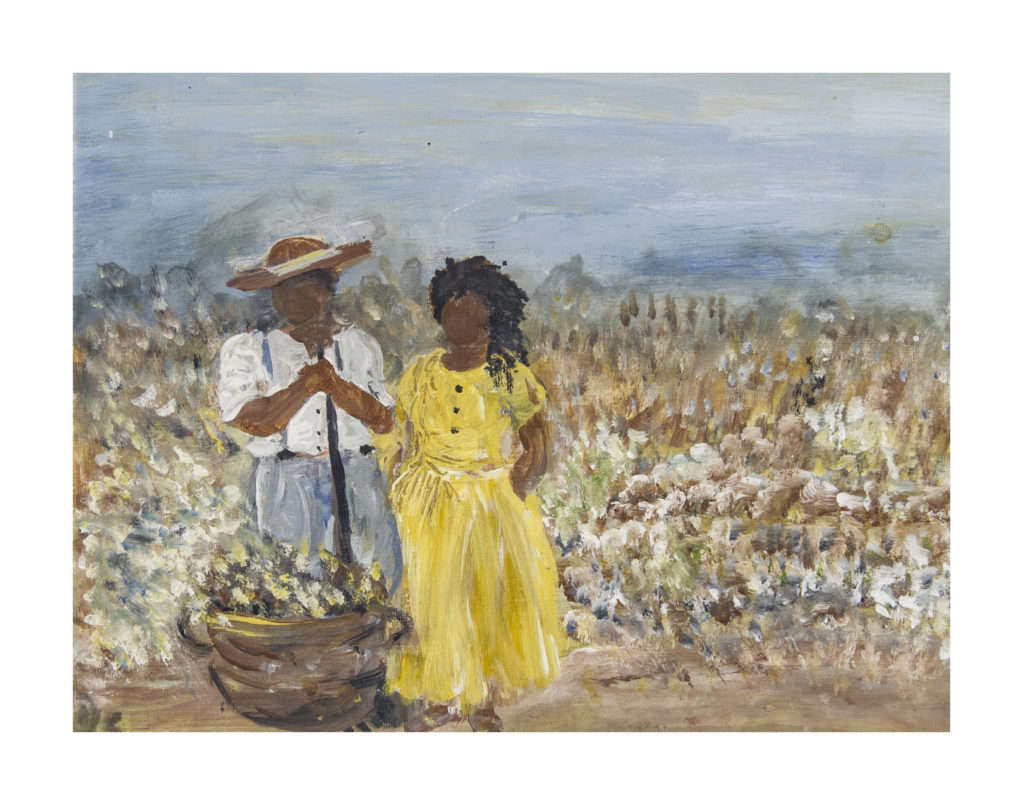
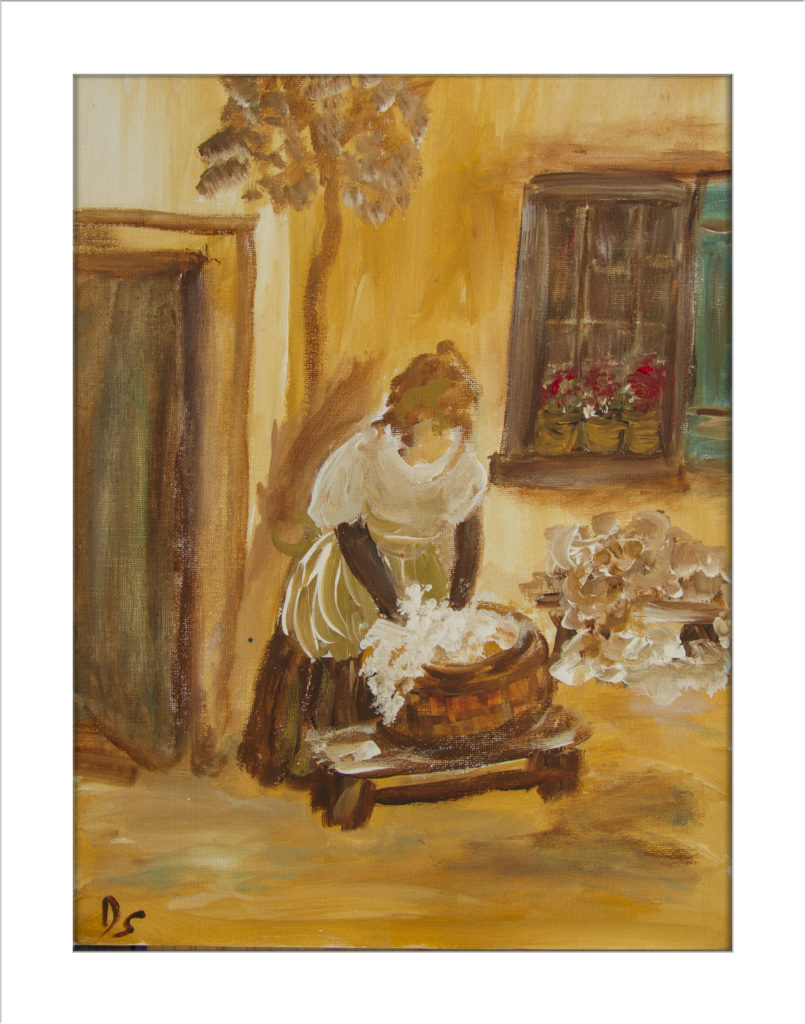
The Crops and The Chattel are part of a series of ten paintings depicting the arrival of an African family to (what is now) Canada in 1785 and their subsequent contributions to Black history.
The paintings were created to commemorate the 150th anniversary of Confederation. The exhibit has travelled to African heritage venues in Nova Scotia and New Brunswick with the support of the Cumberland African Nova Scotian Association, the Town of Amherst, the Nova Scotia government and the Cumberland County Museum. The work has also been disseminated online to help promote a deeper understanding of and respect for African-Canadian history.
I have been a social worker for forty-two years. In this profession, we often work with clients who are living on the margins, who face adversity every day. But I believe most of us face adversities in life and we have someone, or something, that helps us overcome. In 2011, the Family Service of Support presented me with the Ambassador Award. Through the award, I was recognized as a community leader who had overcome adversity and challenges and had then given back by helping others. For this special edition of Understorey Magazine, I wanted to write a story that would inspire, one that would be helpful to someone facing adversity. I decided to share the journey of completing my doctorate degree, a journey that covered very rocky terrain indeed.
In January 1990, I became the first African Nova Scotian hired at Dalhousie University in a tenure track position. I recall someone saying to me at the time, “Wow, they must have lowered the standards to let you teach there.” Such negative comments only served to make me work harder, more diligently and more effectively. However, my contract at Dalhousie stipulated I had to complete course work towards a PhD by year six of the job. The director of my department said, “If you don’t get a PhD, you will be marginalized in the university, so it is not an option.” This meant that I had to apply to a different university to complete a PhD. I was rejected by several institutions, but opportunity knocked unexpectedly in 1993 when I was accepted into the PhD program in sociological studies at the University of Sheffield in England. My research was a participatory study of the factors that helped Black men survive in societies where they were expected to fail. My PhD years (1992-1996) became the best of times and the worst of times, all in one package.
It was the best of times because, first, I had incredible family and community support (also known as pressure to perform). I had the most amazing PhD supervisor, Dr. Lena Dominelli, an Italian-Canadian mentor who believed in me even when I did not believe in myself. Second, my PhD research made a positive impact on the lives of Black men, both in Canada and in England, and led to many policy and institutional changes in both countries. Professionally, my studies positioned me for a stellar career, which led to my promotion to full professor in 2006.
These years were also the worst of times because they were bracketed by huge losses in my life and unbelievable trauma.
While there were many positives, my PhD years were also the worst of times because they were bracketed by huge losses in my life and unbelievable trauma that remains difficult to talk about to this day. In year one of my program in England, my maternal grandmother died after a twenty-four-hour stay in hospital. This was a terrible loss; she was my second mother. In year two, my father-in-law died after two weeks in a coma, following a massive stroke. One month later, my eldest brother (who was like a father to us after Dad died) was diagnosed with cancer and nearly died after his first round of chemotherapy. The worry of this devastating family issue was almost immobilizing. It was difficult to be in England when I wanted to be back in Halifax helping my family cope.
If all of this was not enough, when my spouse, George Bernard, and I finally returned home after I had completed my doctoral program, we became victims of a fraud scheme. The fraud was a complex set of lies and impersonations that were used to commit a number of crimes, including identity theft, embezzlement, emotional abuse, threats, extortion and theft. After some extraordinary police work, including a sting operation, the police arrested the perpetrator, who confessed immediately and also requested to see me. It turned out she was a relative, a young woman whom I had mentored and who was a member of our church family. She requested to see me because I was a social worker and she thought I might drop the charges. Her mother also invited me to her house in the hopes that I might drop the charges. The story from both the perpetrator of the crime and her mother was the same: we should not let our Black youth go through the criminal justice system because the system does not, in fact, do them justice. As a social worker, I was expected to understand this and show compassion. The church family did not quite know how to deal with the situation and most people did not feel comfortable talking to me about it. As a victim of the fraud scheme who just happened to be a social worker, I was expected to understand, to forgive, to be lenient, to be more tolerant and more patient. As a leader in the Black community and an advocate for social justice, I was expected by others in the Black community to be compassionate and understanding.
As a leader in the Black community and an advocate for social justice, I was expected to be compassionate and understanding.
We did not drop the charges. Although the perpetrator had originally confessed, she retained a lawyer and entered a plea of not guilty on her first appearance. The case dragged through the criminal justice system for eighteen months, with many court appearances and delays, all meant to wear us down. Finally, we went to trial by judge only. On the first day of the trial, the perpetrator changed her plea once more, this time to guilty, and her lawyer asked for a non-custodial sentence because she expressed remorse. We spoke to the judge through our victim impact statements and told of the emotional and psychological trauma we experienced both during the crime and during the frequent trips to court. In the end, the perpetrator was given six months in the Halifax Correctional Centre. Our family was vindicated by the outcome of the criminal case. However, we were not vindicated by the community, those who thought: “She is a social worker, a Black woman, an advocate; she should not lay charges.”
That was one of the most difficult situations I have ever had to deal with in my life. At the time, I questioned my ability to continue in social work. I questioned my ability to judge character and to assess an unsafe situation. I became a social work educator because I wanted to influence how social work was practised from a critical perspective. When I became a victim of crime, and people expected me to drop the charges, I questioned my ability to teach and inspire others. In fact, I questioned my entire belief system.
However, this was also a time when my family became stronger and even more united. We depended on each other, believed in each other and supported each other. I knew if I gave in to my depression, fears and anxiety, it would be impossible to go on. I did not want to become that angry, bitter person who lived life without hope. In addition, my eldest brother who faced his own challenge with such amazing grace lost his battle and died in the midst of this journey, two months before my graduation. I needed to be a role model for my daughter who was also victimized by the fraud scheme. If I faltered, she might become re-victimized.
Most significant for me was that I found strength in my spirituality and, as I grieved the multiple losses, I found the courage to go on.
Most significant for me was that I found strength in my spirituality and, as I grieved the multiple losses, I found the courage to go on. I completed my PhD and attended graduation in England, surrounded by family and friends. I had some very supportive social work colleagues who helped me through. Today, I thank them for helping me find my passion for social work and social change. I thank them for helping me overcome this adversity with dignity, respect, integrity and tenacity. I now realize that, although I experienced trauma, I also experienced post-traumatic growth.
After over four decades as a social worker, twenty-seven years as an educator, ten years as director of the Dalhousie School of Social Work and now as a Senator, I still have a passion for social work and social change. I have had many mentors and role models who have helped me along the way. I stand on their shoulders and I am guided by a sense of “critical hope.” As a result, I continue to give back, to lift as I climb, as the writer bell hooks says. We were targets of a vicious crime, but we did not become bitter; we became stronger. And as a result, we have received so many more blessings, including the ability to pay it forward. It is my sincere critical hope that wherever I speak, someone will remember something I say and because of it their life, and the lives of those they touch, will be changed a little. My hope is that we all build more capacity to find the courage to give back, despite the adversities we face.