Archives

Uranium: Three Poems

This entry was posted on by .

The following poems are part of a manuscript that explores the history and future of uranium mining in northern Saskatchewan. The voices that form the recurrent chorus of women are inspired by testimony found in transcripts from public hearings held throughout Saskatchewan when the uranium industry was expanding in the early 1990s.

Enter the Transcripts

A subterranean stream, a long reel of altered words, heard and reinterpreted, distant static in an accidentally tapped land line.

Young women in federal offices, their names signed at the back of each text, attest they transcribed these words to the best of their abilities, each parenthetical inaudible not a failure, an admission, the best they could do, so many elders in translation, many layers of mishearing already altering each speech, tipping the process toward a precipice, misprision.

Read at your own risk. Words break down over time, travel from mind to mouth to ear to eye. What happens in between: erosion, decay, necrosis.


Women, Meadow Lake

Some see this province as straight lines, landlocked lakes of flax, highways running past steamrolled horizon, grid road, rail track.

But just as the echoes of the Cypress Hills near Swift Current spool off the tongue of a billion-year-old vibration, the northern landscape troubles this mirage, undulates—not a heat wave, a watermark, rippling surface. Intricacy of riverwork, latticed waterways, a system of lakes unlocked, knotted here and there, pulse suppressed, energy tapped for cash, light.

Switches, ignitions. What comes from where?

So fixed we are on the dirtiest pits, we speak little about real needs. What we take every day without asking. Assumptions we make about survival, sustenance, nourishment, luxury.

The north is not a barren land. Food grows in the boreal forest: woodland caribou, moose, spruce grouse, trout. Blueberry, cloudberry, bearberry, mossberry.

Juniper. Currants. Indigo milk caps, morels, chanterelles. Wild rice. Lichen. People have fed and healed here for thousands of years.

Real need is perceived by the heart and gut: edible berry, potable water. Returning herd or spawning run. Body’s response to the rhythms around us. Not the mind’s design, not the thought that nags, How much? How much? Enough.


Women, Candle Lake

mountainwoman_cropped

Mountain Woman (detail) by Melanie Best

Take it to the light—where power was made, lamps lit, bury it there. Bury it where light was made, power consumed, where fumes and rays faded.

Let those who use it bear its waste, those who live with the wounds heal the land.

We need generations to keep and guard our decommissioned mines and deep geological repositories. Beacons to mark where we buried our glassified thorium. Our mausoleums of light.

We’ve rearranged whole ore bodies, used them as fuel, used them in fields of fluorescence, in cancer treatments.

We’ve irradiated seeds, detonated weapons: atmospheric, oceanic, underground. Tests, tests, tests.

How we pass, how we fail. How we pass, fail, pass.

Waiting to be Heard

This entry was posted on by .

After the hearing, my mother and I sat in the breakout room across the table from the Parole Board of Canada’s Communications Officer, a gentle woman who had escorted us through the process.

Next door in the boardroom, two parole board members, both highly skilled in risk assessment, were deciding on the outcome of three applications made by one incarcerated man, the man who brutally murdered my father in the middle of the night, in my family’s home, when I was eleven years old.

“Do you think he’ll get it?” my mother asked. “Oh, I hope he does.”

I knew what she meant: she hoped he had improved enough that he could reintegrate into society, be a productive member. I too hoped that my father’s meaningless death would at least open up space for this offender to become a different man. Different than the twenty-three year-old who broke into my home to steal something.

One could hope.

“He’ll get the first two applications,” I said to my mother. I reasoned that his request for work releases and visits with his counsellor would be supported; it seemed a logical extension from what had been granted at previous hearings. “But he won’t get day parole,” I said. That was too much of a leap.

Isn’t parole parole? I’d asked myself years before, wondering about differences between escorted and unescorted temporary absences, day and full parole. As a registered victim of violent crime, I felt that I had to learn these terms, learn what was happening to the person who destroyed my world. Each year, as we came closer to the twenty-fifth anniversary of his incarceration, I learned more.

That day, I sat at the hexagon-shaped table in that stark multi-purpose breakout room. I took in the locked cabinets, the bright prairie sun of Drumheller shining through the window, the therapy posters hung on the walls and thought about the series of questions the parole board officers had asked at the hearing, along with the offender’s responses.

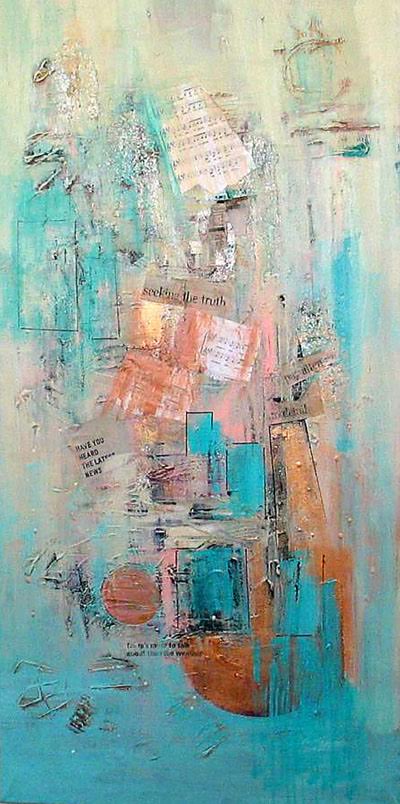
seekingthetruth

Seeking the Truth by Leah Dockrill

“Why did you go toward the noise upstairs instead of leaving the house?”

“I don’t know.”

“Why did you pick up the kitchen knife?”

“I don’t know.”

My gut wrenched as I heard the unforthcoming and unprepared responses. I listened to his high-pitched voice and realized, once again, that there may never be answers.

“Why didn’t you just leave?”

“I don’t know. I wanted to leave the house with something.”

He did leave my house with something. And at every parole hearing, each time I saw him sitting with his back to me, I stared at his forearms placed on top of the table, the hand that held that fateful knife, the back of his balding, closely-shaved head, and his running shoes firmly planted on the floor. Each time I saw him, I was reminded that he was here and my father was not. It was a certain resignation where, in his presence, I would slowly close my eyes, lower my head, and say to myself, “You’re okay. You’re just here to witness.”

“Do you think he’ll get it?” my mother asked again.

“He doesn’t have a good enough plan.” I said. “He needs a social worker in there.”

I was disappointed. I assumed there would be people to help him through this predictable application process. And then I laughed at myself. I was sitting in a prison, wishing the man who murdered my father had better support.

“Don’t you think it’s a little absurd that we’re advocating for his release?” I asked my mother. “He murdered dad.”

But I did sit there hoping that he could better explain himself next time, let down that our collective tax dollars seemed to be housing him, funding parole application hearings, but not actually rehabilitating him. Rather, it seemed as though we were all just riding out the sentence’s terms.

“Tell us,” the parole board members had said in the hearing, in and amongst their hours of questions. “What do you think are the long term effects of the crime on your victims?”

I didn’t like how, implied in their questions, we were his possession, his victims. This was the first and not the last time I wanted to speak up, to ask them to reflect on their syntax and the consequences for my identity.

“He’s not there for Christmas,” the offender paused. “Or birthdays.” Full stop.

My heart sank and I wanted to interrupt the questioning. How about the fact that I cannot contribute to my father’s life? That I can’t go to him for advice? That he can’t hold my future babies and teach them everything he knows. I could feel the questions almost leap out of my mouth. Indignation rose in my body and I wanted to yell. But I was not allowed to speak unless I had given them a vetted Victim Impact Statement one month before, a statement that would have left no room for my new questions, let alone a conversation. How unfair that he could see my words in advance but I could not see his. No, I must sit there against a wall. I must not disrupt the proceedings, lest I wished to be removed. And so I sat, silent, waiting to be somewhere else where I could be heard and they continued their questions.

“What will you do if released on day parole?”

“I think I’ll go to Calgary,” he said, tentatively.

“Do you know anyone there?”

“Maybe I’ll contact a friend of my family’s.”

“Have you contacted them already?”

“No.”

“Then what will you do in Calgary?”

He couldn’t respond.

“Calgary?” I said to my mother in the breakout room. “Why didn’t he say Drumheller?”

I couldn’t imagine why he’d go back to the city of his crime and not stay in the town where the prison is located, where he’d developed job and volunteer connections, where he’d made friendships with people willing to give him a second chance. I needn’t have worked in social services my entire adult life to know that his responses weren’t going to slide. They hadn’t prepared him for his release, hadn’t helped him answer the most predictable of questions.

“I wonder if he’ll get it,” my mother said yet again, thankfully interrupting the train of questions that circled my mind.

“It wasn’t a good enough plan,” I responded. “They won’t approve it.”

The Communications Officer escorted us back to the boardroom where we listened to the decision. The unescorted temporary absences – for work and counselling – were approved. But sure enough, his application for day parole was denied.

As they finished up the proceedings, I wasn’t quite sure what I was more disillusioned by: that he continued to not understand the gravity of his crime; that the prison hadn’t helped rehabilitate this woefully unprepared man; or that I didn’t speak up, despite being told I was not allowed to.

So I sat there, stroking my left hand with my right thumb, waiting for the moment I could leave, go to a place where I could speak again.

Colored Girl

This entry was posted on by .

Colored Girl


Little girl with the rainbow colored hair
Double Dutch wizard side to side
Without care
Beauty, freedom emanate from your pores
Are you the Colored girl
I’ve been longing for?

What do you see, feel for your life?
Sing to me now
That I’ve dealt with the strife
Go deep inside
Pack your bags,
All the wonder, dreams
You’ve tied in rags
Live with me now and oh, what fun
No more girl
Living life on the run.

Colored girl
What do you say?
Come procreate with me
A brand new day
This is good
Where we at right now, internal gaze looking out
Let’s bow
To each other only
We answer to no one
Covenant sweetened
Ripened by love sun.

Resist no more
Stared black ambition down
Nothing remainsnot even a sound
Your voice comes through
My breath that you hear
Gestation formats a phenomenal year.

Can’t wait to behold
The outcome of this
A long awaited form of ultimate bliss.
To know that inside
Is finally in sync
To the newborn Nirvana of my inner link.
Little girl with the rainbow colored hair
Double Dutch wizard side to side
Without care
Beauty, freedom emanate from your pores
You
is the Colored girl
I’ve been longing for.

The Listener

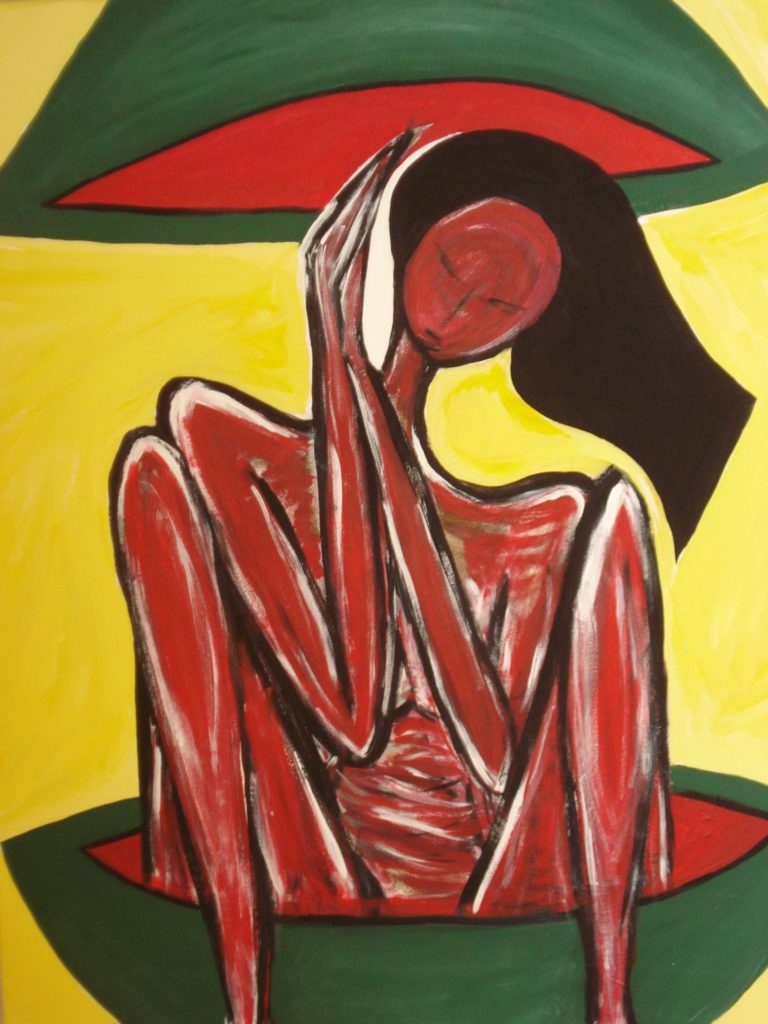
The Listener by Leeanne Harris

“Nice Cop”

This entry was posted on by .

When Albert Benoit answered the phone, I informed him that his niece had made allegations.

“That filthy, lying—”

“Mr. Benoit,”

“bitch,” he said.

“Mr. Benoit! Before you say anything else, please hear me out.”

He sighed. “Yes Ma’am.”

“I want to give you the opportunity to tell your side of the story, but not right now, not yet. I want to speak to you in person.”

“Oh?”

“Are you busy today? I could drive out to see you.”

“Lord Jesus! Dat’s just what I needs right now, the cops standin’ on me bridge, pounding at me door!”

“I understand.”

“No, my dear, you don’t! I’ll come to where you’re to.”

“No problem. When can you come in?”

“I’ll be by, ’round eight,” he said.

“Wonderful! Thank you, Mr. Benoit,” I said. “We’ll see you tonight.”

I replaced the phone on the receiver, took a deep breath and turned to look through the large industrial window beside my desk. The top part of the window was tilted open slightly to let in a bit of air. Half a dozen teenage boys shouted and carried on as they took shots on the basketball net set up in the detachment parking lot. The racket sent vibrations through my chest. I shifted my focus to the foot-high stack of files on my desk. I’d have to get through them all in the next six days, before my days off. After that I’d be into a week of nights and it would be hard to get anything done on files.

“Why is it that I get stuck with all the sexual assaults for this bloody detachment?” I said, still watching the boys play ball. I slumped forward, one elbow on my armrest, fingers raking the stress moguls in my forehead. I noticed that the room had gone silent; my four male colleagues all trying to look busy at their desks. This time I addressed them. “I mean really, how many sexual assault files are you guys carrying right now?”

“You’ve got such a knack for that sort of thing,” said Josh.

The Corporal agreed, the Detachment Commander nodded, and the two remaining Constables stayed silent. Gripping the ends of my armrests, I straightened, and shook my wide-eyed head at the four of them. The Sergeant tried to cut the tension with a joke.

*

They all knew why I got these cases. Newfoundland’s Mount Cashel sexual abuse scandal broke just years earlier. I’d had a closed door meeting with my Sergeant. “Josh is a helluva investigator,” the Sergeant said, “but between you and me, he’s as lazy as Hell. And Ike, well, Ike tries, but he just doesn’t have the….” Then he tapped two fingers on the side of his skull. “You’re my only girl! And they’d rather talk to a girl. What else can I do?”

He leaned in, his voice softened. “It’s a real can of worms, I know. And you’ve a lot on your plate but that’s just the way it goes.” Then he looked puzzled. “You know, some guys whine about getting female recruits but I’ve had nothing but good experiences. Every one of mine has been a good, solid worker. I’d take a woman any day.”

He tasked me to develop a half-day talk for elementary kids about sexual assault. “No, Get Away, and Tell Someone.” It seemed catchy enough for a kid to remember. After these presentations, students lined up to speak with me. Many disclosed on the spot. The floodgates were open and I was swamped. And I got really good at interviewing.

*

Just before eight, a vehicle turned in from the main road and crept into the parking area. Mr. Benoit came through the door, with the smell of tobacco and Irish Spring. I ushered him past the front desk and through the bullpen, to a smaller room furnished with a large grey desk and two chairs. On the desk was a 1994 edition of The Criminal Code of Canada and a clunky telephone slapped with a fluorescent yellow sticker: 1-800 for legal aid. I drew the drapes and offered him one of the chairs and a coffee.

“I’m placing you under arrest now….”

“What?”

“You are under investigation for sexually assaulting Carla Benoit. I have to arrest you so I can interview you.”

“Jesus!”

I gestured him to stop. “I’ll be releasing you tonight, but you’ll have to agree to some conditions.”

“What?”

“You must promise to stay away from your niece.”

His eyes narrowed.

I read him his rights. “Do you understand Mr. Benoit? You don’t have to talk to me but there are always two sides to a story.” I scribbled in my notebook.
Did he want to call a lawyer? I pointed to the phone.

There was no doubt in my mind he’d committed the assaults. Victims don’t generally make this shit up; it’s just too hard to come forward. I’d taken so many victim statements by that time and second-guessed maybe one. Still, I didn’t think Benoit was a monster. We all make mistakes. He’d developed a habit of making very poor choices and, yes, his mistakes were monstrous. But I wasn’t there to judge him. The best thing I could do—for everyone—was to get him to talk.

He sat there, arms folded. They all start like that. I went in easy, talked about the weather, rabbit and moose hunting.

He’s beginning to relax.

“And you’re a fisherman?” led to the cod moratorium:

“Brian Tobin!” he spewed spit and expletives.

So I backed away from that subject.

I asked about his family but avoided the subject of Carla. He softened in his chair, his arms less tense.

“Mary—oh yes. Da wife makes ten loaves every Wednesday, den she gives ‘alf of it away to da church.

A smile. A soft spot.

“Yes, she loves ‘er bingo night, she do. Got da number on speed dial. You play bingo, do ya?”

“Bingo? No-no, not me.”

That’s not my game.

I got a sense of him, from all that chit-chat, discovered the chinks in his armour.

Let’s talk about Carla.

We danced in and out of the noose’s loop. When I went too fast, he pulled back. I’d slack off then inch forward again.

Slowly, softly….

“What about the other time?” I asked.

“…the other time?”

“Yes, Carla talked about another time—in your truck—what happened there?”

Tap-tap, tap-tap. We inched forward, went back, inched forward again.

Two hours later, his watery, blue eyes engaged mine as we exited the stuffy room. “Thank you,” he whispered. “You’re a nice cop.”

The Justice of The Peace had arrived from Black Duck Crossing. I placed my right hand on the frayed bible and swore to the information contained in the charges. Mr. Benoit promised to keep the peace and be of good behavior, signed his name with an X in blue ink. He took the copy of his release document, folded it several times, and forced it into a sleeve in his wallet.

As I walked them to the exit, Albert turned to me, his legs trembled.

“Will you be there, in court?” he asked.

“I’m not sure about that, Mr. Benoit.”

I locked the heavy blue door behind them, moved slowly to my chair and sagged. I removed my smudged glasses, cradled my arms over the heap on my desk. I lowered my head, let it rest, and feeling the weight of it, closed my eyes.

True Blue

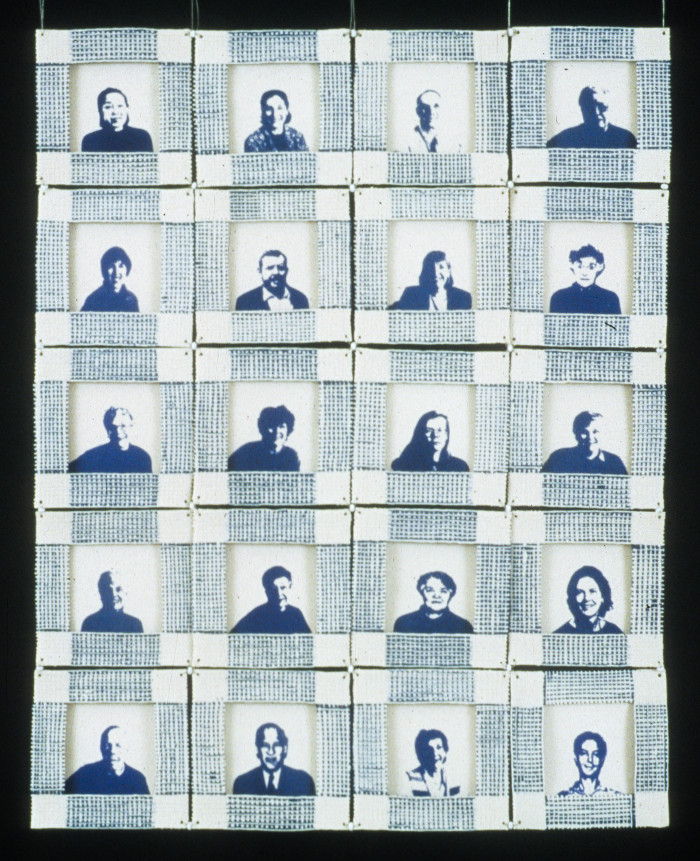
True Blue by Alexandra McCurdy

Authors’ Advice to Writers

This entry was posted on by .

Does motherhood stifle creativity? Can mothers be successful authors?

Do we even need to ask these questions? After all, it’s 2015.

But just two years ago, The Atlantic published this headline: “The Secret to Being Both a Successful Writer and a Mother: Have Just One Kid.” The title was meant to provoke. The author, Lauren Sandler, did not make this sweeping claim. Not quite. She was looking for literary role models and found several who, like her, have only one child.

Nonetheless, the essay re-ignited smouldering debate about motherhood, publishing and social policy.

Zadie Smith, award-winning author and mother of two, responded to the article:

The idea that motherhood is inherently somehow a threat to creativity is just absurd. What IS a threat to all women’s freedoms is the issue of time….”

Jane Smiley, Anakana Schofield, Aimee Phan and many other women and men, writers and non-writers, weighed in. Most noted that workplace success depends less on the existence or number of children than on how parenting time and duties are shared.

There is good reason for such ongoing debate. In heterosexual couples, women still shoulder an unequal amount of childcare and household responsibility. At the same time, in almost forty percent of households with children (in the US, at least), women are the primary or sole wage earner. Women are very busy. It’s perhaps unsurprising, then, that compared to men, women win fewer literary awards, publish fewer books and have fewer books reviewed. Even books about women are less likely to win prizes.

So while we work for more equitable social policies and a more diverse publishing industry, we need to keep asking questions.

And we have.

Understorey Magazine invited eight Canadian authors who are also mothers (see their biographies below) to share experiences and advice, mother-writer to mother-writer. Their responses were diverse, as you might expect. But issue of time was front and centre:

Motherhood and writing. Eek. I suspect the largest “hindrance” is the way motherhood distracts and divides your time and attention. I am forced to make choices between the kids and the work, sometimes work wins, sometimes the kids win. But even when I’m writing, my head is never one hundred percent there. I have random thoughts about the kids all day, every day.

— Natalie Corbett Sampson

I don’t know if having children stifles creativity so much as it siphons time. I think many female writers who are mothers fear how children will interrupt their writing timeline: “I must release my second novel within three years or I will lose momentum or become irrelevant.”

— Ali Bryan

Women writers often also work as teachers and mentors, a role others often see as maternal. Its demands are huge, and women, especially, are expected to be selfless and giving. The time “between the cracks,” the shadow work, both paid and unpaid, can consume us unless we’re careful. Whether it’s our children or our students, women writers have to negotiate daily the means to protect our writing time and meet others’ needs.

— Lorri Neilsen Glenn

I would like to wave a wand and make it acceptable for women to proclaim not only, “I’m utterly uninterested in bearing and raising children ever,” but also, “I’m all-consumed by raising children and I don’t feel like writing now.” That both these statements remain taboo means that women in the former situation have to justify choosing art over babies, and those in the latter find themselves impossibly stretched, so that it begins to appear that writing and motherhood are incompatible.

— Kerry Clare

Of course, it’s not just mothers or writers who are clamouring for more time. But mothers are particularly stretched and writing, for most, is not a job that pays the bills. Writing must be squeezed in among other commitments—and mothers have a lot of commitments.

This is something guides to writing and publishing rarely discuss. In fact, general advice on the writing life often stresses the benefits of solitude and uninterrupted thought, precisely what many mothers—especially new mothers—lack.

Still, mothers write books. Good books. Great books.

Author Joanne Harris notes, “No man in publishing is ever described as ‘juggling’ anything.” Successful women, however, are constantly asked, “How do you do it?” And we still need to know.

We asked mother-authors what they might add to a guidebook on writing.

I think being at the heart of this whirring, exciting dynamo (two four-year-old boys, two careers each for my wife and me, and extended family on two continents) has unlocked a level of directness and emotion that I couldn’t access in my writing before. It is a gift—though I don’t want to romanticise it too much. Sometimes you just need to finish your draft and the dishes are piled and someone has cut his knee and there is a stack of papers to mark and the dog needs out. Yes, that happens. So it has made me hard-nosed about my writing time. There is none of this getting into the mood and waiting for inspiration to strike. If I have half an hour at the bus stop, the notebook is out. If I am sitting near a giant jungle gym with my boys while two hundred kids release their pent-up howls, well, I put on my earphones and keep writing. So for advice, I would say try to be tough and vulnerable at the same time. You have to let people around you know that your writing is key to your happiness. Let them have the chance to help out.

— Natalie Meisner

My routine has been different every year of my children’s life, when i was married and as a single mother. Our daily and weekly schedule changes over time. And that one truth might give the most relief to someone struggling right now. It always changes. And we have the power to make it work better, even if the only thing that shifts is time itself. Can you get up one hour earlier in the morning to write? Can the children spend time with someone else for two hours twice a week? Do you have a writing space and are they old enough to respect that space and leave you to it? Can you incorporate their reading or writing into yours? Can you create a writing club? Can you write little notes all week, flashes of ideas, and save them up for a weekend morning while your family or kids are busy? Or can you stay later at work once or twice a week and switch to writing at the end of the day? You have to take time to reflect and make a new plan if something isn’t working. Because it can work.

— Shalan Joudry

Last night I attended a reading by a poet who claimed to have spent five months doing nothing but work on one poem. My first thought was, What a luxury. But the more I considered it, the more horrific that notion seemed. I am prolific because I don’t have five months to write a single poem. I’ve written entire novels in five months because I am forced to make time. I wrote the final draft of my first novel with one hand while I held my breastfeeding infant in the other. The chaos of home life and parenting can also influence the writing. I seldom write long, lyrical passages of description because I don’t have time for that. My chapters are short, my pace quick, likely an influence of only being able to squeeze in a few hours at 5:00 am before people start wandering down from upstairs looking for breakfast.

— Ali Bryan

If you really want to do it, you can make it work. How? Read while the baby sleeps. And eats. When babies are small, you can write lying down with a laptop on your knees while the baby naps on your chest. Compose stories in your head while you’re out pushing your stroller. Learn to zone out your children and the world around you so that you can write a novel while your older daughter watches Annie and the baby naps. Never do housework or errands on your own time—bring the children along to the post office and call it an education. Don’t be too much fun that they’re happy to play without you. Always have a book in your bag. Don’t volunteer to be classroom parent. Ask a lot or enough of your partner. Accept that sometimes your workday will start at 9 pm.

— Kerry Clare

A time and space of one’s own is very important. Once or twice a week, every day, an hour or two at a time, even a full day—but your own, discrete, private, personal, alone time. For some people, particularly single mothers, this will often mean night time, after kids go to bed (if exhaustion will allow for ideas) or while they’re in school (if you are not working elsewhere). If there is a partner, this is the job of a partner, to help care for children and to allow for the work you need to do to get done. I’ve enjoyed sharing time and space with other writers, each writing, quietly, outside the home, together. Perhaps we need a pooled space for women, with childcare arranged, so that we can write. Wouldn’t that be amazing?

— Alice Burdick

I kept a notebook in my pocket, carried scraps of poems in my head, escaped for a few days’ retreat every few months where someone else made meals and let me hide in a room or walk outdoors muttering to myself. At meals, I had that faraway stare so common to artists, so grateful I was to be lost in words, to have hours on my own. Hell, I’d gladly have eaten a week of liver and onions for that gift of time. — Lorri Neilsen Glenn

So there are personal and practical ways for busy women to find time to write and publish. And there are certainly social and political ways to allow mothers more time to pursue work beyond childcare. But there are also philosophical ways to bridge that gap between the reality of life with kids and the desire, sometimes need, to write—and to address the entrenched fear that life’s interruptions will stifle larger literary goals.

In her wonderful collection 100 Essays I Did Not Have Time to Write, Sarah Ruhl, award-winning playwright and mother of three, brings her motherhood straight into the pages of a book on theatre. Sentences are dropped because a son needs to poop or suddenly usurps the keyboard. And then the sentences—and the insight, humour and wisdom of a professional career—are picked up again. Ruhl says that after having twins she thought her writing career was over, “annihilated.” And then she had a thought:

All right, then, annihilate me; that other self was a fiction anyhow. And then I could breathe. I could investigate the pauses. I found that life intruding on writing was, in fact, life.

The authors we spoke with had more to say on this point than any other: Acknowledge, examine, sometimes even embrace the pauses, whether they last a few seconds or a few years. Blur the line between life and art and then move on to live and create.

I don’t think the model of the committed writer is realistic for many people right now. Only a very few writers can support themselves so most have distractions of other jobs and roles. Shutting the world and your experience out in a “no diversion” and “no intrusion” approach leaves you open to missing things that can be shaped into stories. I absolutely think my children contribute a huge amount to who I am as a writer and professional. It’s cliché, but they teach me and push me every day to be a better person as a whole, and that feeds into the way I interact with my clients at work and develop my writing/characters/stories.

— Natalie Corbett Sampson

If we are to say, “Yes, we struggle with work and motherhood,” then let us say it in a new way. When i think about the kinds of stories i love best it’s the ones that are specific, unique and hauntingly beautiful in their own being. I find that we write those interesting characters and stories after we have first pulled off the outer layers. Yes, as mothers we feel as though we’re neglecting our children to write or do something for ourselves. Yes, ok. Write that down first to get it out. Write it on paper, your computer, your journal, or say it out loud. Get it off your conscience. In our culture, we sometimes call that letting go of it in the sacred fire. It’s also about forgiving ourselves. Then we can get to the next layer of identity and ideas and it gets more interesting or specific. We take another turn around the circle, like a sharing circle, and maybe we share more, something that has even more depth and truth. We live these everyday. They are gorgeous human stories. Like when our child responds to an issue with such clarity or humour that we undo something in ourselves. Give that opportunity to your character and plot.

— Shalan Joudry

Although there are some instances where writers are contractually obligated to release material within a specified timeline, most of our timelines are perceived, self-imposed or merely recommended. The reality is that even the most successful writers don’t have readers who are sitting around desperate to read their work. No one really cares about your book. You are not the world’s one designated writer, so the book can wait. I remind myself of this often when my need to write outweighs my desire to parent. I’ve learned to pick parenting. A tea party or a baseball draft means more to a child in that moment than the book will ever mean to a stranger. And as cliché as it sounds, they grow fast. I have two kids in elementary and one in preschool. I’ve joked that by the time all three are in school full-time I won’t be able to write at all.

— Ali Bryan

Poet Lucille Clifton said, “Why do you think my poems are so short?” With six children, she had a houseful of activity. Carol Shields, the much-loved novelist, had five children and managed to steal time to write stories longhand at the kitchen table. Are these women superhuman, or can the rest of us accomplish this? I’m not sure, but there’s something in there about motivation, about an urgent need to express ourselves, about loving and valuing the work as much as we love and value our families.

— Lorri Neilsen Glenn

In my early, fiery days of deciding to be a writer, it felt like the odds were indeed stacked against any young Canadian making a living in the arts—let alone a woman, let alone a lesbian from a working class background in a small town in southwest Nova Scotia. During those days, I inhaled the work and also studied the lives of solitary literary lionesses like Virginia Woolf and Elizabeth Bishop. I internalized, without meaning to, the idea that you needed to stay unencumbered and light on your feet. Family, the running of a household and babies, especially, seemed antithetical to the hours of reading and practice needed to truly hone a craft. For nearly a decade, I kept myself quite free of such “impediments” until it became radically apparent that attachment—that is really what life is all about! How could I have ever dreamed that you could make silos in this way? Writing, love, ties, attachment, they are all wound up in the knotty secret heart of a writer.

— Natalie Meisner

This will sound odd, but having dealt with trauma from a young age, I’ve become used to the idea that writing can wait and life can take centre stage. And yes, the words will come back. So at the very outset of motherhood, taking care of an infant, exhaustion may take over, the body takes over. But the mind in the meantime works away, the words to come. If you write, then writing is a part of your life, and you can let other parts of your life nourish it.

— Alice Burdick

Know too that motherhood becomes less devouring as the children grow. If there isn’t time for writing now, one day there will be. Take it easy on yourself. Concentrate on the moment at hand. Take notes.

— Kerry Clare

The experiences generously shared here are neither definitive or representative. How could they be? But in offering a glimpse of different writers, mothers and lives, we hope to keep the conversation—and the writing—alive. As Shalan Joudry says:

What helped me was talking with other women about writing. We’re all so different but it felt good to swap stories and see how our different lifestyles affect our writing routine.


In this spirit of sharing stories, we invite you to join in. Post your thoughts, advice, experiences and comments below or send them to Understorey Magazine.

We give the last words of this essay to Sylvia D. Hamilton:

Believe in yourself. You have to believe in you, otherwise why should anyone else? Douse the rising self-doubt. Tip the scale inward. Practice trusting in yourself.

With many thanks….

Ali Bryan is the author of Roost (Freehand Books), the 2014 pick for One Book Nova Scotia. She is at work on a second novel.

Alice Burdick is the author of three collections of poetry and co-owner of Lexicon Books. Her fourth poetry collection, Book of Short Sentences, will be published by Mansfield Press in 2016.

Kerry Clare is editor of The M Word: Conversations About Motherhood (Goose Lane Editions). Her first novel, Mitzi Bytes, will be published in 2017.

Lorri Neilsen Glenn is the author of six books, including Untying the Apron: Daughters Remember Mothers of the 1950s (Guernica Editions). She was Poet Laureate of Halifax from 2005-2009 and currently teaches at Mount St. Vincent University.

Natalie Corbett Sampson is the author of Game Plan and Aptitude (Fierce Ink Books). Her third novel, It Should Have Been a #GoodDay, is forthcoming in 2016.

Natalie Meisner is a writer from Nova Scotia and Professor of English at Mount Royal University in Calgary. Her first work of nonfiction, Double Pregnant: Two Lesbians Make a Family (Fernwood Publishing), was a finalist in the Atlantic Book Awards.

Shalan Joudry is the author of Generations Re-merging, a collections of poems (Gaspereau Press). She is also a performance artist, storyteller, cultural interpreter and ecologist at the Bear River First Nation in Nova Scotia.

Sylvia D. Hamilton is a writer, award-winning filmmaker and professor in the School of Journalism at the University of King’s College in Halifax. Her poetry collection And I Alone Escaped to Tell You (Gaspereau Press) was nominated for an East Coast Literary Award.

*

Understorey Magazine is a project of the Second Story Women’s Centre and a registered charity. If you like what you see here, please share with friends and consider making a donation. Thank you.