Archives

Bradley at the Dinner Table

This entry was posted on by .

Bradley at the Dinner Table

 
You don’t want salad.
Your mouth is full of
moist dayglow gobs of
bubble-mint spiderwebs.
You spit them out in your napkin,
slurping an emerald smoothie
I made just for you.
It tastes like gummy bears
you tell me, as you take a sip
that plants sprouts on your chin
when you are done.

I’m spiralizing the cucumbers into
a decorative frill for your plate.
I hope that the curly
green and white garland
might convince you to give
the villainous vegetable a try.

Your refusal bounces
off impenetrable parental armor.
My lack of luck tonight will be
your morning breakfast smoothie —
a mother never gives up.

You smile party streamers at me,
and tap a staccato rhythm
with fork and knife against
the rectangular white table surface,
then the back of your wooden chair.

Stop is caught between my teeth —
I dance to your beat.

Spike-y Pieces by Marla Benton

You Call This A Life?

This entry was posted on by .

I have three children. April is my oldest daughter. A delicate figure, feet barely touching the floor as she moves, she resembles Tinker Bell. But April is deceivingly tough — like nails. When she rides her horse she transforms into an amazone, galloping through the fields wild and untamed. Her younger sister, Hazel, is a “real” princess. She prefers to stand in front of a mirror admiring her pink tutu and her flexibility. Hazel thinks she is great. Hazel thinks everyone else is great, too, and she expresses her fondness by greeting all who cross her path, generously handing out more than a few kisses. April and Hazel are Olav’s big sisters. They love to tease Olav then smother him with love and affection. April and Hazel have Down syndrome. Olav does not.

While no one will deny that people with Down syndrome are individuals, just like people without Down syndrome, when it comes to prenatal screening and diagnosis, they suddenly belong to a group. Parents who have just received news that their unborn baby has DS are handed collective statistics and predictions as “neutral” information. Suddenly, it seems crucial that these parents are made aware of the average life expectancy for their child. They’re also informed of the likelihood their child will develop a health condition, such as allergies or leukaemia, the chances their child will learn to read or swim or ride a bicycle, and the typical age their child will eat with a knife and fork. Simple dreams like “Will my daughter be handy like dad or adventurous like mom?” and “Will my son be best friends with his two-year-old brother?” are replaced with a much bigger question: “Down syndrome: Would you call this a life?”

I declined testing when expecting April and enjoyed a carefree pregnancy. Hazel was diagnosed with DS prenatally and although I worried I’d learned that this information, these statistics, are not neutral at all. Who can really predict if a child will develop a disease or, for that matter, get into an accident? Who knows if an infant will grow to be a bully, or a victim of one? Maybe the child will abuse drugs or spend too many hours staring at a screen.

Scientists believe that within a few years the entire genome of an unborn baby will be analyzed from a drop of blood from a pregnant women. Expectations of parenting perfect offspring will grow and so will the illusion that these perfect genes will reduce suffering. Yet life is full of opportunities to mess things up and full of more opportunities to make things right again. You can eat a bucket-full of ice cream or go for a jog. You can park at a handicapped space or help an elderly woman cross the street. You can expect perfection from others or love them for who they are. Health and happiness, I’ve learned, are not set in our genes.

If you asked April and Hazel what life is like (with Down syndrome), they would probably give you their undivided attention for a few moments. Hazel would likely start telling you about her friends in school, her little brother Olav, and her favourite foods and activities. The story might get increasingly hard to follow and probably end in laughter and a high five. April will gaze at you solemnly from behind her glasses. Searching her brain for the proper words to express her feelings, she will be pensive for a while as in meditation. You will start to notice her delicate features and the freckles on her cheeks and tiny nose. Then, as she wraps her small arms around your shoulders, a smile will radiate like a ray of sunshine from behind that earnest look.

My daughter’s lives are not defined by the presence of an extra chromosome. While the road to fluent speech, flawless writing, and coordinated bicycling is often filled with obstacles larger than Mount Everest, planting our flag on top makes it all the more worthwhile. Of course, like any kid, mine can drive a mother insane. Hazel can be stubborn as a mule and April can take an hour to get dressed. But they also have the ability to simply accept their flaws and those of others without judgment and to fully enjoy life. In my opinion, that makes my daughters perfect.

Parents often say nothing could have prepared them for their role as a mom or dad. Perhaps this holds an even greater truth for parents of children with special needs. But to describe parenting a child with DS through brochures and statistics is like trying to understand the weather by watching the Weather Channel. If you really want to feel the weather, you go outside where the wind is tugging your hair, the rain lashes your face, melting snow creeps inside your collar, and the sun warms your skin and bones.

If you really want to make sense of a prenatal diagnosis it might be a good idea to go outside and meet a family living with Down syndrome. Join them in daily activities, talk with them. You might find that limitless joy, hardship, worry, sleeplessness, celebration, and love cannot be pinned down by medical facts. You might indeed call this a life.

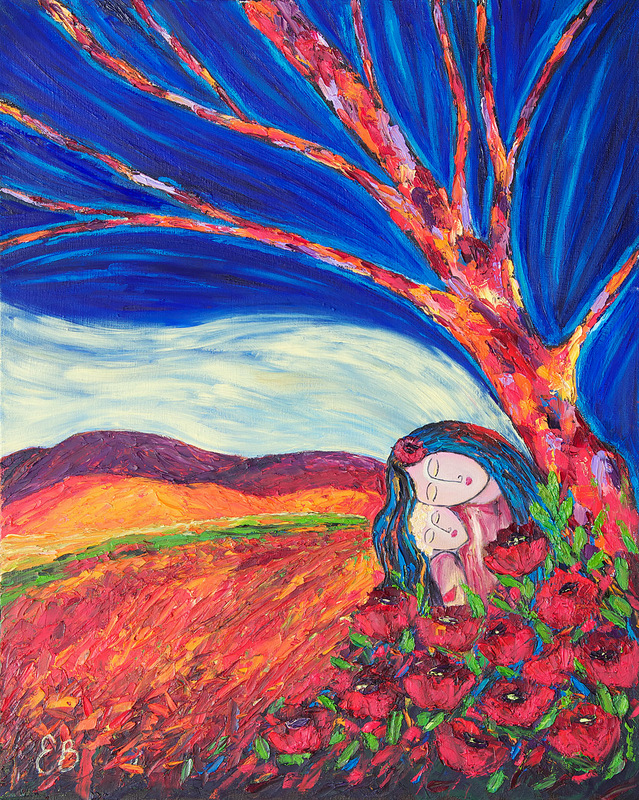
Mother & Child by Eva Butowska

Mother & Child by Eva Butowska

In the Museum of Your Last Day

This entry was posted on by .

In the Museum of Your Last Day

 
Tangled sheets,
but no pillow.

A storage basket with broken binders
and unopened packages of lined paper.

The pencil case you fill every September
but never use.

Your dress shoes,
upside down by the closet.

Folded paper squares
rain weed when I open them.

A worn backpack that belongs to Thomas
who doesn’t want his parents to find his bong.

Scraps of the Vonnegut biography
I bought for you. Benign remnant of your rage.

Empty boxes of pizza pops.
Socks rolled like potato bugs.

The clothes you didn’t stuff into that duffel bag.
The winter jacket you didn’t know you might still need in April.

Ashes along the windowsill.
A burn mark on the wall beneath it.

The screen you removed so you can climb onto the roof.
High, sleepless.

Most of this I empty into several garbage bags
the first day you are gone.

The rest I leave. Intend, some time, to set right.
After your true last day. If we ever learn when that is.

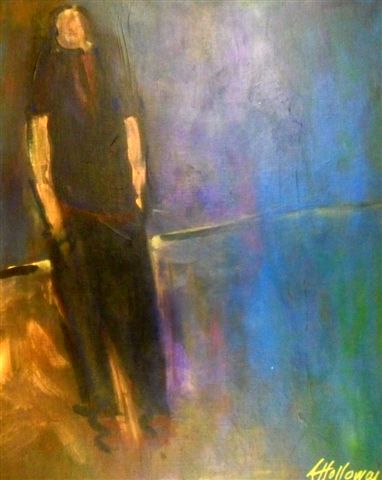
Man Alone by Anya Holloway

Man Alone by Anya Holloway

Carmen Is Licking Her Babies

This entry was posted on by .

Carmen is licking her babies. She licks their faces and they almost fall over. She’s so strong and they are so little but they seem to like it. It’s funny to watch them. They just fall over all the time with their eyes shut just getting licked around. I have my tummy on my special pillow and my hands under my chin. I’m watching them really close up which is fine because they like to be watched.

I always do this after work. I come in right off the Access-a-bus and get my pillow and get right in here. We’re all squashed up behind the sofa — me and Carmen and the babies. Mum told me to move away but she doesn’t really know Carmen like I know her. She doesn’t understand what it’s like. Me and Carmen have a special bond. In particular that is because she is my cat. That means I’m allowed to watch her close up.

Today I’ve got a bag of chips. These ones are chili or something really gross. Why would anyone make chips that taste so bad? If I was in charge of making chips I wouldn’t make anything so gross for sure. You can bet on that. I wouldn’t put them in the cupboard with the lock on either. I would have them out in big bowls. And good flavours. Not gross ones.

Little Black Cat is the one who gets the most milk. She always pushes the other kittens out of the way and gets right in there. I know someone else who is like that. My sister whose name is Ros Johnson. She always gets the best stuff and gets more than me even though she is eight years younger and that is the truth. Chips for example in particular. Ever since she was born that has always been the way. I just have to put up or shut up. That’s for sure.

When I watch Carmen I can see how much she loves her babies. She licks them and she feeds them. She looks after them and they are hers for sure. I get a feeling inside my tummy and in my heart when I’m watching them. It starts on one side and then it goes all around my body. I feel it right inside me. Really deep down and tingly. Especially tingly in my tummy. I think I know what it is but I’m not sure. I’m not going to tell anyone yet. It’s my secret and mine alone. I might tell Carmen — she’s been through all this before — but that’s about it to be honest with you.

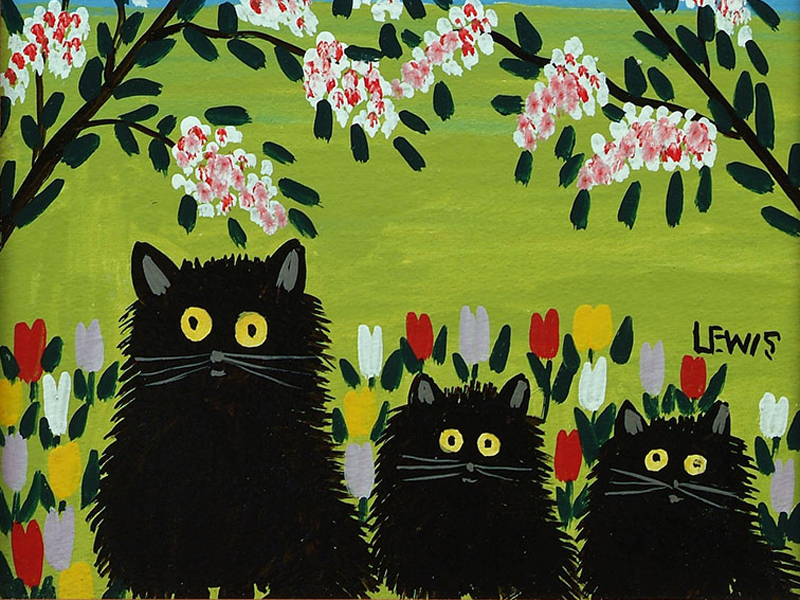
Three Black Cats 1955 by Maud Lewis. (c) Art Gallery of Nova Scotia. Used with permission.

Three Black Cats 1955 by Maud Lewis. (c) Art Gallery of Nova Scotia. Used with permission.

Little Black Cat has opened his eyes now. Before when I was looking at him I could see his eyes were open. He’s all snuggled up real close to his mom under her neck. They have a special bond for sure. None of the kittens have got Down syndrome I don’t think. But they are still special and they’ve got a special bond. Just like me.

I’m going to Group Meeting today. I go to Group meeting on Sundays. On Mondays I go to work and then I watch movies and that’s it. Sometimes I have an early night and get my beauty sleep. On Tuesdays I go to Cheer which is pretty good actually. On Wednesdays I go to Special Olympics Bowling which sucks big time. On Fridays I go to Group Meeting and on Sundays I go to Group Meeting again even though I already went the day before yesterday. And on the other days I do more movies or I go out with my respite worker and go to the Mall or something. Really it depends.

Today is a Group meeting day though. We are doing “Sharing.” I don’t know whether I will share about my secret but I think that maybe I won’t today. I think I’ll do a puzzle book instead and use the new markers — there’s a new wordsearch and I am so totally awesome at those. Really, if you give me a wordsearch you would be amazed that I am so awesome at it. Some people think that people with Down syndrome can’t read but they don’t know about my talents with the wordsearches, that’s for sure.

I have decided that I won’t tell anyone else my secret for the moment. If it turns out to be really true, I will just let the baby grow and then when it is ready I will plan a big party and have a baby shower. I’ll have balloons and I’ll invite everyone from Cheer and Group Meeting and I might invite some of the people from Bowling but not Hayden because he just gets on my nerves to be honest with you. When everyone arrives there will be a big table that they can put their gifts on. Then I will sit in a big chair and there will be lots of balloons all around. Everyone will come up to me and give me their gifts and I will say, “Thank you. You are so kind.” They’ll be so happy to give me the gifts like a pram and I’ll have really cute clothes for the baby too. I think the decorations will be yellow because that is good for a girl and a boy too. I think I will have a girl first and then a boy afterwards.

I’m going to call my daughter Lynetta Spears Florence Johnson and then if I have a boy I will call him Wayden Mark Ronan Johnson. I won’t dress the girl in only pink because it is good to have other colours not just pink for a girl. We don’t all just like pink. Sometimes we like to wear other colours like black or purple or green and that’s the honest truth. If people give me pink clothes for the baby that will be fine. But otherwise I will choose all different colours. I will get a baby alarm too so I can hear when the baby is crying. I’ll take her into my bed and I will rock her in my arms and say “Go to sleep” and then I will sing to her. I will be very patient with her because I am good at being patient. I don’t mind waiting for things like being in the line at Tim Hortons. Also, I have good people skills for sure.

I will be a very good mom. I will love my children both the same. I won’t let one of them get more than the other and watch what she wants to watch on the TV and not let the other one watch her shows even though she has been waiting for ages. And I will make sure that my children are always clean. I know it will be hard work but that is OK. My mom will help me too.

Carmen carries her babies with her teeth. She bites up on their necks and brings them back when they run away. They don’t mind because its just Mother Nature but I think she should stop really. Little Black Cat came up to me today. She’s much bigger than the other ones now. She came up and licked my finger. It’s rough and wet and not wet at the same time. If I put my hand by her mouth she will lick me for sure.

I think I am going to date Hayden from Bowling. I’ve thought about it and it is quite a good idea actually. Anyway he asked me and I said yes so he is going to be my boyfriend now for a while at least. We might try sex too because that is what you actually need to do if you want to have a baby. I do know that if you feel tingly feelings in your tummy and in your heart that doesn’t mean you are pregnant. That is just the feeling that you have when you are looking at Carmen or another cat who has babies. It doesn’t mean you are going to have a baby yourself actually. The way to have a baby is to have a proper relationship and have sexual intercourse together and then you will feel the same tingly feelings but it will be because you are pregnant. Not because you are looking at a cat. I went to Group Meeting today and that is what they said there too. Also they said that you have to have sperm go inside you. I don’t mind that I’m not pregnant now. I know I will be a good mom someday. I will be patient for now and hang out with Carmen and help her be the best mom she can be. And that is OK for sure.

Star’s Echo

This entry was posted on by .

I am a competitive person. In school, I succeeded not for the sense of mastery, but to get a higher grade. When I joined sports it was for team camradery, but mostly to win. Developing internal motivation is an ongoing struggle. I live my life out loud, listening for the echo. When I became a mother, I imagined my children as little echoes of me. My first, a boy, talked circles around me. Then, almost three years later, I birthed a daughter who I assumed would join our rowdy chorus. She found her place in our family, though perhaps not as I had anticipated.

Three years passed. Addi’s brother started kindergarten. She asked when she, too, could attend school and my stomach clenched. It was the feeling of your baby reaching for the stars before you are ready for her to fly. It was the feeling of being on a visa that doesn’t allow you to work, and wondering what you would do with the time. What really rattled me, though, was something I had not yet found words to express. Instead, the cells of my body, this body that once held her body, thrummed.

Something was different about Addi.

Our family is geek chic. We appreciate that people are unique, quirky even. Addi’s brother adores freshwater fishing and crochet, hobbies he picked up at five years old. Addi’s dad is a semi-conductor researcher who drives a Volkswagen Beetle. I celebrate Pi day and wear lopsided hand-knit hats. In many ways, Addi is the most “normal” one. She races her trike through puddles, collects caterpillars, screams, climbs, and twirls, like adventure ignited. She also struggles with anxiety. There are times she becomes so overwhelmed by the intensity of the world that she implodes, crumbles, inconsolable, to the earth.

In these moments, I struggle to connect, to walk into her fire. All I want to do is scream, settle down – it is no big deal – but the more I talk, the further she contracts.

When her requests for school became persistent, I signed her up for a preschool screening. She spoke excitedly on the walk to school, counting buses in a row. Then, when we entered the testing room, she closed her mouth and didn’t say another word. Not her name. Not her age. Not her ABCs. Not her colours, all of which she knew. As we left the testing room, I joked I had a little mute girl, tossing the term casually around.

How long are you going to stay quiet? I joked.

She didn’t respond until we re-crossed the threshold of the testing room door.

About five minutes, she replied.

Once school started, life caved in on Addi. Every day was a struggle. At home, she would get up, determined to go to school. On the drive to school, her volume would drop, but would pick up again along the sidewalk, counting buses. When it came time to hug good-bye, she held on, tears forming, but she would always walk into class. I assumed like most kids, once inside, she would be fine. Except she wasn’t. Terror held Addi’s limbs and breath. She didn’t speak. She didn’t eat. She barely moved from one square of carpet, silent heaving sobs her only interaction – and no one told me for weeks.

I try to forgive myself for the missed clues and the mistakes, though it is tempting to search for what I did to “cause” my child to be different. Was it the time I left her overnight with her grandparents whom she had just met? Or when we moved her critically developing ears from her familiar Australian accent, to Boston’s strangely absent Rs? Questions multiply, but there are never really answers – just the sound of doubt and guilt.

Recently, Addi and I watched her baby videos. In one video, Addi gurgled and babbled as her chubby thighs cycled the air. In the video, I moved closer until, surprised, baby Addi spotted me. Her mouth closed. Her squeals stopped. Silence. Sitting on the couch with four-year-old Addi and watching baby Addi stop speaking, shock shifted my bones. Did it really start this far back?

Sometimes, I imagine myself fully absolved. Solution found. Genetics. Not my fault, at least not in a way I can easily change. I relax. But in the morning, when Addi screams unintelligibly over what seems to be a misunderstanding about which fruit she wanted or which cup is hers, it doesn’t really matter how we got to this breakfast table. All that matters is that we are here. Here, in a space where Addi sometimes talks, where panic throttles her from the inside without warning, and where I struggle to close my mouth and listen.

So, what is it like to be four years old living with selective mutism? If you asked Addi, she likely wouldn’t answer. Direct questions are hard. New people are hard. Any perceived judgement is excruciating. Even when I ask her, she is likely to say, I am not a sometimes talker.

When pressed to recall that day at school, or two minutes earlier at the shops, she purses her lips and walks away. It isn’t easy to get an answer from Addi.

But sometimes, when Addi feels strong and I feel brave, we find ourselves in this space where she talks and I listen. It is a beautiful liquid place, quiet. Here, she explains her turmoil: I don’t know why all the other kids can do it but I can’t. I try my hardest, and I still can’t.

She tells me panic is a dizzy chest, a wobbly belly and jelly knees. She presses my hand into her sternum, to experience the pounding rhythm of her terrified heart. My own heart shutters, but I stay with her. We float.

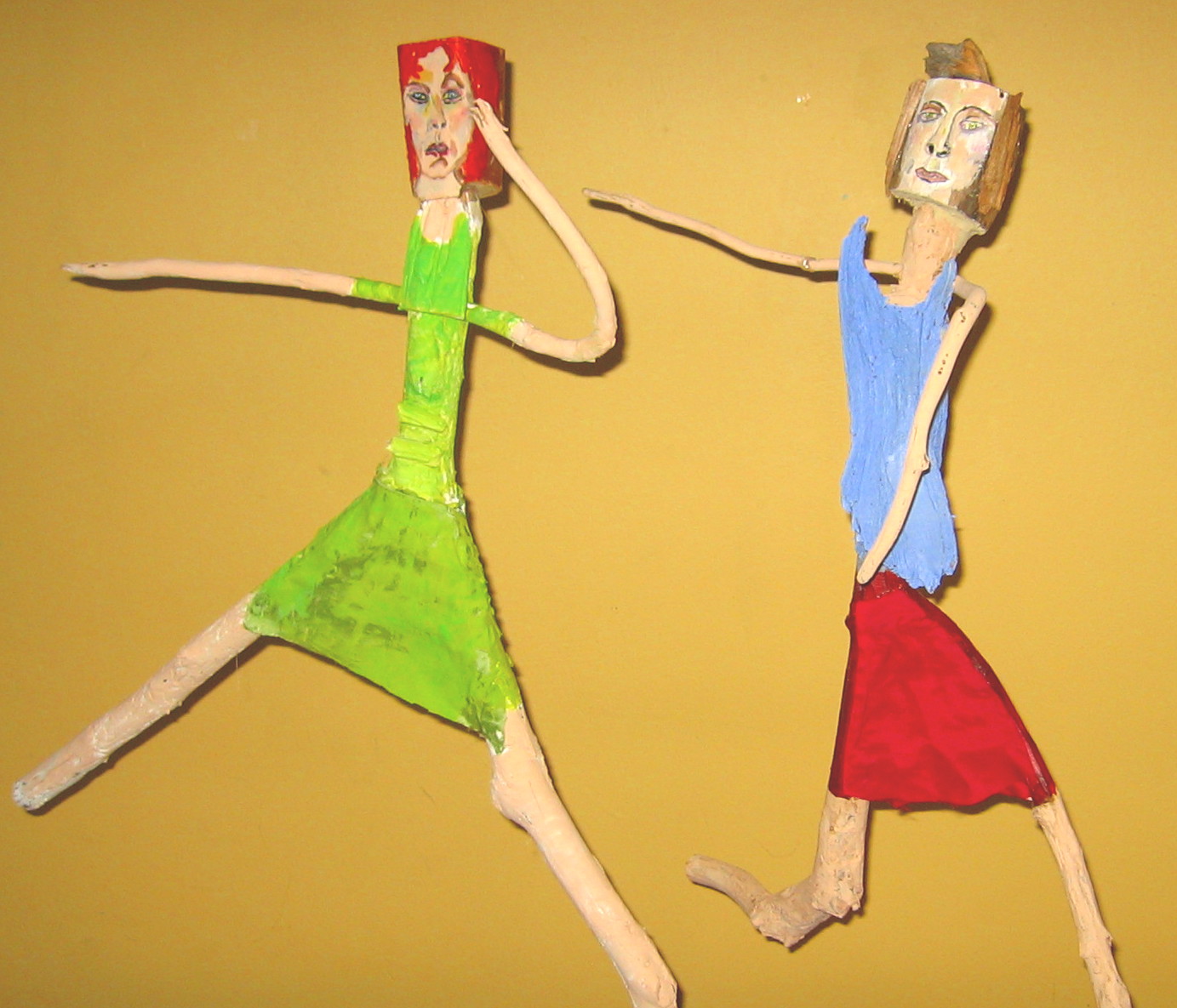
Two Gals Dancing by Carole Glasser Langille

Two Gals Dancing by Carole Glasser Langille

What is it like mothering a child with selective mutism? I only know what it is like to mother Addi. It is both the hardest thing I have done and my biggest accomplishment. I was reminded of this recently when Addi enrolled in art class. I provided information about selective mutism to the instructor, and at the first class I reminded the teacher that Addi is a sometimes-talker. Addi smiled, relieved her teacher knew.

Then one day her regular teacher was absent. I peeled her screaming body from the corner of the art room, embarrassed and disappointed, but not surprised. I pulled her into my arms and perched on a stool. We breathed. Addi grabbed a crayon and started drawing. I moved her to her own stool. She continued to draw. I left to check on her brother. She drew. From the waiting room I heard the class preparing to play a game. The teacher encouraged the kids to call out which animal she was drawing. I cringed. Then, the child, who half an hour earlier was a heap of flesh on the floor – my Addi – yelled, Bunny! Then, she took her place at the front of the room. It was her turn to draw.

Other parents collected their children and commented on the beautiful colours and complexities of the elephants they had drawn. I had tears in my eyes as I hugged Addi and told her how proud I was. She said, I don’t know why. I did perfectly well at art class right from the start.

I couldn’t argue. In her way, she did.

Addi has her own way of living out loud. It is quieter at times, but no less vibrant. I recently read that stars are born when clouds of dust and gas collapse into themselves, and I see that in Addi. Her strength is not trying to beat anxiety. Addi’s strength lies in the way she inhabits anxiety, the way she folds into herself, and emerges illuminated. Now, I try not to waste time waiting for her sonic boom; instead I find a quiet corner of her universe where I wish upon her star.