Archives

Extraordinary

This entry was posted on by .
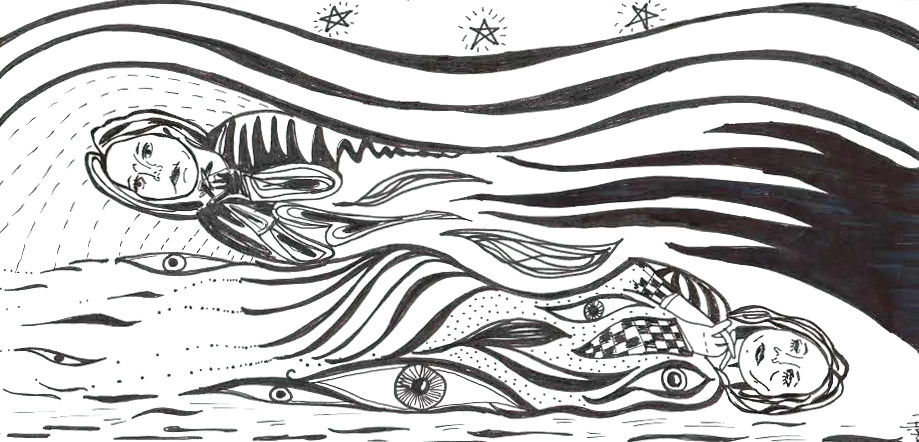
Conversations by Flavia Testa

Conversations by Flavia Testa

Welcome to the “Extraordinary” edition of Understorey Magazine, a diverse collection of stories, poetry, and visual art on mothering through social, physical, and mental challenge. We are excited to publish work by both new and established writers and artists — Canadian women living in Nova Scotia, New Brunswick, Ontario, British Columbia, the US, and the Netherlands.

Our title, “Extraordinary,” is meant to skirt (at least temporarily) sometimes disputed terms such as “disability” or “special need” while at the same time raising questions about what these words and categories mean to the people who live them.

Literally, extraordinary means outside or beyond the ordinary. But the word draws no definite or permanent line between inside and out — and makes no obvious value judgement. Extraordinary can mean rare, distinctive, atypical, and sometimes fabulous.

Likewise, through essays, fiction, poetry, and art, our contributors show that there are many ways to define, surpass, or simply live with our particular challenges — and those of our kids.

Andrea Nicki, in her poem on personality disorder, and Renate Lindeman, in her essay on mothering two daughters with Down syndrome, for example, raise pointed questions about definitions and authority. What is, or should be, the role of doctors, patients, and parents in proclaiming a diagnosis? And why should that declaration — the finding of an extra chromosome, for instance — trump all other ways of describing who we are and what we can do?

In fact, contributors Alice Evans, Kristin Proctor, and Carol Bruneau ask — in very different ways — whether Down syndrome, selective mutism, or schizophrenia are adequately described as a deficit. Are such conditions simply an absence that needs to be filled or fixed? Or can they be better described as the presence of something that, yes, brings challenge but also creates a new way of viewing and being in the world?

Indeed, for some people, symptoms and struggles are constant and unwavering. But for many, the lines between ability, disability, and even super-ability shift with age or task or surrounding. Poets Tracy Carruthers and Paula Follett-Comeau look at everyday events, a shared meal or a visit to the theatre. They ask, as everyone has asked from time to time: Is this normal? Do we need a name for this, a label? Do other kids and other mothers experience this too?

Motherhood, of course, adds layers of complexity to these questions. Mothers are supposed to protect. They are supposed to help their children. They’re supposed to want the best for their families, even at personal cost. Already, this is extraordinary. But contributors Sheila Morrison, Debra Reynolds Banting, and Susie Berg explore maternal responsibility, expectation, and love through the added challenges of autism, depression, substance abuse, and mental illness.

Cecile Proctor and Rita Kindl Meyers examine the flip side of these issues. What happens when a mother coping with traumatic brain injury or multiple sclerosis must learn to depend on her children, and learn to ask for help rather than provide it? How do mothers and their kids face this unexpected reversal of care, vigilance, and trust?

In all of these situations, the private slips into the public — and therefore into the political, the bureaucratic, and sometimes, as Rachel Edmonds finds in Sue Goyette’s new book, the legal. But while our social institutions might provide necessary guidance through our individual challenges, we can gain no deep understanding of ourselves, our families, our community — our motherhood — without telling our own, personal stories of everyday experience.

And so we present the “Extraordinary” edition of Understorey Magazine.

Thank you to the writers who sent in their work. Although not all submissions are published here, all took time, energy, and much courage to set down on screen or paper.

Thank you to the artists whose incredible work brings this magazine to life. Not coincidentally, several of the stories in this issue demonstrate an essential link between art, wellness, accomplishment, and empowerment. Written stories tend to get centre stage in our editorials, but the stories told through visual art are vital to Undertorey‘s mission, message, and aesthetic appeal.

A sincere thank you Disabled Persons Commission of Nova Scotia and the Family Development Centre for their enthusiastic moral support and generous financial support, both of which made the “Extraordinary” edition possible.

And, of course, thank you to all of our readers. Please leave a comment or two and tell us what you think!
Postpartum: Three Poems

This entry was posted on by .

Poem 1: Exhausted Haiku

Silent screams burning
Exhausted claws lacerate
Lonely tears falling

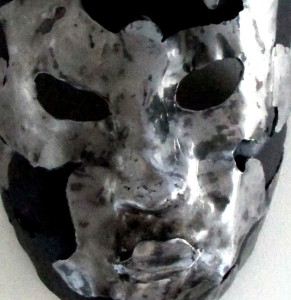
Masque by Barbara M. Schmeisser

Masque by Barbara M. Schmeisser


Poem 2: Wet Ash

I am wet ash.
Void of all light and warmth
no hope to flutter about.
A cold lump of what was once so bright.
All joy burned away long ago.
Once so cherished, now discarded.
Used and unwanted
left with the bleak rain of misery.
It does not soak, it does not penetrate
it does not fizzle.
I am nothing now but
a dark, murky slime.
I am merely, wet ash.


Poem 3: Sack of Straw

You know those sayings to get you through hard times? All those You can do its? Well, when you’re sleep deprived, that block of strength turns to a sugar cube. The words crumble and dissolve into nothingness. There are no reserves to motivate you. There are emotions, though.

There is guilt as your see your baby in the playpen or watching TV, guilt because you’re too tired to play with him. There is rage. The intense, pure anger that comes without sleep. Violence inside the mind. Teeth biting, blood gushing, screams and claws. A volcano of destruction that boils inside you. It passes as quickly as it comes, and you are left with self-pity. Loathing. Certain that you’re not very good at anything. And begging. Begging for just a few minutes of rest. Stripped of all resolve. Empty and full at the same time—a sack of straw. Please, let me sleep.

On Rejection and Snow Angels

This entry was posted on by .
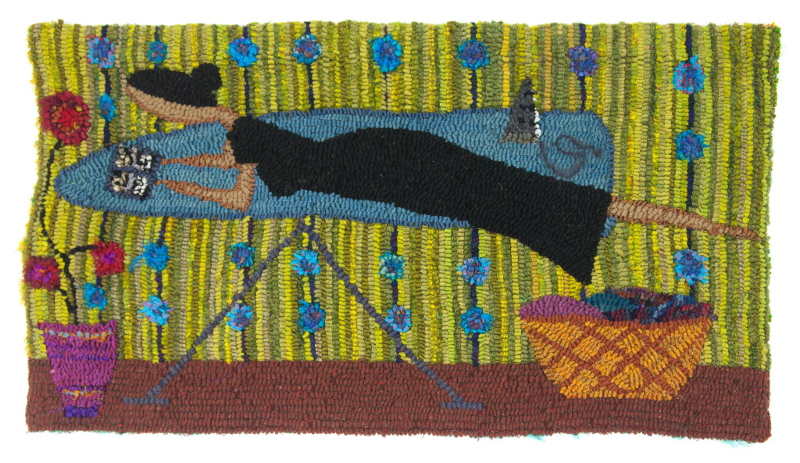
I'd Rather Be Reading than Ironing hooked rug by Laura Kenney

I’d Rather Be Reading than Ironing. Hooked rug by Laura Kenney

Winter. Discontent. There’s a reason Shakespeare bound those words for eternity.

When I was a kid, winter meant a puffy new coat, tunnels through giant snowbanks, and sweeping, ephemeral snow angels. Though I loved that first day of spring—running shoes on pavement!—I loved the whole winter, too. It was simply part of the year, part of life.

Now, as a trudging adult, winter means work. I blindly hope it won’t happen, that it will somehow pass me by. When winter arrives, as it always does, I feel injustice: What? Snow, again? I shovel the driveway, find mitts, wipe salt from the kitchen floor, find mitts, dry boots on the radiator, and find those very same mitts once again. The possibilities of winter are stifled beneath the weight of getting things done.

Of course, there are parallels to the creative process. Watch a kid who loves to paint or write. The first brush stroke or sentence, like that first plunge in the snow, begins an adventure, opens a portal to everywhere and nowhere at all. It’s thrilling. It’s magical. And then, well, it’s time for dinner….

But to be serious artists we must indeed be serious. Product matters. Success matters. We must buckle down, finish our work, package it neatly, and ship it out to the world. And then we wait as our creative offspring is surveyed, judged, scrutinized, and more than likely shipped right back home again. Turned down. Rejected. Like the fifth winter storm in February, rejection is unfair, infuriating—and inevitable.

The literary world is infamous for copious and cryptic rejection. Top literary magazines reject 99.9 per cent of submissions and most with a form letter or cold silence. The writer is left with nothing but their boomerang prose and a creeping sense of failure. No doubt visual artists vying for their first show experience the same.

I’ve dealt with rejection from both sides. As a writer, I’ve amassed my share of eternal question marks and Dear Submitter letters. As an editor, I can attest that sending rejections is the very worst part of running a magazine. Understorey is small and dedicated to nourishing creativity, so we try to respond to each submission with a personal note, either an acceptance or a reason for rejection.

Still, every writer and editor knows that rejection is part of the deal. Like winter, it will come. To ease the blow, we offer Understorey‘s alliterative emergency kit: four small Rs to better prepare for the the Big R.

1. Revel. Go on, take a moment to wallow. Feed your rejection letter through the shredder. Toss your writing guides in the compost. Furiously clean the house because that, at least, is productive. You might even co-wallow at places like Literary Rejections on Display, a nine-year-and-counting collection of merciless brush-off. Raise a glass with fellow failures everywhere!

2. Reframe. In the sober moments following your rejection-fest, you might consider the wise words of researchers who study failure for a living. Carol Dweck, for instance, suggests we reframe failure as “not yet,” as a necessary, neuron-building rung on the wobbly ladder to success. In Outliers, Malcolm Gladwell concludes that greatness requires a degree of aptitude and a ton of work—10,000 hours of work to become a virtuoso. So, yes, the early stages will be tough, collect yourself. In the immortal words of Debbie Allen: You want fame. Well, fame costs….

3. Recruit. You need to get to work. But given that two-word rejection letter, where do you start? How can writers improve when writing markets provide little or no evaluation? Some guidebooks are great; retrieve yours from the compost bin now. Writing websites offer valuable insight, too. People are best, of course, but finding available, willing readers to provide honest, constructive critique is tough. I’ve considered starting a match-making service through Understorey where writers can exchange work and feedback. What do you think? Would you use it? (Leave a comment or contact me.)

4. Regress. Yes, we need to work hard, get things done—but not all the time. Nearly every instruction on writing (and no doubt on other creative pursuits) suggests daily doodling, a time to create without critique. Natalie Goldberg popularized the idea of free writing, during which “the correctness and quality of what you write do not matter; the act of writing does.” There is no goal, just childlike freedom play. Goldberg and many others promise this practice will restore your spirit and improve writing. So put down the snow shovels, writers and artists, find your puffiest coat and the fluffiest snow drift. Fling yourself backward. Make angels.

Grandmother

This entry was posted on by .

Shauntay’s poem “Grandmother” is published in The Great Black North: Contemporary African Canadian Poetry (Frontenac House, 2012) and most recently featured as a spoken word recording on her 2014 album release Say Sumthin. Co-produced by Johann Deterville, Say Sumthin has been heralded as “a bona fide listening experience, a remarkable journey” (The Chronicle Herald).

saysumthin