Archives

A Story Under a Story

This entry was posted on by .
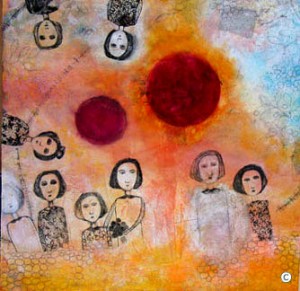
"Don't Be Lonely" by Sarah Reesor

Don’t Be Lonely by Sarah Reesor

A story. A story under a story. And a story under that, and behind that one, and—wait!—there is another, larger one.

When my first child was born, the doctor threatened forceps, and so I pushed. But once out of my body, my son seemed never to want to be close again; for a decade as a young man he may as well have been orbiting a space station. My second child, born eight years later, was lifted from the gash in my belly in a dark room while I waited for a nurse, the doctor—anyone—to explain the abrupt silence. All I heard was the clink of instruments, low whispers. The doctor who should have known better moved to Ontario shortly afterward.

You see what I mean. Stories peek out from under stories, bubbling with energy and steeped in significance. Being a mother—whether we birth a child, adopt one, take in our cousin’s orphaned daughter, or simply open the door to the stray in the neighbourhood who prefers our house because he feels safer—makes each of us a constellation of stories. Stories leak out of our pores; they hovered like mist around the body of our own mother. We create them with family, we inherit them, we draw on them for inspiration, and we shrink from them when they haunt or frighten us. That scar on our face is a story untold. A photograph, a ring, or the child-sized jean jacket we won’t throw away? A story. Every woman I know mothers a person or a creature or a cause or a place. And everyone I know is a universe of untold stories.

We tell ourselves stories in order to live, says the writer Joan Didion. The truth about stories is that’s all we are, says Thomas King. And he adds: Don’t say in the years to come that you would have lived your life differently if only you had heard this story. You’ve heard it now.

And that, for me, is the power stories hold. They inspire change. Once I have heard the details of the rape of a friend’s daughter (as statistics show, every 17 minutes across Canada a woman is raped), I cannot un-know that story. After December 1989, when 14 young women were murdered in Montreal at École Polytechnique, violence against women became a public story none of us can now refuse to know. These stories invite me to focus my lens on the epidemic of gendered violence in the world. Each woman’s story is singular, but it’s universal, too. I am taken to Saskatoon or to Highway 16 (The Highway of Tears) between Prince George and Prince Rupert. As a women with aboriginal roots, I am galvanized by the profound losses in these communities: I am implicated. As a woman, as a mother, I am connected. But the connections reach beyond Canada: I look across the globe, to India, to the Sudan.

Sometimes it all seems overwhelming. What can any of us do in the face of such enormous pain and horror in the world?

What’s important to me is to remember the sanctity of each woman’s life, and the need for each of us to claim our own story and to write it or tell it, if we can. Writing and speaking what we know force us to pay attention, to honour experience. When I’m walking on the beach I look at the stunning detail the tide scrapes in the sand; I watch the movement of clouds, or the occasional ship on the horizon. When I listen to a young woman’s story, I try to hear beyond her words. I cultivate awareness, and when I work with women as they write their lives, I try to help them become aware of their singular vision and their strength. Each individual carries a world.

It’s also important to me to create a space to talk with young people, especially young men, about their beliefs about girls and sex; I can call them on their jokes, push them on their offhand remarks (especially those two sons, whom I mentioned earlier, and who are now good men). I can bring to my classroom glossy ads I find in the local newspaper, ads such as the one showing a girl wearing little else but hockey gear, bearing the caption, “pull the goalie and score!” My students (male and female) will discuss this ad, search for more ads in print and electronic media that consider women as available sex objects. (I can—and I did—phone the company that distributed the ad and sent a note to Advertising Standards Canada). Equally important, though, I can continue to create a safe environment for awkward and sometimes tough conversations, for young men and women to make connections among, between, under and beyond the stories around them.

A story under a story can move each of us. Mother Teresa said it best: I alone cannot change the world, but I can cast a stone across the waters to create many ripples.
Rant

This entry was posted on by .

Yes, I am a Feminist. No, I do not hate men. Yes, I believe women are still oppressed. No, I have never burned a bra. Yes, I wear one. No, I am not a lesbian, but so what if I were? Yes, I wear make-up. No, I don’t like the color pink. Yes, I have long hair. No, I am not a tomboy because there is no such thing. No, I don’t want to be a man. Yes, I am proud to be a woman. No, it is not women’s nature to be nurturing. Yes, we can give birth to a child but we are no less of a woman if we choose not to. No, I do not need you to determine my value, only I can do that. Yes, I believe in birth control. No, I am not a slut. Yes, I believe women are as capable as men. No, I am not making you a sandwich. Yes, you can make me one. No, I am not bitter. Yes, I believe in love. No, I am not butch, but so what if I were? Yes, gender roles are learned. No, I don’t have penis envy. Yes, I talk back. No, I am not blaming men. Yes, we live in patriarchy. No, I do not want to take your last name. Yes, I have no shame in saying VAGINA. VAGINA, VAGINA, VAGINA. No, I do not need you, but we could make a good team. Yes, I am independent. No, it doesn’t matter what she was wearing. Yes, I cry, but I also laugh, fight, and smile. No, I will not be “yours,” I will be mine.

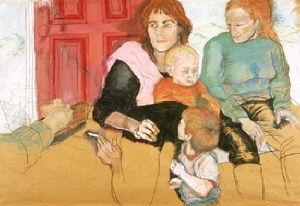
"Red Door" by Su Rogers

Red Door by Su Rogers

Catfood

This entry was posted on by .

Mum was up smoking at the window. Tapping ashes into the sink. Nini’s dead, I told her. I put her last bottle of blueberry jam on the table.

Mum took straight off past me with her cigarette. Cross the gravel in bare feet like God said it, not me. So I set about making toast on the stove and took mum’s spot at the window, watched her circle ’round to Aunt Nini’s porch door. Bout twelve when I found her. Nancy was her right name.

Mum was only in there and outta sight for a second. Showed up again like a movie reversing and she backed into a spruce. Never seen her so dazzled. Bounced right off the tree and headed home. Walking normal enough, but a cigarette hanging from her lip and her face all knotted up. Never seen her not hold her cigarette before.

She stomped back in, hit the door into the porch wall. Told me to get the hell out cause she had calls to make, and make sure Kitty and Fran stay the hell out with you. Kept on stomping.

Mum brought her little black handbag to the kitchen table. The side by the phone. Nini didn’t have her own, just used the big skin-colour one on our wall. Used to let mum dump all her ashes in the sink, too. Asked after dad, her brother, but it was all guessing, never any news from the ship.

Kitty was long gone already, out shooting in the clearing since sun-up. Fran was hiding in the front room as usual til she heard mum growling. Tore out fore I could even go get her.

Had to stop for my toast on my own way out. Perfect brown right then. Stacked it up and cut down for these nice little triangles. Was going for the jam when I seen mum’s head come up out the side of my eye.

Gave me a good glare with a new cigarette hanging off her face and glasses on. Cat eyes just like Nini’s. So out I went with dry toast.

*

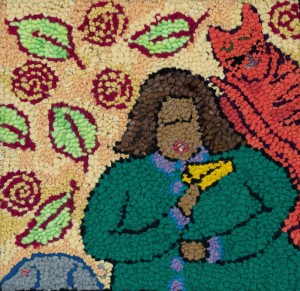
Hooked Rug by Deanne Fitzpatrick.

Hooked Rug by Deanne Fitzpatrick.

Didn’t occur til I was out on the step what mum dug out of her bag. An old address book I never seen in years. We never called nothing we didn’t know by heart, never wrote letters or went visiting.

Mum on the phone then. Her voice was some low hum through the windows. Nini’s cats everywhere in the yard, like they was lost. Franny sitting up on the well, hunched so far over her tits skimmed her legs. Facing Nini’s, half away from me.

I heard mum stop, nothing for a bit, then the phone jingled at her. Heard her again, then quiet, then ringing again.

I was picking all the little bits of toast off my overalls and Franny was playing with her hair when Kitty showed up. Marching down the hill with the .22 over her shoulder. Swinging a couple of dead squirrels by their long dead tails.

Me and Fran just sitting around musta tipped her off something wasn’t right. She stopped cold half-way down and called at us.

Cupped my hands around my mouth to say Nini’s dead and make sure she heard. Just like mum then, Kitty didn’t say a thing, just changed direction straight over to Nini’s porch.

Felt the sound of that first shot ‘fore I really heard it, in my neck, through those bones right behind your ears. Then crack. Bunch of birds flitted up off Nini’s roof. Her cats took crying again and Franny yelped.

Kitty came outta Nini’s with blood on her shirt and her gun tight in both hands. Might have been from the squirrels, the blood, but who knew.

She planted her feet. Put the butt of her rifle up to her cheek and took aim right there in the yard. Squinted, then another crack. A cat skitted across the gravel in front of me and blood flew the other way.

Fran wailed Kitty, Kitty, Kitty! Damned if I knew which one she meant.

Door hit the porch wall again behind me and there was mum looming. Mum’s eyes on Kitty’s made a sharp line through the air that cut her wide open.

Kitty wailed they were trying to eat her.

Fran whipped around to look at mum, then back to Kitty, trying to figure what was going on.

Kit burst again, that Nini’s cats were eating her.

Mum got this sneer, like the whole thing was rotted out, like she was gonna be sick. Put her hands up on her hips and looked down the drive away from all of us. Foolishness, she said.

I got up off the step and cut a wide path up by the well to get to Nini’s and stay outta Kitty’s way. Still looked like she was gonna shoot us all. Told Franny to stay right where she was and don’t follow me for no reason.

*

Nini looked pretty much same as when I found her. Flat on her back on the porch floor. Her mouth hanging open, glasses crooked half off her face. Rumply stockings, dress scooted up in a puff from tipping over. Still had hold of her can opener. One of those nice ones, red rubber handles, right up over her head in one hand like a prize. Curlers in.

Pretty much same cept for Kitty’s squirrels limp over her leg. Then I seen her fingers. First two on the hand without the can opener. The one down by her side. Top parts looked all wrong. Like chewed up spit out sandwich ham. But I just seen her a minute ago.

Nini couldn’t feel nothing so it didn’t really matter what was going on, but Kitty’s rage made a kinda sense to me, then. Til I caught sight a where that first shot went. A little orange longhair, not full grown. With a big red hole in its side, trailing down to Nini’s floor. Into the wood.

Went back out and yelled over to mum that cats musta ate up Nini’s fingers. It fell outta me, saying it. Not saying Kitty was being sensible for shooting cats or scaring the hell outta Franny, but that’s just how it was.

The dead cat in the yard, the one she shot right out in front of me, was a big old tabby we had forever. She hit it more back by its ass so it was still suffering.

I said so.

Kitty screamed at us: good!

Mum bellowed git in and I tried to grab Kitty’s eye one more time, get her to end it for the suffering tabby taking big breaths like a fish, its jaw up and down, eyes looking nowhere, but so was she, looking nowhere.

Fran went in past mum, then I did, and mum bolted the door.

Kitty showed up at the kitchen window and screamed through it with no words, just a bunch a awful, sick sounds. Eyes right round. Figured she was gonna take the butt of the .22 to the glass but she only stood there looking in, screaming.

Fran got upset again, so mum put her at the table and lit a cigarette for both of em. I asked if she called a doctor, the Mounties, and mum didn’t say, just held Fran’s hand and smoked.

*

Kitty gave up after a bit. Stopped staring in and screaming and wandered way from the window. Heard one more shot.

Then a while later an engine up the hill, rocks crunching. I unlatched the door, got it open just a sliver for my eye.  Seen a long blue car with fins pulling up far as the well.

The shot tabby, there was new blood around its head. Car didn’t go nowhere near it, the mess. I couldn’t see Kitty.

A lady got out the driver’s side. Had black eyebrows like dad and Nini. But she couldn’t a been much older than Franny. Some fella with her. He had black slacks on, nothing on top his white undershirt. Marlon Brando, I thought of.

I spotted Kitty in the trees with her gleaming .22 pointed at em. But they were already headed to Nini’s and didn’t even see her. Holding hands.

The man came out first, with Nini folded up in his big arms. Her dress was smoothed out nice.

The woman came after but went faster. Got ahead and clicked open the big blue back door. He slid Nini in. Feet first, held her curlers careful. The woman clicked it shut, the back door. And then she slid, just let go and crumbled right down to the dirt. Wailed with her head in her hands.

She started talking. Sick hillbillies, she said to the fella. Leaving her in filth and hiding. Bleeding dead animals, cat food all over her. The words choked their way out of her, just barely.

He pulled her up and led her slow back to the driver’s seat.

Disgusting, heard her say.

When they were both in she swung the car back in a big curve toward the trees, lighting up Kitty and her gun red. Then down the lane.

Reunion

This entry was posted on by .
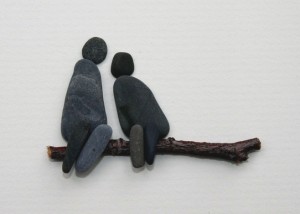
Pebble art by Sharon Nowlan

Pebble art by Sharon Nowlan

I met someone.
You can call her what you want.
I’m going to call her

biological mother
for now.

Jesus, we look alike.

We’re a little lost.
We talk and talk.
Jesus, we sounds alike.
We order green tea and forget to drink it.
Questions, answers
Questioned, answered
Cheekbones, same
talk talk talk
Expressions, similar
talk talk talk
Height, identical
tangent, tangent, back
talking, we search
feature by feature
looking for connections, more
than superficial?

I think so

We leave
each other, shaking
a 27-year-old embrace
found.

It’s ok.
It’s all ok.
It always has been.
It was all for the best. This
is where
we are

supposed to start.

New Books: Milk Fever

This entry was posted on by .

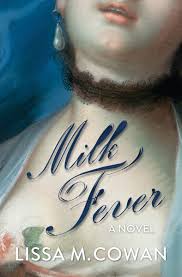
milk fever

Milk Fever
by Lissa M. Cowan
Demeter Press, 2013

The “wet nurse” now seems an antiquated term and obsolete profession, but only a hundred years ago wet-nursing was common throughout the world and remains so in many cultures today.

Canadian author Lissa M. Cowan was fascinated by the practice of wet-nursing, particularly the long-held notion that personality, emotions, and morals could be transferred to babies through breast milk. In Milk Fever, her debut novel, Cowan explores this idea in her character Armande Vivant, a wet nurse renown for the magical quality of her milk.

The story takes place on the eve of the French Revolution, 1789. Armande’s services are in great demand as France’s rich grow richer and poor poorer. Armande, unlike most wet nurses of her time, is well-educated and her reputation for reviving sickly infants, suckling them into robust, precocious toddlers, has garnered both awe and suspicion. Through this unusual character, Cowan examines key themes of the French Revolution: shifting power structures, women’s rights, and the role of science versus folklore.

Part historical novel, part mystery, Milk Fever is also an exploration of motherhood and the roles of foster mothers and nursing mothers. The story is narrated by Celeste, a 16-year-old orphaned servant-girl who helps Armande care for her charges and protects her from the ill will of neighbours. In return, Armande teaches Celeste to read and write, and becomes the mother Celeste never knew. When Armande goes missing, Celeste follows a trail of secrets to Paris and into the heart of the Revolution.

While set in the 18th century, Milk Fever raises questions relevant today. Debate about wet-nursing, now called cross-nursing, is on the rise. Organizations such as La Leche League support breastfeeding and screened milk banks, but generally discourage informal cross-nursing. Such arrangements are often short-term and reciprocal (mothers feed one another’s babies) but according to La Leche, donating unscreened milk risks transmission of illness, including HIV, drugs, and environmental contaminants—not emotions or personality, but perhaps our 21st century “milk fever.”

Other new titles by Canadian authors at Demeter Press include Fresh Hell, Motherhood in Pieces and Chasing Rainbows, Exploring Gender Fluid Parenting Practices. See Demeter’s 2013 catalogue for more details.