Archives

To Dye or Not to Dye

This entry was posted on by .

To Dye or Not to Dye

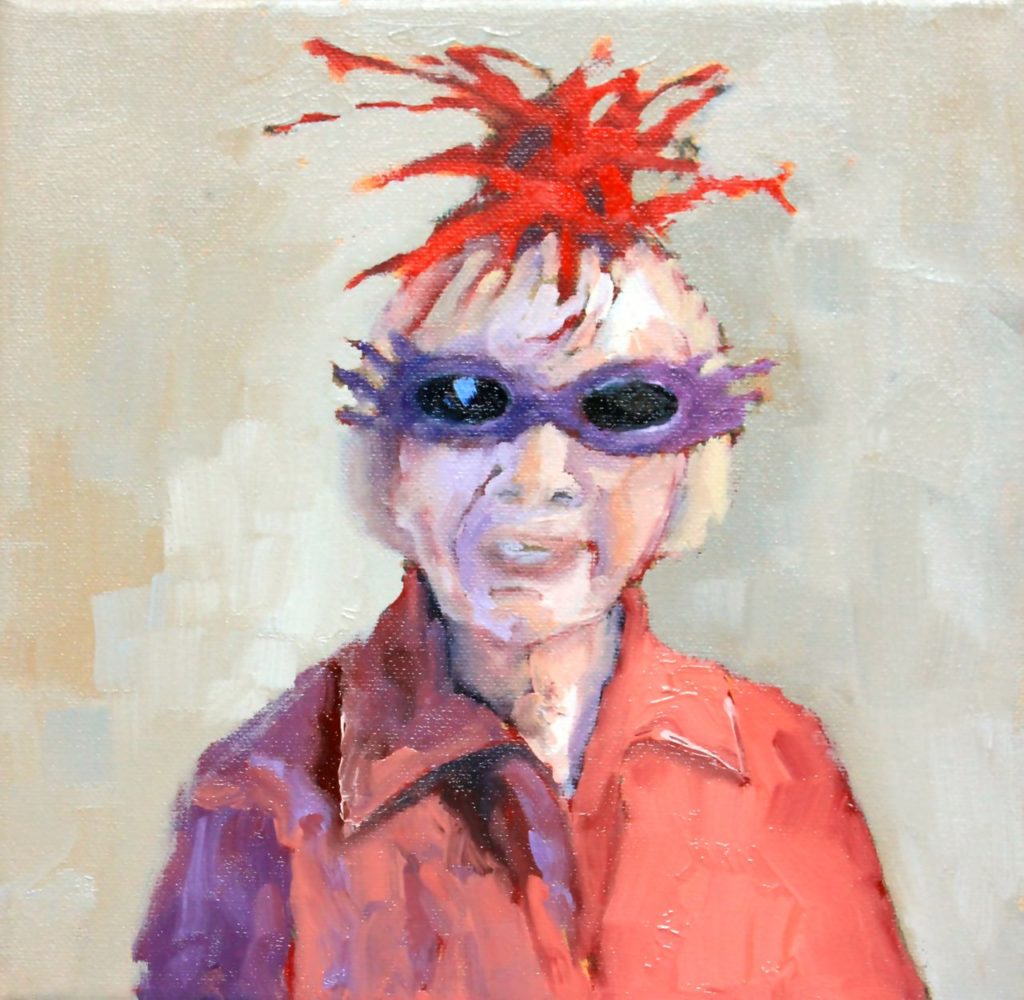
To dye or not to dye, that is the question:
Whether ‘tis nobler to let the grey hairs win
And reveal the age she truly is,
Or to take arms against the march of time
And hit the Clairol aisle at Shoppers. To dye—to streak,
Or more; and by dyeing to hide
The roots and faded follicles
That dot the ageing scalp: ‘tis a temptation
Difficult to resist. To dye—to streak;
To streak, perchance with foils—ay, there’s the rub:
For in that choice to dye what costs may come,
When she must colour every month or so,
Must give her pause—there’s the price
That makes expense of so long life.
Yet who would bear the tyranny of age,
The dismissive glance, the cheery “Dear”
The assumed discount on Seniors Days
The insolence of youth and the scorn
Of techie geeks
When she herself might fix it all
With a single flask of dye?
She ponders highlights, hues, and tones,
Till a nagging question wracks her brain.
“Why not be who I truly am?
To hell with turning back the clock!”
And thus the needless plans to dye,
Are cast off with a single thought:
“I’m free of this, let the grey begin
I shall embrace my silver locks.”

With apologies to William Shakespeare


Fifty Shades of Grey by Robyn Martelly

The Reclamation

This entry was posted on by .

The Reclamation

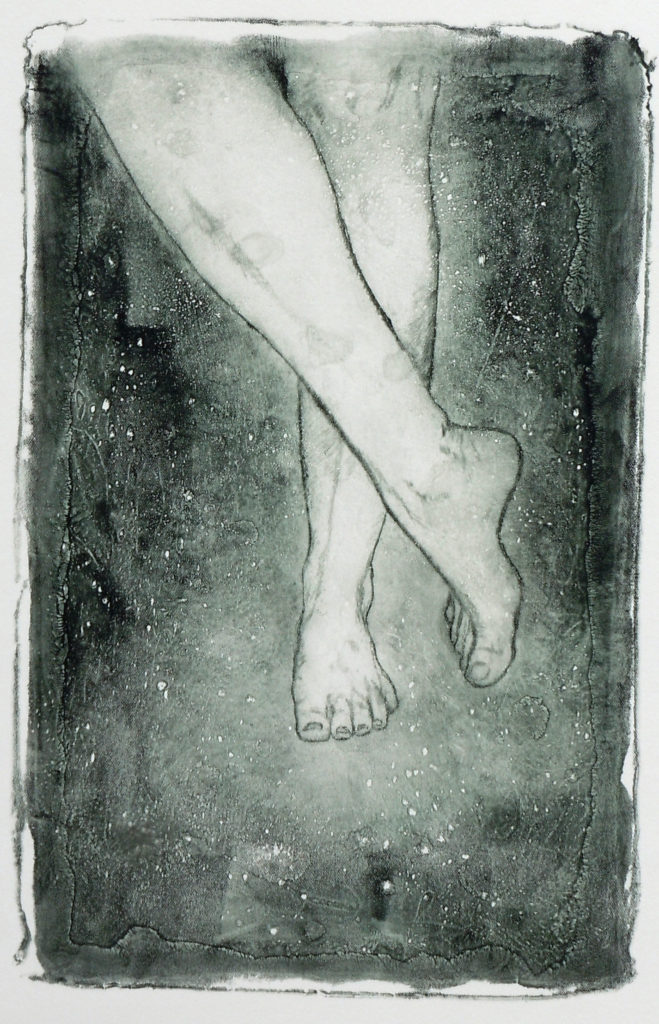
When young I ran
loose and barefoot
Over partially colonised fields
and tide-transmuted rock.
Not pausing to consider the life
crushed underfoot
Or the millennia sharply pressed
into my tender arches.
I just wanted to splash, mindlessly
Into the water.

Now
I am still barefoot, but circumspect.
And cognisant of the grass
Between my toes.

I think if I stand for a time
The blades will grow long
and cover my legs
Ants will march up and find refuge
in my bellybutton
Wild roses will entwine
my pubis, and my breasts
will provide nest space for swallows.
My ears will be repurposed for hives
by fat bees, and my nose will prove a
quiet place for chrysalides.

And if I follow the new-born butterflies
To the shore of my youth
I will not splash, but float,
Arms spread wide and toes splayed,
allowing fish to nibble my skin
for sustenance.
And if the seaweed reclaims my hair
as its own
And pulls me down to the Basin floor
to live with the hermit crabs and periwinkles
Forever

I will not resist.


Waiting by Sally Warren

Badass Orla

This entry was posted on by .

“Hope Acres has unfurnished suites so you can bring your own furniture. It’s like a small hotel with a therapeutic pool and a roof garden.” Moira’s still hell-bent on shunting Orla into a biddy villa.

“Never mind all that.” Orla waves a sheaf of papers. “Dr. Moffatt came through with my referral. I’m to be a guinea pig!”

To Ms. Orla McWhinney from Health Canada: In fall 2018, St Michael’s Hospital Medical Research Program will conduct a double-blind study to evaluate the impact of Vitamin D injections on geriatric depression. As a participant in Phase 1 Trial: High-Dose Vitamin D, you will be entitled to the following benefits at no cost: study-related clinic visits, lab tests, study medication, travel expenses. Compensation: $800.

“But Orla,” Moira sighs, “what about your diabetes?”

“Oh huff and puff,” Orla says, “Dr. Moffatt explained about cutting back on boiled sweets. Hopefully I won’t sprout three heads, haha.”

“They want your informed consent,” Moira shrills. “Have you even read these forms?”

Orla rummages through her drawer full of bingo daubers and mint humbugs for a pen then signs on for six outpatient visits and three nights at the research facility in Mississauga. For overnights, Orla packs her track suit and Nivea cream in a sponge bag reeking of Sloan’s Liniment.

“Don’t be afraid to use the shower,” Moira nags.


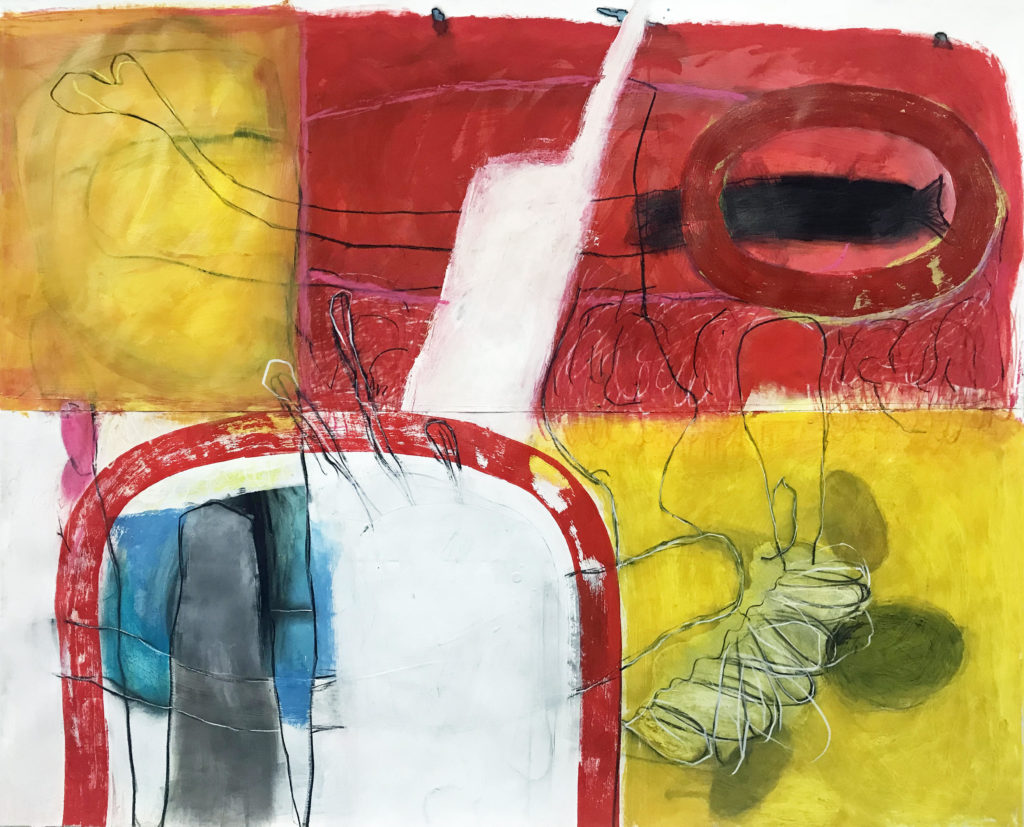
Bedazzled by Lisa-Maj Roos


Ten women and ten men separated into fluorescent dormitories with single beds, private lockers and flat-screen TVs. Orla’s new roommates are Melva, a sallow blonde in a blue onesie, and Dory, a glassy-eyed woman with heavily veined arms. With the exception of one ruddy-faced, bearded man in a fedora, the whole group falls into a pecking order: a secretive coffee klatch by the vending machine, a knit-and-bitch circle, and several nutters who won’t stop pacing. They all line up for their injections alphabetically. Orla is Number 6.

Lucas the venipuncturist has a coaxing manner. “Alrightee, Number 6 show me your bingo wing. That’s it. One, two, three….” Orla quickly loses count of all the needles and syringes.

Armed with vending-machine cocoa and a stack of Woman’s Day, Orla makes a beeline for the glassed-in patient lounge. Melva barges in nattering about her grandson: “During diaper changes, he calls out: ‘I’ll be right back!’ Isn’t that too cute for words?” Orla wrestles the wingback chair into a corner and takes cover behind Ikea birch-tree curtains.

In the dormitory that evening, the nightlight casts shadows on the upper bunk. The heat vent makes a tick-tick, pock-pock sound. Melva and Dory are both out for the count by ten. Even with her failing eyesight, Orla can conjure up shapes in the dark like a magic lantern show. Cormorants wheeling over the Irish Sea, a pooka in the guise of a white hare. By some miracle, she doesn’t have to pee all night.

*

The man in the fedora and beard pretend-knocks on Orla’s cubicle then pushes the curtain aside. “Howdy. My name’s Orie. This your first clinical trial? Go easy on the bacon burgers or your cholesterol’ll go through the roof. They load us up with heavy foods cause blood draws can be enervating.” Orie withdraws then parts the curtain again with one meaty hand, a saggy-jowled Green Man peering through faux-verdant leaves. “You don’t look depressed. Keep your distance from the cuckoo clocks in here and you’ll be alright.”

”Orie? Now there’s a coincidence for you. My name’s Orla. If you don’t mind me askin, howd’ya pass the screening for geriatric depression?”

“I told my doctor my Labrador retriever died last month and I’m still not over it.”

“Oh you’re terrible!” Orla titters. “Depression’s no laughing matter. S’pose I’m just as bad though. I told my GP I could feel a kind of fog closin’ in on me. ‘Dr. Moffatt,’ I said, ‘did you know Ireland ranks second on the list of most depressed people in the western world just behind Iceland?’”

“Well, well. You’re quite the little schemer aren’t you?” Orie says, his eyes shining.

*

Orla watches from her hidey-hole by the window as five male lab rats hurl snowballs into the ravine then piggyback-joust till one of the heftier geezers topples onto his back and limps inside. Rather than head downtown on a day pass, they’ve hung about the research station’s ugly, treeless preserve, their brain receptors awash in Vitamin D.

“Look at the state o’ them!” Orla marvels. She wanders back to the dorm for a quick nap before the next cattle call. In that drowsy, half-oblivious state where you’re not asleep yet you’re dreaming, Orla witnesses a fireball of unknown origin obliterating every nursing home sign for miles: “Caution, Senior Moment in Progress” … “In Dog Years, I’m Dead” … “Retirement Living at Its Best.”

After the final blood draw, Orie appears in the patient lounge. He points to his fancy rubber-soled slippers. “Columbia. Top of the line. Next month I’m off to Northwest Territories to test thermal underwear. I’m their moisture-wicking, anti-crotch rot guy. You should sign on, Orla. You don’t need a doctor’s letter, the money’s good and there’s no needles. Columbia Sportswear used to be a bunch of twerps in snowboard pants but now they’re targeting the fifty-plus market. My new motto is: ‘The future is age-neutral. Get used to it punks.’”

*

Hectic blotches appear on Orla’s cheeks. Her hair sticks up like she’s been sleeping in a hedge. She waves Moira aside and lurches to the car with a rolling sailor’s gait.

“Jaysus and the wee donkey but I feel grand. Like a few kinks in my brain got ironed out. They treat you like something in a glass case in there! Not stingy with the grub either. Steak, mushrooms and spuds.”

Just then, Orie pulls up in a Jeep Wrangler and rolls down his window. “Call you next week, Orla?” he hollers.

“Who is that?” Moira asks but Orla is already long gone.

Our Lady of Thermodynamics and
The Rapture of Crazy Jane

This entry was posted on by .

Our Lady of Thermodynamics: crone vs. the city

One should never trust a woman who tells one her real age. A woman who would tell one that, would tell one anything.
—Oscar Wilde, A Woman of No Importance

If you want to clear a room, start talking about ageing. Take my three friends: the first one loses her temper whenever I say anything about growing older. I used the word “crone” in front of her once just to watch the meltdown. A second friend was so resistant to any whiff of age that she once pressed down on my foot, hard, under the table because I was telling a story that veered close to saying how long she and I had known each other and, therefore, how old she might be. I can tell you that she was old enough to give me a big bruise on my foot. (A woman who would tell that would tell anything: Oscar knows.)

But ageing is only terrible until you consider the alternative. I met the third friend for lunch. He and I both lived through the AIDS crisis of the 1980s and 1990s, and to find ourselves alive in the café in our old neighbourhood after twenty-five years was a mind-bender. We grew older while many of our friends did not.

There was a popular meme making the rounds a few months ago: “describe yourself as a male novelist would describe you.” I didn’t do it: not because I was too good for the meme but because male novelists don’t describe women like me. Alison Lurie, in her novel Foreign Affairs, notes that the Western canon of British literature was written by the young for the young, as few people lived past the age of fifty in the eighteenth and nineteenth centuries. Lurie’s succinct description of literature by and for the young arrives with the knowledge that sympathetic writing about ageing women has been—with some exceptions—in short supply. We are, as we age, tagged with some of the adjectives of our childhood: silly, stupid, weak, emotional or, in short, every epithet we rejected as we took wide-legged stances in our prime to assert ourselves as adult women. I see my friend’s foot-bruising tactics have a purpose.

Jane Jacobs, in her “gloomy and hopeful” 2004 book Dark Age Ahead, notes that “pockets of people patronized as quaint, or ridiculed as feckless or stupid, are sometimes (perhaps always) Dark Age populations still handicapped by the consignment of their cultures and identities to limbo” (168). These “identities in limbo” include women who are ageing in urban spaces: patronized, mocked, often solidarity, not on the public radar.

In my forthcoming book Mobile (Book*hug, Fall 2019), I’ve written about women’s urban citizenship in two voices. The young woman is a shifting portrait of dozens of the young women I knew, including versions of myself. The older woman is neither quaint nor stupid and she’s not run by anxiety the way the younger women are. She’s calm and philosophical; she has an unwashed body and a clear head. She’s homeless, pitiless, and expectation-free. I’m calling her Crazy Jane, a homage to and extension of W. B. Yeats’ poems, and partly to push back against two centuries of poetic “Crazy Janes,” older women considered mad for making their way alone in the world. (See Matthew Lewis’s 1796 novel and Richard Dadd’s 1855 painting.)

My own Crazy Jane started talking to me when I was writing about the perils of walking in the city and women’s poverty and vulnerability. Crazy Jane’s rock-like presence in the muddied stream of late capitalism allows her to be a Yeatsian philosopher and a Blakean prophet. Role models for my Crazy Jane include, though are not limited to, the poet Anne Szumigalski and Jane Jacobs herself, both great examples of women whose art and fierce clarity defied age. But Crazy Jane is most defiantly herself.

Ageing takes guts. It requires the emotional fortitude of a saint and the exploratory zeal of an elite athlete. Parsing our way through some bodily change, my partner asked “Is this normal? Is this what is supposed to happen?” I answered, “I don’t know. I’ve never been this old before.”

About ten years ago, a friend of mine turned sixty and announced that she was giving up gender because it had never done anything for her. When I was younger I felt as though I could choose to occupy my body or escape it temporarily, via books or wine or conversation. But those opportunities to escape the body are just about over. The degenerating disks in my spine demand that I get up and move every twenty minutes. My piriformis is kicking back after so many years of walking. My left ankle did not return to its usual shape after the Great Distil Fibula Break of 2012, and there’s something unspeakable happening to my big toes. I take glucosamine and vitamin D; I stretch; I work at a stand-up desk; I walk. I modify and get results that are a bit better, but I—and we all—grow more and more entropic. Call me Our Lady of Thermodynamics.

We are young forever until one day we are not. Whatever ageing is, I’m spectacularly good at it, a natural, a champion. I can do it without even trying. From my crone’s catbird seat with my swollen ankle and bruised foot, I might do anything. Fifty-six. Anything.


Voices by Lynda Cronin


The Rapture of Crazy Jane: Five Poems

Crazy Jane meets W.B. Yeats

William, I walk the Annex. You’ll
call it Byzantium. There is no
country for young women; I know
why they are in one another’s arms.

But me, makar, I walk the blocks.
You can’t be surprised. Fish
or fowl, I’ll take my form
from any natural thing and more

besides, begotten, besotted. I’ll
take the sidewalk test and pass
with flying colours. I’ll rummage
in the marvellous order. Give me

a rundown building, give me
squatters; I’ll show you the subway
stop, a woman in a shawl that’s
the weave and colour of my skin.

Now we are old and grey and full of
sleep, I’ll say an aged woman is not
a party of the first part; gather me
into what is. To come, makar. To see.

*

Crazy Jane, Leaky Object

The city’s no arcade, no gallery, no marketplace. She will consider growing older on the sidewalk.

Bunions, pull-cart, sneakers, three layers of skirts, Leafs jersey beneath cable-knit beneath cardigan beneath green cloth coat. Jane’s as crazy as you or me.

She can slip you an aphorism if you’re short. Always stand your broken ground or We are leaky as skin.

She does not fear the hiss of the stars. She walks like a citizen, she stamps your passport, she welcomes you and your luggage to her country, the river valley, the park, the hard runnels of the alley, the overgrown community garden.

Have you anything to declare? Your matching baggage. Your basket of rotting apricots.

If you know her, raise your hand, raise your glass, raise your ruckus, raise your kids, raise your flag, raise your interest rates.

She’s the madwoman of the Danforth, every day on the corner across from World of Cheese. No one sees her. Everyone does.

*

Crazy Jane and the Central Query

When Crazy Jane is crowned the Queen
of Swords, she is not chastened: she’s
no sister of mercy or torment.

She raises your roof and rumbas.
A want of wit’s not her carpetbag.
When thanked for her passion, she

knows they mean patience. Blessed for
her goodness, she knows they mean
old woman, don’t meddle. She grasps

the hilt in her potato-dirt hand, beckons
with the other. The Queen of Swords
knows a lie when it rolls up and

starts to bluster. Jane’s never been
one to slide away. She’ll collect
crosses to bear and nail them to

your door, buster. She knows the long
ticker-tape of deferred grief,
the sobbing nightingale, orchard

dead by the highway. Jane collects
wrinkled apples on the point of her
sword. If she offers you one, don’t

hesitate. Take it and bite. Love is
squalor; we’ll be run forever.

*

Death and the Old Maiden

Man in a hood by the BFI bin. Hoarse breath. Kick in my ribs. Sharp clavicle swipe. Garbage. Gash. A mouth open in my neck.

I am fierce, bone dog, your paw between my teeth. You can study it if you want, I’m just the one who gets to bite it. Apotheosis isn’t easy.

Your black robe won’t protect you. I’m a prisoner with an agenda, a tongue as curved as your scythe. I’ll sleep coughly in your harms. Call me Saint Jane of the Sidewalk, canonize me behind the Wing On Funeral Home, sanctify me in the alley by the Bata Shoe Museum.

                     Ssssssshhhh.

Bastard rack of ribs, help me stand for this last lesson in skirt-lifting.
If I can’t dance macabre, I don’t want to be a part of your world-class city.

*

Crazy Jane visits the Yeats Exhibit at the National Library in Dublin

Jane’s nowhere to be seen
among the drafts they gleaned
from the apprentice mage.
She does not show her age,
but she occupies Yeats.
But our Jane’s a Free State,
likes the photo of Maud
Gonne, looking just, by God
like she’d clean Willie’s clock
in two short rounds: tick, tock.

Insurgency

This entry was posted on by .

I’m looking at a photo in a magazine. It’s part of a four-page photo essay called “How We Were.” The kid in the photo could be me in 1963. The clothes this kid is wearing are the clothes I had: the striped t-shirt, the baggy pants, the Keds shoes. And her short brown hair is pinned on one side with a hair clip, exactly how I used to pin my hair back.

All the kids in this photo—there are nine of us—are standing in a circle in a parking lot; we’re all holding bikes. We are about seven years old. The circle is perfect and we are looking at a tall teenager standing in the middle of it. She’s in shorts, a white shirt, white knee socks and white running shoes. She looks like a camp counsellor.

My first thought on seeing this photo is strange. It’s not, Oh look, I remember that bike, or, I loved that t-shirt, or, Plastic streamers on the handle bars, I remember those—and playing cards pegged to the wheel spokes. No. My first thought is this: Why am I standing there in that circle like a trained circus pony, waiting to be told what to do?

But now that I think of it, I spent a lot of time as a kid going round in circles, or waiting to be told to go round in circles. Either it was circles in gym class when we were running or swimming, or it was horseback riding in circles. Campfire circles or singing circles or reading circles or drama circles or circles at birthday parties. Sitting in circles, standing in circles, perched on a fat pony going round in circles. I was always going round in circles, or waiting to be told to go round in circles, now that I think of it.

If my mind could go back in time and inhabit the body of my seven-year-old self, I would get on my bike, get out of that circle and ride the wrong way down a six-lane highway or straight into a wall, jumping off at the last second. Or maybe, I would set fire to the bike, and the plastic streamers and playing cards would spew out a dense, black storm of smoke.

It occurs to me now that everything I did as a kid was an act of radical obedience in some way or other, whether I was playing with other kids or learning how to print in class, reciting the Lord’s Prayer or watching Lassie on TV in living colour, eating Lucky Charms or just sitting alone, thinking. Somebody always told me what to do and what to think, and I always did it, I always thought it. I never knew any other option. It never occurred to me not to comply. I always found my place in the circle and stayed there, waiting to follow the instructions of whomever was standing in the middle of it.

And as I got older, it was no different. The circles got bigger and looked a little ragged and lopsided sometimes, but they were all concentric, and the person at the centre was never me. All those years, it was really just the same circle, the circle I never stepped out of.


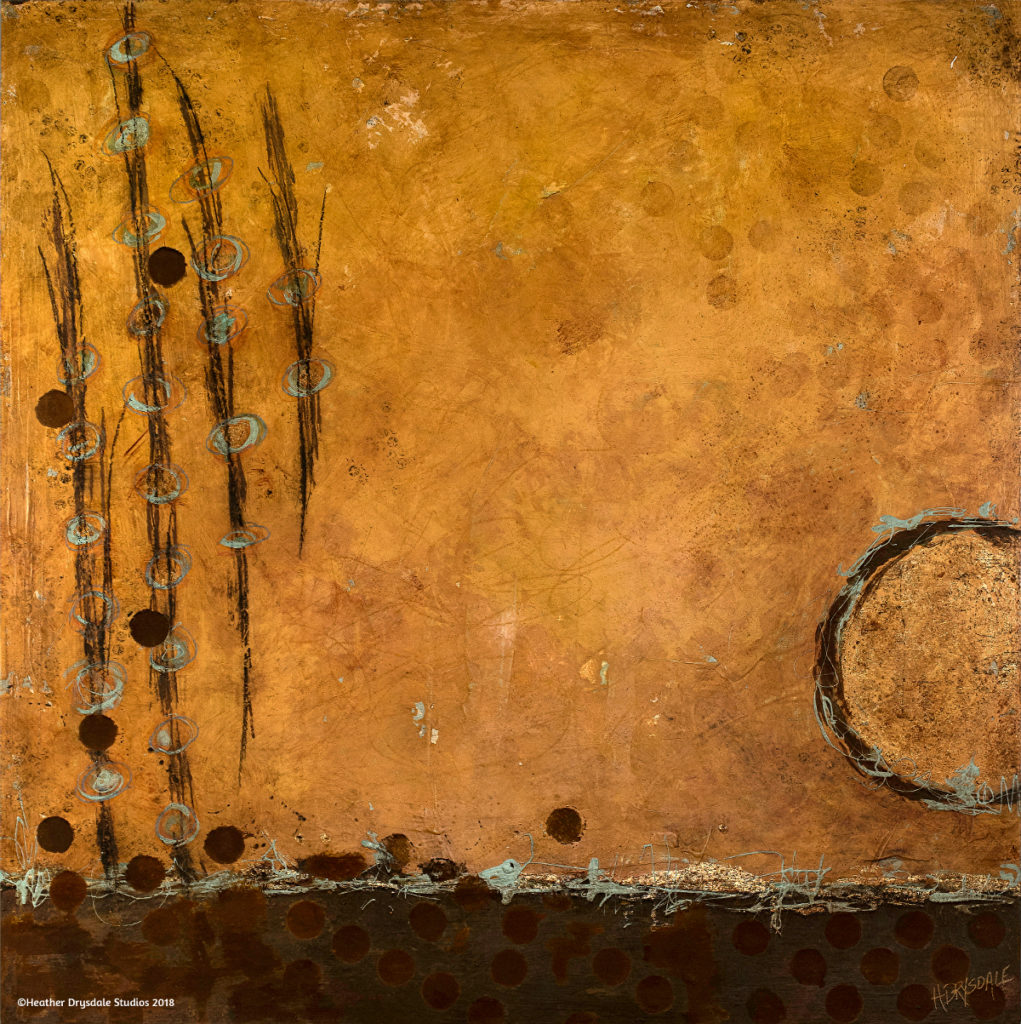
Dancing in Barcelona by Heather Drysdale


Now here I am, I have a job as a legal secretary, I have a husband and a two-storey house and a small blue car, and I am still in this circle. Instead of looking at the camp counsellor waiting to be told what to do, I am looking at my husband, waiting, or the cashier, waiting, or the yoga instructor, waiting, or my boss, who is always ready to tell me what I should be doing, and sometimes I look at the cat in that same way, waiting.

In this moment, as I look at this photo, I see it all—all my life as one single prolonged act of obedience, as deep-rooted as prayer—and I want like blazes to go back and change everything. And the first step would not be riding the bike down a six-lane highway. No, I would just wheel it over to the camp counsellor and say to her:

“Here. Take this junk heap. I don’t need it.”

And I would drop it, just let go of it, and it would clatter to the ground in a satisfying way. Then I would stand right in front of her and look straight at her and say:

“Who do you think you are, telling me what to do? Go fuck off and take all of these poor suckers with you. I’m moving to Barcelona or maybe Berlin. And if you so much as breathe a word of this to my parents, you’ll be swimming with the fishes with a cement block tied to your neck. I know someone who can take care of that, so keep your trap shut. Understand?”

Then I would march off towards the train station. At which point, someone would probably find me and grab me and put me in some kind of detention centre or boot camp for delinquents where I would trash and smash everything—all the furniture, television sets, pastel pictures on the walls, magazines with photo essays in them, and even those stupid books like Nancy Drew and the Famous Five—until maybe I’d end up in solitary confinement, and I’d trash the walls in there too, with anything I could get my hands on, a plastic spoon or fork, or even my own blood if I had to use that. There would be no end to speaking my indignation for as long as I lived, even if I had to slam my head against walls to do it. Then and only then would I know that every moment was mine—in living anger—every moment my own blood-red insurgency.

There I am in that circle, just standing there waiting. And here I am, years later, in the same circle, sitting here waiting. But now it’s different. It might look like I’m waiting for my husband to come home. But I’m not. I’m waiting for the right moment.