Archives

Duty: Three Poems

This entry was posted on by .

Playing Nancy

The city sleuth, I was bestowed the role of Nancy.
My cousins, farm girls, were George and Bess.
We dug through Grandma’s attic for clues in old letters,
the stone pile for startling treasures,
the hay mow for hidden bones,
though mostly we made tunnels from bales
and became human moles.

Retired now, and back in bare feet, I walk the beach,
watching for sand dollars and garbage bags full of cash
or hash or other illicit goods thrown overboard
to avoid approaching Coast Guard vessels.
All I spot is a rubber glove, cuff buried.
I approach tentatively. It could hold a hand.
But no, only sand.

Each wearing a silver cross, the young widow and
her three children stepped away from the casket.
I took my place.
His uniform was fresh, bearing only the one medal
marking his tour in Afghanistan.
Shrapnel scars were disguised with putty and makeup.
I touched my fingers to his sleeve.

Filled with sand.

I know a man who had been an ambulance driver in Palestine.
He had been responsible to scrape up all the particles
of bombing victims.

Their entire bodies would be buried
together. As though whole.
For religious purposes.

No cheating with sand.
No buried treasures.


She Still Flinches at Fireworks and She’s Only Been to KAF

Fuck, she only faced
a couple of rockets and
a guy deaf to ‘No.’

(KAF: Kandahar Air Field, Afghanistan)


Duty

Cat whiskers waken me early enough to listen to poetry on PBS,
reheat yesterday’s oatmeal, eat it set with walnuts and banana and
(thank you) chocolate chips.

Before I go I kiss your whiskered, bed-warm cheek—see you at supper?
Maybe tomorrow after work.
Walk my prayer, rush through cardinal calls.

Two requests already for prayers pre-surgery. Two sets of twins coming,
but, well, but. Too early, too early.
Births and deaths come crowding when my weather finger moans.

The three-month-old in Peds misses his mother who hasn’t been seen all week.
Nurses fight over who wants most to take him home.
A woman, sixty-three, misses her mother. Orphaned now.

I miss lazing with my husband in bed. Instead, I am bedside with the husband,
of the woman stripped near-naked, red-painted toenails incongruous with
quivering, heavy flesh as doctors take turn riding her chest in search of a beat.

Reflections by Justine MacDonald

(dis)service

This entry was posted on by .

(dis)service

bent head and borrowed bearing
eyes averted and authored by
outward lens
in this factory mass-producing
man’s concept of woman

my seat in the line
was gifted by my mother
        from her mother
                and her mother
                        and her mother
scripted and unalienable
the whispered audit proclaiming
this is woman’s work—to serve

this is how it has always been

my fingers deconstruct tangled lineage
wrenching free from the line
each length of twining fibre
each strand amassed
from years of keeping everything together
this is not my role
outraged silence or disapproval
urge me to fix what I’ve laid bare

I have never believed in the product

I am
dispersing the collective

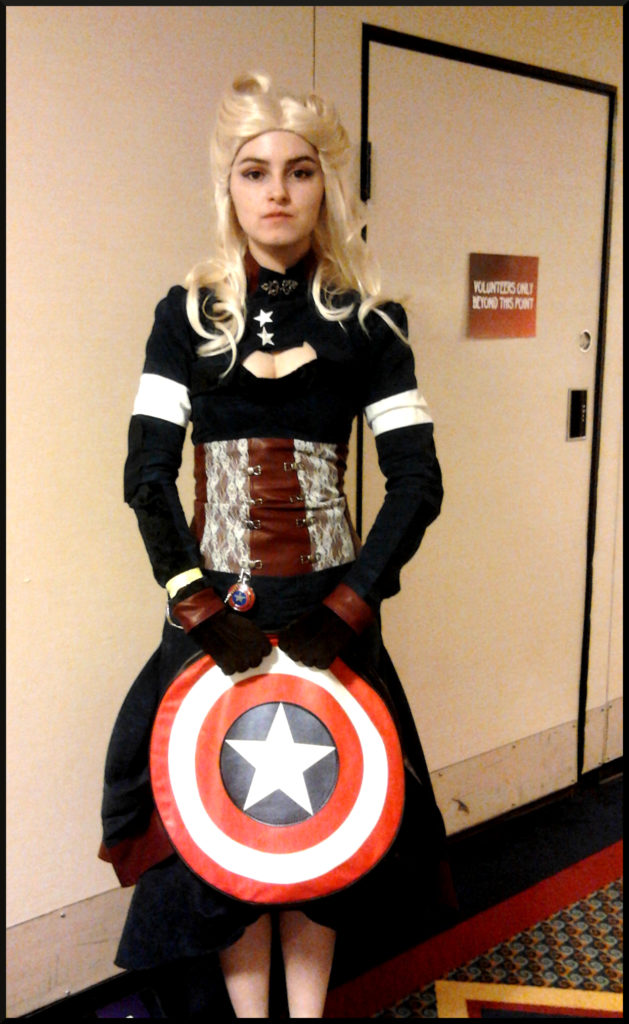
Captain Americana by Justine MacDonald

she came home

This entry was posted on by .

she came home

you don’t know who they are sometimes
when they come home

the military doesn’t want her
neither do the hospitals or safe houses

I pick her up off of the street
drive her as far from Edmonton
and the military prison as we can get

Club Ed she says soldiers call it

for a month I listen to her cry
while I wean her off
the dumpster diet she is addicted to
clean the vomit and blood make
her use a toothbrush wash
between her toes try my best with
the mouth on her
buy her decent clothes
which she will not wear

insists fatigues
boots without laces
and greatcoat are
the uniform she needs
the prison she carries with her

she volunteered
to die if need be
trained for a
mental commitment to win
did her best
to be a good soldier
did it like the guys did
she says
she knows what’s right
I see it

You need to see a doctor
she says no, terrified…

last month she ate nothing
but Joe Louis and slept…
now, suddenly she’s awake
hassling me when I smoke
ruining my sleep and furniture

training myself not to breathe
without considering her feelings
in her confusion
I’ve been punched, block-tackled
one night she drove my SUV
through the plate glass window
at the bus station
couldn’t get away from my love fast enough
trying to buy a ticket
waving imaginary money
hands splattering blood on the ticket lady

she says I’ve been good to her
can’t bring herself to tell me
bad things she did
she’s made mistakes
I look at her in wonder
she’s one of the country’s finest
what can she mean, what has she done?

I sit with her, pick the maggots
from her abdomen with tweezers
pretend to put them in a box
hum to her in spite of my terror
make her sip a little tea
she heaves dryly, fiercely
slams her head into mine
I hum and rock
ignoring the searing pain around my eyes

why are you doing this, she says
you’re saving me, why?

I don’t know if I’m a man
or an animal who’d kill
to protect his territory
I believe in justice
this country, its military
love, trust, literature, hope, beauty
the civilizing solace of Mozart and
a good glass of wine
now I think
if I get to a sunrise
without her blood on her clothes
or mine
one way or another
tell myself that’s a good night

when she calls herself
garbage la poubelle
in the other official language
I say you’re busted, dented, bruised,
damaged like the rest of us…
your valves have rusted shut
would I do all this
if I believed you were la poubelle

she left my home eleven years ago
shiny braids tucked underneath her hat
thankful for an endless supply of
military issue elastics, she joked

one of the country’s finest
doesn’t know who I am…
this time when she comes home

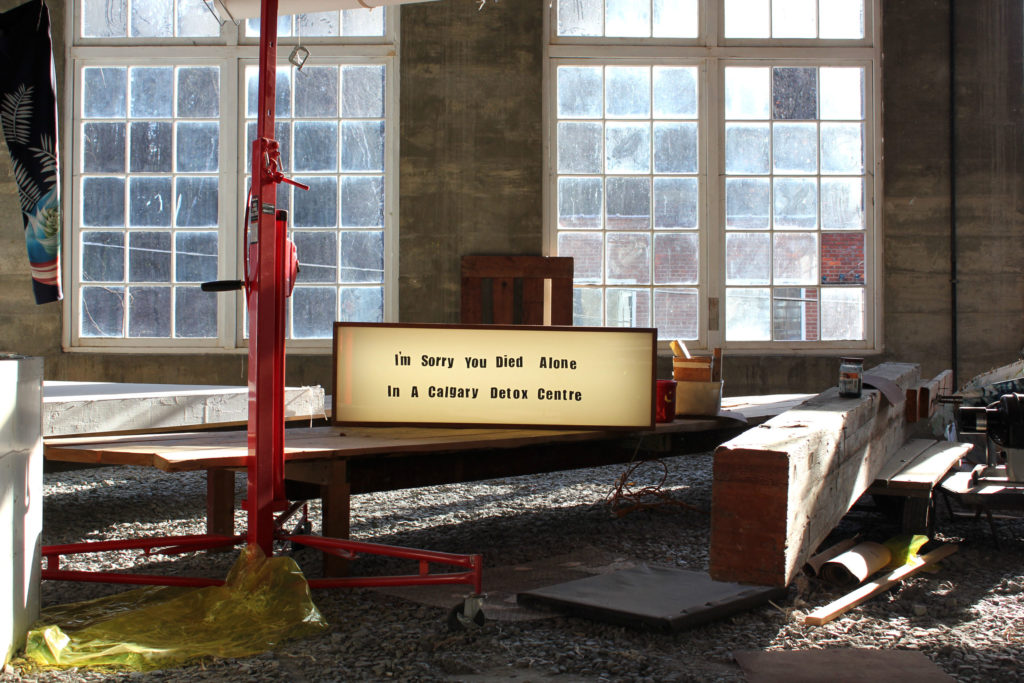
Where Do You Find Loss?? by Julia Rose Sutherland

Chemistry of Fire

This entry was posted on by .

I have a bomb in my purse. Its presence is constant. It could go off at any hour, as long as I’m in range of the detonator. Across the province, the country, the continent, there are hundreds of thousands of people carrying their own bombs, strapped to belts, tucked in pockets, clipped to sun visors in cars. And here’s the thing I’m not supposed to say out loud: I can’t wait until the bomb goes off.

*

Every Christmas when I was growing up, my sisters and I would wake in the cold, dark morning and gather together in one of our bedrooms to open the stockings that had been left on our beds. Then we would bundle ourselves in fleece housecoats and slippers and take our opened stockings into our parents’ room, unveil our gifts, and watch as Mom and Dad opened theirs—painstakingly it seemed, as we were anxious for bigger presents under the tree. One year, we had just gathered on my parents’ bed when my father’s bomb went off. He was up, dressed, and out the front door into the cold Christmas morning while my sisters and I looked at each other. The presents would have to wait. Someone was having a bad day.

My father joined the fire department in our village on the South Shore of Nova Scotia before I was born. As a young child, I grew accustomed to getting out of the way when he bolted from the house at the squeal of his pager, the tires on the car kicking up gravel in the driveway. When he got home, I would hug him and take in the smoky-diesel smell of his turnout gear. And when the fire trucks visited my school during fire prevention week, I clung to him, showing my firefighter Dad off to my friends.

*

In grade school, students learn about the “fire triangle,” that fire needs heat, fuel, and oxygen to burn. Take away one of those elements, according to the triangle, and the fire will go out: heat cools with water, fuel is finite, oxygen can be depleted. But I now know that the chemistry of fire is more complex. These three elements alone cannot create a fire. Something more is needed: a chemical chain reaction that allows the fire to build through ignition to the stage of flames and smoke. Heat, fuel, and oxygen can be present but they are futile—even innocent—without the chain reaction. It’s like attraction, the thread that ties lovers together, the roots that tie family together. You can trust someone and respect them, but without love, what kind of life can you build together? You can love someone and respect them, but without trust, would you go into a burning building together? This is a firefighter’s highest, or lowest, praise. I would—or would not—go into the flames with you.

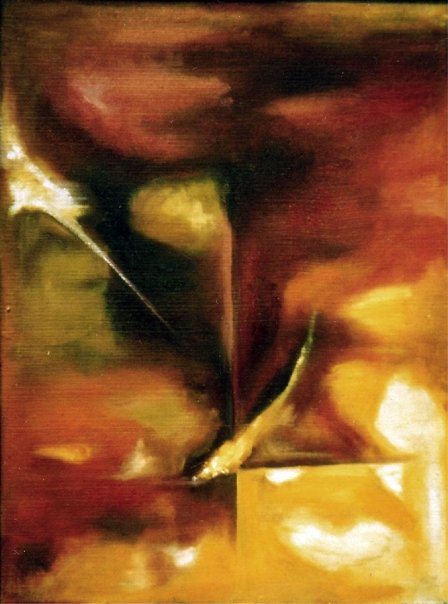
Adrift a Sea of Hidden Fire by Meena Chopra

I left Nova Scotia at eighteen. I jetted off to university in Toronto and then spent nearly a decade in Ghana and South Africa, where I worked as a journalist. These were wonderful, lonely years. I swung through work, friendships, and relationships, looking for something to make a happy life. I found I could create a spark but couldn’t sustain it. I blamed the long hours at a tiring job. In Ghana, I blamed the exhaustion that comes from living in a place where daily necessities like electricity and running water are often luxuries. I blamed the passive alienation, the persistent feeling that I didn’t fit in, that I would always be seeking a link in the chain reaction, no matter how long I lived away

I began to think, increasingly with the passing years, about moving back to Nova Scotia. It might have been a flight of fancy, a grass-is-always-greener dream, but after sixteen years away I wanted to believe that the place where my roots were the deepest would provide that missing link. So when I finally found a job I could do from anywhere—no office required—I was fuelled. I went home.

I spent a summer in my parents’ house, in the village where I grew up. As I watched my Dad go to weekly practices and meetings at the fire hall, watched him peel out of the driveway when the pager squealed, I began to ask him more about the fire department. I saw how it fulfilled an innate need to work together, to serve, and sacrifice. It was the opposite of that feeling of unbelonging I had during my lonely years abroad. Some people thrive as the outsider. I didn’t. In Ghana, the local term for foreigners—usually white people—is Obruni. It’s often friendly and harmless, an expression of curiosity but as the years went on it grated on me more and more. Every time I was called Obruni, I was reminded that I didn’t belong and never would. I realized that belonging was the link I was missing.

Nine months after moving back to Nova Scotia, I bought a house. Shortly after I moved in, I applied to join the local fire department. I was interviewed by two of the department’s officers, got a criminal record check by the RCMP, and was voted in at the department’s regular meeting. Within a month, I became a volunteer firefighter.

*

My resting state is now anticipation. When I stand in line at the grocery store, I wonder if people will think it’s rude if I drop my basket and run. In the drive-through, I look for escape routes and feel anxious if there isn’t one. If I leave my house without the pager-bomb, even to take out the garbage or hang clothes, I chide myself and go back to fetch it. Once, I fled from a meeting because I was so certain I heard my pager go off. I was halfway to the fire hall before I discovered I was wrong.

I am aware of the pain in my shoulders from practice, the blister on my foot, the mystery bruises that appear and later silently slide off my skin. Anxiety, aches, and nerves: these are the runoff from my service, the quiet badges I carry to belong.

A few weeks after joining the department, my first call came. I had dinner cooking. I remembered to shut off the stove but then took too much time to switch off the television and use the bathroom. I’d wondered how I’d react when my pager went off and found it brought a surge of adrenaline. And this, too, is part of the belonging. The rush. The sudden need to drop everything. I knew that all the firefighters were doing the same and that for the next hour or two or six we’d be joined together by a silver thread. We would rely on each other. The lights and sirens cut through the still evening as we prepared for the work ahead. The call was to a car accident. We were there to control the flow of traffic and help clean up debris, not the glamorous work of storming a burning building but vital to aid someone’s bad day.

In our department, we have office workers and mechanics. We work in health care and retail. Some of us are retired. We write and ride motorcycles and go south on winter holidays. We all carry the pager-bombs and we all have families who are left, like my sisters and I were left that Christmas morning.

When I was an outsider, an Obruni, I belonged to universities and jobs and professions—the necessary, easy belonging of adulthood. But I found little satisfaction there. Jobs change, classes end. Now, as I tug on my heavy yellow gear and try not to trip over my own feet, I realize it is the excitement and camaraderie of service, of answering the pager-bomb, that has made this rural Nova Scotia village more of a home than any other place I’ve lived. I have always had oxygen, fuel, and heat. But we just sustain the elements. In fire service—in fighting fire—I’ve finally found the chemical chain reaction to keep my own fire burning.

Stardust

This entry was posted on by .

A gale of wind blew across the land. Travelling over rushing rivers and unreachable mountain peaks, she looked for a place to rest. A safe haven. A home. For this wind had seen many far-off lands but never a place to call her own. Zephyr was her name. She could be a soft and gentle breeze, the kind that crosses your face on a cool spring day. But she could just as well become a roaring wind, one that sought to disfigure the face of our world and summon chaos in the fiercest form. She was a sleeping dragon, poke her, and you would be sure to release the wrath of one of mother nature’s most formidable demons. A Poltergeist of a wind, Zephyr was made to stir the waters and the branches of our great forests, to steal hats and wreak havoc as she travelled the world.

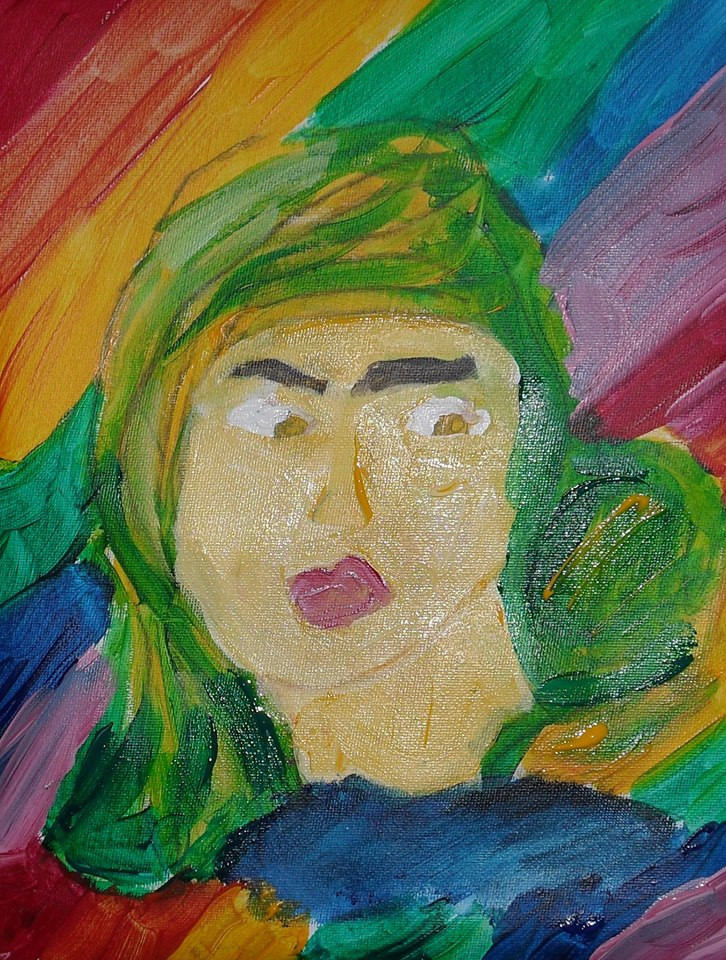
The Girl with the Green Hair after Michelangelo’s
The Delphic Sibyl, by Frøya Smith

One miserable night, when the rain pelted against the soil, Zephyr flew overhead. A storm was coming. Tendrils of her breeze stretched over the land beneath her, feeling for asylum. She found it: a cave off in the distance, clinging to the side of a mountain and cramped in size. It would do—though something was not as it should be. From the depths of the cave’s mouth, emerged a faint glow, flickering and feeble. She hastened her pace in pursuit of refuge and intrigued by the dying light. As Zephyr approached the mouth of the cave, she realised the light was a dwindling fire, his flames no longer dancing, his life waning.

“Hello?” called Zephyr, unsure if the fire would be able to return her greeting. He did not respond. “Are you alright?” she inquired. It was a rhetorical question but what else was there to ask?

The fire gestured slightly, his flames moving side to side, in what was clearly a “no.” Zephyr rushed to his side. Using her powers, her howling and fiendish gales, the kind of wind she was created to be, she summoned kindling from the forest. Small branches and twigs flew toward the cave, spinning through the air at a treacherous speed. They sung through the ether, hurling into the cave, to finally rest amid the fire’s embers. In a matter of seconds, they caught ablaze, sparks flying in a fit of spirit. Life returned to the fire, his flames roared and live coals crackled, caught in the wake of Zephyr’s mighty wind.

“Alive. I’m alive again. How? Why…?” He spoke in undertones, his voice trailing off as he interrupted himself. For a moment the two sat in silence. “You saved me.”

“Indeed I did.”

“I don’t understand.” He knew he should be dead. And yet here he was.

“Well, let me introduce myself, as you clearly aren’t going to.” The fire gaped at Zephyr. This stranger had just saved his life but she acted as though it were nothing. “They might call me the mistress of mayhem, the queen of the sky or the bringer of the windswept. But you may call me Zephyr, gentle breeze of the west.”

The fire stumbled over his words. “I, uh, name is, that is to say, I mean….”

“Out with it, will you?”

“Inferno. My name is Inferno.” No longer stammering, Inferno spoke softly. “Thank you. Just…. Thank you. Words cannot express the gratitude I feel towards you. You saved me from a treacherous fate, a painful death I would have endured alone. Thank you, Zephyr, mistress of mayhem, bringer of the windswept and gentle breeze of the west. I am forever in your debt.”

“You forgot queen of the sky.”

“What?”

“It’s Zephyr, mistress of mayhem, queen of the sky, bringer of the windswept and gentle breeze of the west. You forgot queen of the sky.”

“Are you kidding?” Inferno screeched at this quarrelsome wind’s ability to infuriate. “I just thanked you for saving my life! And all you can say is that I forgot part of your title?”

A playful smile danced on Zephyr’s lips. This was the Poltergeist of a wind that most are familiar with. “I did just save your life. You should be more grateful.”

Inferno paused, considering his position. The wind did have a point. His flames turned a rosy red, as he blushed. “I’m sorry,” he said.

“It’s okay. I was being a pain,” said Zephyr.

“So was I.”

The two stared at each other then burst out in laughter. Zephyr’s sides shook as she laughed and her winds rushed through Inferno.

“Ahhhh!” He screeched in pain and swiped at her breezes, trying to push them away. Zephyr didn’t know what she had done. “You will kill me if you don’t watch,” he wheezed. “I am a fragile force, formidable, yet fragile. I can be broken by wind, rain and earth.”

Zephyr didn’t understand, she’d never met anyone opposed to her breezes, but then she hadn’t met that many creatures.

“It’s all about power and how it is used,” Inferno continued. “Who has it and who wants to take it. You have power to destroy or sustain. This is your choice.”

Zephyr listened. Inferno’s words brought forth deep questions and she searched her mind for answers. She realised that if she let down her guard, if she let her winds fall astray, she could hurt him. Zephyr had never felt this way before: All her life, she had been cold; now she felt warmth.

Light from the clearing skies shone into the cave. The ether was exposed and stars illuminated Zephyr’s shimmering form. Inferno watched as her breezes swirled in midair but at the same time hardly moved at all. He gasped.

“What?” Zephyr asked, fearing he was still angry.

“You’re shining,” he said, “like stardust.” And Inferno’s flames danced in the moon’s glow.

#

Related reading: “Uranium” by Elise Marcella Godfrey