
Archives

What to Read Next: The Write Crowd

This entry was posted on by .

The Write Crowd: Literary Citizenship and the Writing Life by Lori A. May (Bloomsbury 2015) is not your average writing guide. It does not explore point of view or plot structures. It does not advise on how to pitch to agents or approach publishers. But it just may keep you writing. It may make the difference between saying, “I write” and “I am a writer.”

The Write Crowd advocates finding, creating and nurturing literary community through small “acts of literary kindness.” May begins the book by telling of her move from small-town Ontario to Detroit. She knew few people in the city but ventured out one night to a poetry reading in support of local authors. There she met other writers, publishers and like-minded poets. She made contacts that allowed her to launch a literary journal. She wasn’t “networking” but engaging. She was offering support and, as it happened, she also received it.

Literary citizenship can take many forms and May provides dozens of ideas from a simple “thank-you” note for author to reading for literary magazines. “The concept is to pay kindness and skill forward, to offer something to the community so that others may learn, engage, and grow from combined efforts.”

Literary citizenship is “contributing something to the literary world outside one’s own immediate need.”

The Write Crowd is both practical and inspirational. It is about connecting with others, about recognizing and celebrating the fact that we need each other.

Lori A. May spoke with Understorey Magazine about the book, literary citizenship and her latest projects.

Understorey Magazine: Writing your book was itself an “act of literary kindness” in that it inspires others to engage. What prompted you to write it?

Lori A. May: I had been impressed with so many wonderful acts of literary kindness around me—seeing emerging writers take the stage at reading series, witnessing grad student volunteers becoming employees of independent presses, watching grassroots groups become registered nonprofit organizations—that I began to document some of the ways we can foster and strengthen literary community. I wanted to share ideas big and small for how we play a role in the community and in passing on goodwill to the next generation of readers and writers. After speaking on the topic for a number of years and publishing a few articles, I imagined there was an audience for a book-length discussion.

UMag: You note in the book that literary citizenship has a long history (Walt Whitman was one advocate). Do you think the concept has changed significantly in recent times, especially with all the self-promotion authors are now expected to do?
writecrowdLM: I don’t consider self-promotion a part of literary citizenship. That’s marketing—and it’s certainly necessary for authors to do, perhaps more now than ever. Literary citizenship is when peers and readers share enthusiasm for new books, for authors’ efforts and for events taking place in the community. Acts of literary citizenship are not something a writer can count on as part of a greater marketing plan. But when readers and peers make an extra effort to help authors, it’s a welcome bonus. And when authors devote some of their time to championing others and injecting enthusiasm into the community around them? Well, those same authors are likely to benefit from community support.

UMag: Do you think the literary community and opportunities for engagement are significantly different in Canada versus the US or in big cities versus small towns?

LM: Opportunities are perhaps proportionate to population, but I don’t think there is less opportunity in Canada. There are wonderful book publishers, booksellers, literary festivals and organizations throughout the country and thus plenty of opportunity for literary citizens to get involved. In the book, I highlight a few stand-outs, like Brick Books, Canadian Creative Writers and Writing Programs and Canadian Women in Literary Arts, but there are countless others, such as provincial writers’ guilds and federations and many local literary festivals. The point I hope to make in The Write Crowd is that wherever you live, whatever resources you have to share with others, there is opportunity. If you live in a rural area, that’s all the more reason to find like-minded readers and writers to assemble a reading series. If you live in a small town with access to a library, there’s opportunity to mentor young writers or host community writing workshops. Plus, with the Internet, there’s little excuse to not get involved. Many literary journals rely on volunteer readers for submissions or marketing assistance, and many times these opportunities can be done at a distance. Whatever I learned about literary citizenship, I first learned as a young Canadian writer and I think opportunities are only increasing in Canada.

UMag: Time is a precious resource for most writers—and especially for women, who still take on a disproportionate amount of housework and childcare. Squeezing in thirty minutes of writing before work may be all that is manageable. Yet, as you point out, engagement is vital. What is one small act of literary kindness that a time-stretched emerging writer might perform?

LM: Cheer on a fellow writer. Make a quarterly appointment in your calendar to give encouragement—via mail or email or phone or in person—to another writer and champion whatever he or she is doing, remind one another why you’re writing and celebrate even the smallest of accomplishments. That may not seem like a major act of engagement but writers can so often feel isolated and frustrated with the process that these little boosts of encouragement can do wonders. You never know when someone is having a bad run and feeling down on her work. A pick-me-up phone call or note that says, “Your work matters, keep it up!” can be just the boost someone needs.

UMag: What are you working on now?

LM: I’m tinkering with some new poems, but I’m mostly focused on a new narrative nonfiction project. It’s slow going, in a way that it should be, but I like sinking my teeth into a larger project like that. I also reward myself with the instant gratification of freelance writing, so I’m seeing results for efforts along the way. I’ve had a busy year with travel and presenting at a number of conferences and festivals and being that immersed in the community always makes me feel good. I love the thrill of hearing others’ successes and sharing that magic. Most often when I come home from presenting, I have an extra bit of spunk in my step that motivates me to keep doing what I’m doing. That’s why I think community is so important. We’re all in this together.

UMag: What books or magazines are on your to-read list?

LM: I just received the latest Best Canadian Essays from Tightrope Books, so I’m enjoying the myriad voices in that collection. It’s wonderful. I’m also enjoying my subscriptions to Room Magazine, The Missouri Review and The Colorado Review. Literary journals are an amazing way to discover new voices and support independent publishing too.

Lori A. May is a Canadian author, poet and teacher. Her second collection of poetry, Square Feet, was published by Accents Publishing in 2014. She has also written the The Low-Residency MFA Handbook: A Guide for Prospective Creative Writing Students (Bloomsbury, 2011), two crime novels and short pieces published in leading literary journals. Lori grew up in Ontario and while she currently lives in the US, she keeps many Canadian literary connections, including a teaching post in the creative nonfiction writing program at the University of King’s College-Halifax and a position on the board of the Canadian Creative Writers and Writing Programs.
Home and Away

This entry was posted on by .

I have, so far, called twenty-eight different addresses my home. Some of these were childhood homes, as ours was a military family, always on the move. Many were student homes, me in constant search of lower rent, brighter rooms and better locations. I’ve lived in high rises and basements, above restaurants and below musicians. I’ve lived on Prince Edward Island and Vancouver Island and many places in between.

Few of these homes were perfect. When I shared chaotic flats, I craved civilized domesticity—a single unstained coffee cup. When I finally got my own place, I craved the chaos of living beings—cats and friends and family. But these were just details. Most of my twenty-plus moves contained an element of choice (even military moves) and a much larger element of excitement. Moving has always meant renewal: a fresh bedroom colour as a child, a decently scrubbed apartment as a student. Changing my place of residence never left me feeling adrift. I was never displaced, just replaced.

It was not until we moved to South Africa that I felt home—or the lack of home—in a deeper way. Our three boys were toddlers when my husband accepted a three-year job in Cape Town, a relocation that would in fact last four and a half years. South Africa is a beautiful and complicated place, still struggling with the legacy of apartheid. I have never been more aware of myself, of my identity as a white, middle-class Canadian, than during those years. That awareness surfaced in mundane ways: my search for molasses in the grocery store or a public swimming pool in our neighbourhood. But it manifested in more profound ways too. I drew parallels between the histories—and current realities—of our indigenous peoples. I also glimpsed what it might be like to leave your home country forever.

Though I grew to love South Africa, I felt the constant pull of Canada, that undefinable Canadian essence that somehow defines us. In a small way, I sensed unsettledness: part of myself in one place and another part permanently elsewhere. It was indeed a small way, as we could always return to Canada. Nonetheless, I learned that moving can change more than an address—it can alter a sense of self. I still cannot fathom true displacement. I have never left or made a home due to conflict, disaster, abandonment, discrimination, illness or economic crisis. For this I learn from others: everyday actions, conversations, works of art, the written word.

In this issue of Understorey Magazine, we explore many facets of home and away. The diverse authors and artists featured here portray the small, tangible items that define a home—carrots from a backyard garden; a hooked rug passed down through generations. They capture the more elusive qualities of belonging or exclusion—warmth of the sun felt across time and continents; small acts of assertion at a housing co-op. Our contributors also broach those more profound circumstances—negligence, colonization, war—that can tear down a home and impose its rebuilding.

Please read, consider, comment and share.

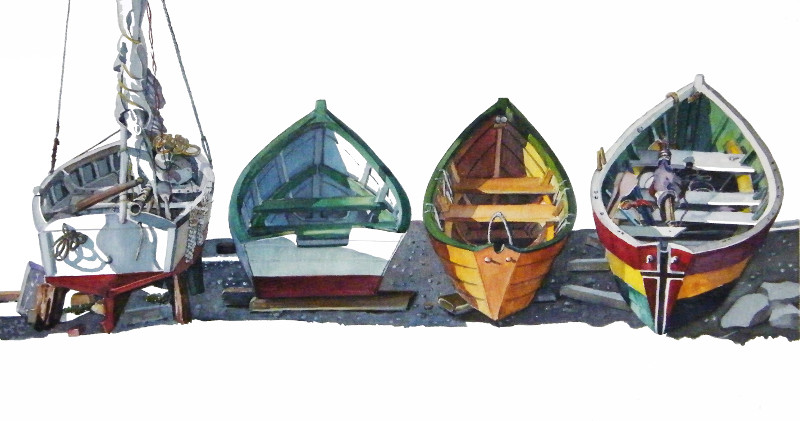
printfourboatsprintbest_scaled

Four Boats by Joy Laking

Gary Gets Angry Sometimes

This entry was posted on by .

Gary can’t pronounce my name; at first he didn’t even try. I don’t think it’s because my name is “ethnic,” as he doesn’t remember my white co-workers’ names either. He calls us Smiley, Pinky, and Blue Eyes, which makes us feel like 1930s gangsters. I call him Helmet Guy because each day during drop-in hours, he rides a shiny red electric scooter down the street from his unit to the housing co-op office and he always leaves his matching helmet on during our conversations.

Gary is a dedicated maintenance volunteer in his housing co-operative. He knows a lot of things about a lot of things. And about a lot of people. He’s resourceful. For instance, one day I wished aloud for a microwave in the office because cold dal just doesn’t have the right texture. As he left, he casually mentioned that he’d keep an eye out. I went back to accounting to the City about how we use their subsidy money. Not two minutes later, Gary returned, speed-walking with microwave in hand. Brown eyes glinting with the score. Official business.

“Holy shit!” my co-worker and I cheered.

“See, I got one for ya. That guy across the street was just getting rid of it!” Only the inside dish and one bottom peg were missing, but microwaves still work when they’re slanted. Gary brought us a dish the next day, found somewhere else.

He knows about mould and doorknobs and furnaces and insulation from his time as a superintendent. He knows exactly which day the City picks up garbage and which day they pick up plastics and which day they pick up paper. They alternate garbage collection now but do compost weekly, to encourage more green bin use. When this was instituted last summer, it drove Gary to the brink of madness.

“Why can no one keep it straight?” he yelled one day in the office. “They should pick up garbage weekly like they usedta ‘cuz people put their compost in the garbage and then the garbage just sits there stinkin’.” I asked the City to deliver calendars listing the pick-up schedule to everyone in the co-op. It seems to have caught on now. Most of the time. Things take time to become part of the culture in a housing co-op, but when they do, they have “always been” how things work.

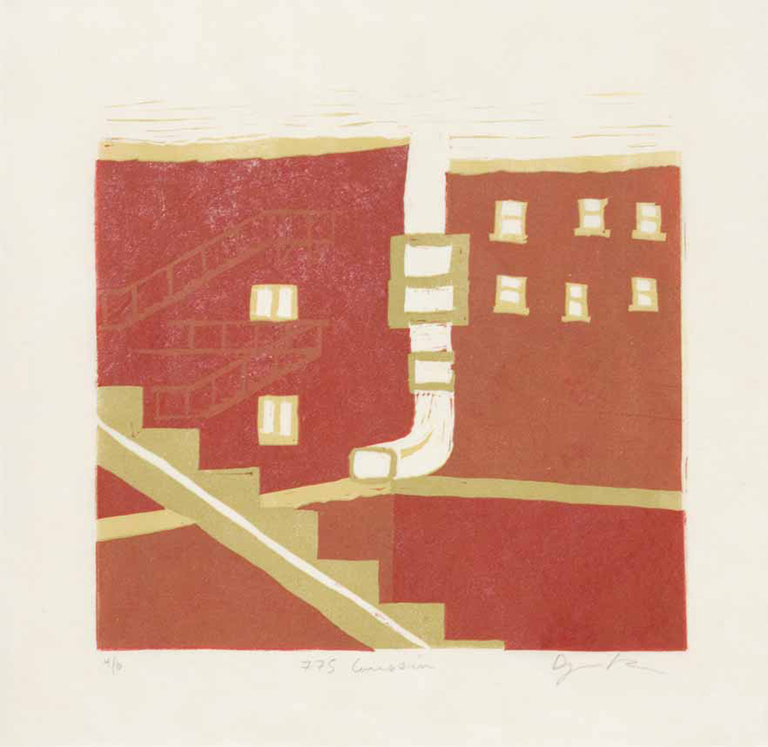
redbuildings-dyanhatanaka

775 Concession by Dyan Hatanaka

Gary moves fast, he is a man of action, so this slow pace of behavioural change in the co-op doesn’t jive with him. He gets angry sometimes, and sometimes the reason is obvious but other times, he is not sure why. He has recurring nightmares about Skynet and apocalyptic visions of the office crumbling to rubble. He had lost his Star Trek uniform, and then he found it buried below the Beanie Baby collection that had to be thrown out after a bed-bug scare. One day after a pretty good discussion on aliens and atheism and terrorism, I asked him why he gets so stressed out.

“Maybe you shouldn’t drink ten cups of coffee a day,” I offered. He said that’s not the problem, it’s because he’s seen things. “Like what?” I asked, thinking of previous conversation topics.

“You wouldn’t want to know.”

Last weekend, we ran into each other in the neighbourhood and it would have been awkward not to walk together, as we were headed in the same direction. I didn’t want to talk about work on my time off, so I inquired after his wife. It had been their anniversary a few days prior. They had gone out for Chinese food and it was shit, he recounted.

“Aw, that sucks,” I said.

“Yeah, I told them about it, too.”

“I bet you did. Which anniversary were you celebrating?”

“You always ask the hard questions, Smiley! Don’t tell my wife!”

“Harhar.” I rolled my eyes.

After a silence, he said “Uhhh, four.” I was surprised; with his white hair and deep furrows I didn’t peg him for a newlywed. Then I learned that she was his second wife and they met while he was a superintendent. She’d lived in the building and he was so handy and they hit it off. His first wife? She had leukemia but didn’t know it. One day she woke up with a bad headache, went to the hospital, and died there. Within a week. That’s why Gary never goes to hospitals, even when he has angina attacks, because those places are doomed and those people don’t know what they’re doing.

Before we parted ways, he sighed and said, “You know Smiley, sometimes I used to get angry at my wife. I don’t know why. I really wish I didn’t.”

“I’m sorry Gary. I guess you can make it up by being good to the folks in your life now.”

“Oh I am.” He nodded vigorously. “See ya tomorrow!” The office isn’t open on weekends, but same same. The days go on.

Yesterday, Gary threatened again to “take the board down.” He was angry because the co-op’s board of directors had not yet approved a policy that allowed maintenance volunteers to have copies of master keys for every unit, in the case of an emergency while the office is closed. The board hadn’t even discussed the issue yet, since they meet monthly and Gary had brought it up only last week, but that’s not really the point. The point is, why is everything so inefficient? What would he do if, one day, there was a fire on a weekend? Why don’t people trust him?

“Well now, just wait. We can talk about this as a group at the monthly board meeting on Monday,” I said.

“They’re dragging their feet!” He replied loudly, pointing at me, eyebrows way up. This is a common refrain, along with “one hand doesn’t know what the other hand is doing” and “they don’t know if they’re comin’ or goin’.” It took me exactly 24 minutes from that moment to explain the process about keys listed in the co-op’s by-laws (“Only good for one thing, toilet paper!”).

After he calmed down, he apologized. “I’m sorry Zeela, I didn’t mean to take it out on you.” He’s recently started trying out my name. It’s kind of nice; Zeela is the nickname my favourite aunt gave me.

Gary gets angry sometimes. He doesn’t know where it comes from, but I can understand. For one thing, he hasn’t got much. Gary wouldn’t call himself poor; he gets by. I know that social assistance pays his rent at one of the City’s rare affordable housing units. The waiting list for a place like his is seven years. He won’t move anywhere, despite his frustrations with the co-op. He can’t. Almost everyone around him is stuck the same way—except for the folks who moved into the new condo buildings last week, and the people who frequent that hip new café that used to be a 2$ kabob place.

Gary gets angry sometimes because he’s got no ID. His birth certificate was in bad shape and when he went to get it replaced, the clerk at the desk punched a hole in it and gave him a form to fill in. This is an insurmountable task. Gary’s not the best reader because he didn’t finish school, because he got into “a bad scene” when he was a kid, because he got bumped from one foster home to the next, because he was taken away by Children’s Aid and split up from his siblings, because they all watched their dad kill their mom. He can’t get a birth certificate without listing his mom’s maiden name on the form, which he doesn’t remember because he was seven when she died and he never knew his family again.

Gary gets angry sometimes, like a lot of men I know whose childhoods have been fucked up. This doesn’t excuse his targeting of the board or his wife or me. He has been conditioned to be angry, to win with intimidation; he’s a scrapper, always has been, and he watches too much Fox News which makes him paranoid.

Sometimes, sometimes often, Gary is loving and patient and playful. He appreciates details. Like today, when he complimented me on the strength of the coffee I made for the meeting. “I’d like to take you with me when I go home on the spaceship,” he winked. And I might go, just to meet those few who live without gravity.

To Whom It May Concern

This entry was posted on by .

From: Marie LeBlanc
To: Understorey Magazine
Date: August 12
Subject: submissions for your next edition?

To whom it may concern,

I am a writer and artist in Winnipeg. I recently participated in an art show called Canary in the Coal Mine where I exhibited my photography—even though I could not attend.

I have Multiple Chemical Sensitivity and the gallery was toxic to me, so I interacted via iPad. I have also done a performance art demonstration about MCS in front of the Legislature Building in Winnipeg. The guards were very good about it.

So I have photography and writing from both of the art shows. Would this be something you are interested in?

Thank you,
Marie LeBlanc


From: Marie LeBlanc
To: Understorey Magazine
Date: September 7
Subject: Re: re: submissions for your next edition?

Thank you for your email. I am sorry I have not responded. I’ve been trying to find a place to live.

I left my rental suite due to mould exposure. The landlord denies it exists so I have been paying rent while not living in my place. I have couch-surfed at five different places so far. One good thing about not having a place to live is that I am learning new skills. I’ve helped to cut shrubs and have become a grounds keeper of sorts.

Sorry, my thoughts are all over the place.

When is your deadline?


From: Marie LeBlanc
To: Understorey Magazine
Date: September 18
Subject: photos?

Would you like to see images of my photos? Or the stories that go with them? I have one about my GP. He recognizes that there is mould in my apartment and has requested safe housing. There is a second where social assistance says they cannot help with housing. The third is about the employment program for people with disabilities here in Manitoba. They are unwilling to accommodate me and say I am not cooperating.

What is your word limit? And did you mention the deadline?


From: Marie LeBlanc
To: Understorey Magazine
Date: September 28
Subject: Re: re: photos?

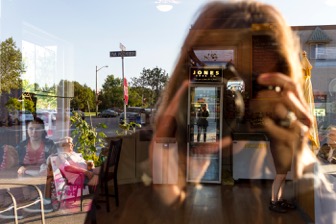
img_3193-polar-bear-aquarium-4-almost-doneI’m sending a photo from the exhibit Canary in the Coal Mine. The polar bear is the canary, much like I am—a person with MCS in constant search for safe housing and basic needs—although even living in a zoo, a so-called safe place, polar bears are now getting human diseases, an early indicator of an unnatural and toxic environment. And the children in the photo—like our children’s and grandchildren’s future—are fragile, just a reflection on the glass. The photo looks so beautiful and elegant yet it represents a warning sign of what is happening to the human population. Are we the beginning of the end of the human species?
Please let me know what else you require.


From: Marie LeBlanc
To: Understorey Magazine
Date: October 12
Subject: no Internet

In case you are trying to get in touch: I’m going back to my apartment to scan my papers, letters and other documentation about my fight for safe housing. I could not scan these in the summer because it took too long and I couldn’t be in the apartment. So I just hauled my bins of papers to different locations. Seems like all I do is haul my bins around 🙂

Anyway, Internet will be spotty for the next little while.

The landlord has done nothing to fix the mould, by the way. He has just covered it up—a Bandaid fix. But I can’t be near the materials he used so I will have to be quick.


From: Marie LeBlanc
To: Understorey Magazine
Date: October 18
Subject: entire household on Kijiji

I am selling all contents in my place. Please see ad below and share as widely as possible.

Full contents sale. Everything must go in fully furnished apartment.  Would consider offers for ENTIRE contents. $2500 OBO.  Contents may have been exposed to mould. Most items have been cleaned; most people would not be affected. Some items of note: 3 metal office cabinets; new portable air conditioner; shelves; full wardrobe including boots and jackets, women’s small. All contents must go. Cash only please.


From: Marie LeBlanc
To: Understorey Magazine
Date: October 30
Subject: CTV interview

CTV Winnipeg is doing feature story on MCS next Tuesday. Beth Macdonell interviewed me wearing my hazmat suit.

I cannot find a safe place to to watch it however.


From: Marie LeBlanc
To: Understorey Magazine
Date: October 31
Subject: Another photo?

Encased by Marie LeBlanc

I am sending another photo. Can you use it? I call this one “Encased,” even though I am outside. I am always outside and it’s getting cold. I’m trying to find winter clothes now but when I go into stores I have a reaction and can’t think straight. People gawk and think I’m drunk. I often leave with nothing—or I just slap something on my credit card to get out of there. I did buy a jacket the other day. The store did not tell me it was a final sale. Well, the jacket is too small and now I am out $50.

Still no permanent place to live and I feel like an inconvenience to all who have gone out of their way to help me in this process.


From: Marie LeBlanc
To: Understorey Magazine
Date: November 1
Subject: Re: re: another photo

I forgot to mention that when I went to drop off the keys to my ex-landlord he made an extra effort to wear cologne! He asked for a hug and I said I couldn’t because he was wearing cologne. He said we were both victims of circumstance.


From: Marie LeBlanc
To: Understorey Magazine
Date: November 4
Subject: Thank you!

Since the CTV interview, many people have approached me on social media or by email about their story. I realize there are other people like me who struggle with lots of symptoms, especially confusion and concentration issues. I feel helpless but I do like the process of talking with others.

Thank you for your help and support. I’d love to visit Nova Scotia again. If I could find a good used car I’d take off across the country and leave all this behind. Maybe some day.

Marie

My Mother’s Wounds

This entry was posted in and tagged on by .

جراح والدتي

زاحفة على بطنها ويديها الصغيرتين ملطختين بالغبار، تلتفت نحو الطرف الآخر وهي في حالة ذعر كبيرة منتظرة ساعة الإنقاذ. وبالقرب منها كل من أختها وأخواتها يتأخذون من الأرض مسندًا لهم، وفي أذنيها صدى الأصوات وصراخ تدعو الله أن تتوقف.
يوجد تحت فخذها ندبة طولها 8سم، كما يوجد شظايا لقنبلة إستقرت تحت الجلد على طول معبدها.
هذه هي الجراح التي أصيبت بها والدتي عند إندلاع الحرب الأهلية في لبنان. أهذه جراح؟ هذه مجرد آثار مادية ولدتها الحرب، أمّا جراحها الحقيقية هي تلك المخاوف اللامتناهية التي نتجت عن سماع الأصوات العالية والإنفجارات بشكل مفاجئ.
فلا يغيب عن ذاكرتها ذلك المشهد الذي رأت فيه كيف ألقيت شقيقتها الصغيرة مسافات بعيدة من تأثير الإنفجار كما أنها لا تنسى ذلك الإحساس عندما رأت أصابع خالتها تنزف دمًا شكلت بركًا على الأرض.
أما جرحها الأكبر هو لوعة قلبها على شقيقها الصغير البالغ من العمر خمس سنوات، الذي فقدته صباح عيد الميلاد.
إضافة إلى ذكرى والدتها التي أصيبت بحالة من التوحّد والإكتئاب لسنوات عدة جراء ما حصل مع إبنها الصغير وأصبحت منذ ذلك الحين مدمنة على الفيكوتين ومنطوية على نفسها ومشلولة.

jacinta

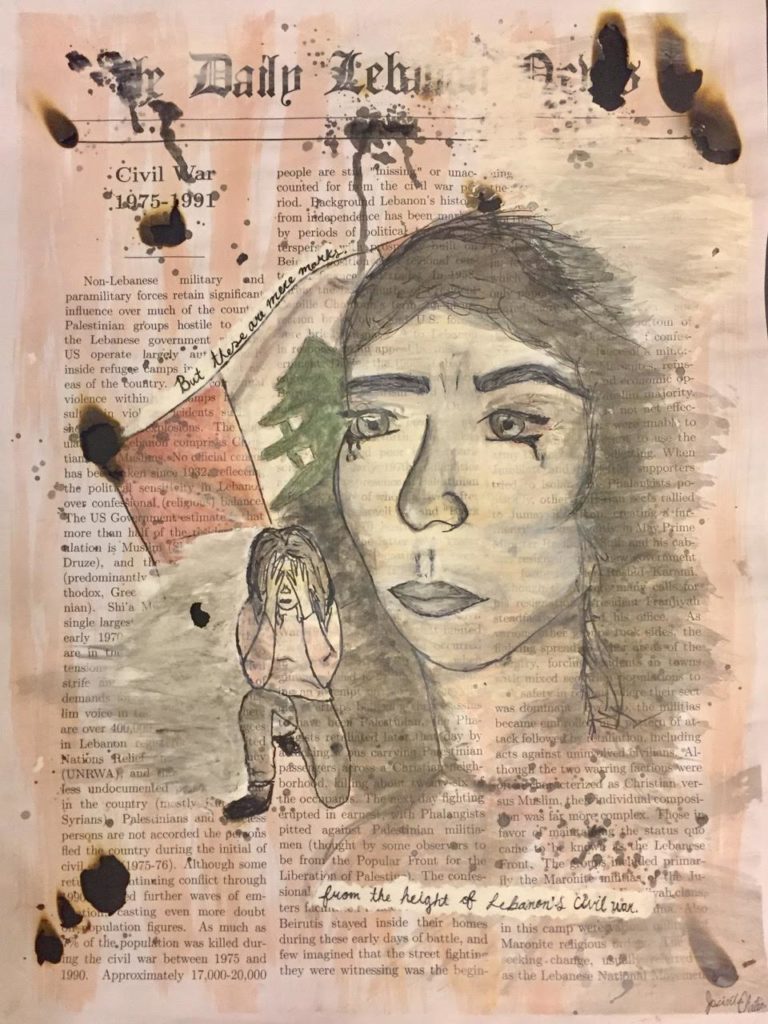
Daily Lebanon News by Jacinta Chater

My Mother’s Wounds

Laying on her stomach
her small hands on the dusty floor
and head to the side,
panicked and waiting.

Her sister and brothers next to her,
their palms against the tile, sweat beneath them.
Her ears are ringing, she prays for it to stop.

A scar down her thigh eight centimetres long
and metal shrapnel lodged
under the skin along her temple.
These are my mother’s wounds
from the height of Lebanon’s Civil War.

But these are mere marks.
Her true wounds are never ending anxieties
from sudden loud noises,
the never fading memory of
seeing her sister thrown
from the ground to building balconies
by the impact of explosion.
Her aunt’s fingers lodged deep
into the tissue of her thigh
to slow down the pools of blood
spilling onto the concrete.

Her wounds are the loss of her five year old brother
on Christmas morning
and the memory of own mother, depressed,
in an unresponsive state for years
addicted to Vicodin and withdrawn from what was left.