Archives

Reena

This entry was posted on by .

No more gloomier monster … and scourge sent by the god’s wrath
ever mounted from the black stygian water–flying things
With young girl’s faces, but foul ooze below,
Talons for hands, pale famished nightmare mouths.
—The Aeneid

She agreed to drop charges against her father, come
home. Imaginary charges, her mother said. But not
imaginary friends. They invited her. To Craigflower Bridge.
That’s a pretty name. A name that sings. I’ll buy a stuffed bear
for my foster mother, she said. But first, a party.
Missy invited her. Down Reena’s arm a path
of needle marks. In and out
of foster homes. Three schools in one year. Ask
who molested her. At fourteen, she could not get clean in any bath.
No more gloomier monster … and scourge sent by the god’s wrath.

Home sobbing. An ugly,
they called her at school. Bearded lady.
Her twelve-year-old body
heavy and large as a woman’s.
But then she got friends. They invited her.
The ones who set her hair blazing like fiery wings,
kicked her, burned cigarettes on her forehead, slammed her face
into a tree, broke both legs. Broke
her back. Nothing deadlier—see what dark brings—
ever mounted from the black stygian water–flying things.

Flying rage? Were they all girls, enraged? No,
Warren was there. He lived with his father
in the trailer until his father left.
When Reena dragged herself across the bridge
(she still could walk) Warren followed. Was his blow
so fierce it left boot marks on her skull? No,
that was Kelly’s. Stay home Reena’s uncle said.
But she left to meet those girls, pretty ones all in a row
with young girl’s faces, but foul ooze below.

Kelly cracked her skull. Who held Reena
under water? Let her up, one said.
No, she deserves it.
Why? Kelly asked when the judge
sentenced her. I didn’t kill her, I just beat her.
(Followed her, finished her off.) She muttered oaths.
No remorse, no goodbye?
No mourning? No ceremony or beating drums
or offerings from north or south?
Talons for hands, pale famished nightmare mouths.

Across a Brook by Lisa Wright

Across a Brook by Lisa Wright

My Daughter’s Mothers

This entry was posted on by .

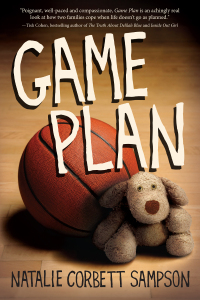
game plan

Natalie Corbett Sampson’s debut YA novel, Game Plan, portrays teen pregnancy and open adoption. “My stories start from the truth of personal experience andby asking ‘What if?grow into fiction,” Natalie says. In her essay, “My Daughter’s Mothers,” she describes the personal truth that inspired her book.

Once upon a time… that’s how fairy tales start. But the story that haunts me is not a fairy tale, at least not a classic one with an easy resolution and a happily-ever-after. It’s a legend, part truth, part imagination, a supposition I create because I don’t know the whole story.

My daughter was born half a world away. She was found one morning in a secret corner of an industrial city. The man who found her brought her to the authorities who took her picture and posted an ad in the paper in case anyone reading might suddenly notice that their daughter was missing.

Two and a half years later, we met that sprite of a girl in a hotel conference room. From the anteroom where I waited, I could hear the girl chirping and clicking her feet on the stone floor as she danced and sang. I said to whomever cared: “There she is!”

When she came to the doorway the chirping stopped as suddenly as her feet. She stood solid and still. In her right hand, she clutched a tiny turtle hanging around her neck on a lanyard; in her left she held a photo album—the one we sent with pictures of us. Although I’d been warned it might not be immediate, I felt “it” right away: she was my daughter. The uncertainty that had crippled me since we started the adoption process almost three years earlier slipped away as we tried to be gentle in our introductions. We plied her with M&Ms and toys and a very cool princess backpack when all we wanted to do was snatch her up, hug her tightly, run from the room, run from the country, and never let her go.

It’s been six years since that day in September. The process of her adoption is so far behind us I often forget her arrival into our family was so different than that of her home-grown siblings. I sometimes forget that she wasn’t always with us, that she grew in our hearts and our imaginations much longer than her siblings grew in my womb. The dubiety that kept us frightened and wary during our adoption is gone, replaced by love and trust and faith that our existence as a family was meant to be. It is most definitely a happily-ever-after for us.

But I still worry; I’m haunted unknowns, by questions about my daughter’s life before us. Children are not willed into being at two and a half. Like all children, she was brought into the world through birth and nourished for a time before responsibility for her care was given to the city’s orphanage. My husband and I know so little about her first moments in life and we intend to share those few details with our daughter when she’s old enough to ask.

Others know more: the people who were with her in those early days, those who now wander through my daydreams when I think about my daughter. While in China, I learned that the country and culture are so different from ours that it’s impossible to understand, and disrespectful to question, the choices people must make. I can’t judge but I can surmise the events that brought my girl from her first family, through children’s services, and into our home.

Once upon a time there was a desperate young girl. I see her long black hair pulled away from her face, her eyes swollen with tears. I hear her muttering, trying to find a way out of her predicament. The father isn’t evil, only a careless teenaged boy who was just as frightened when he learned the truth. They were so fearful of their families’ reactions that they hid the pregnancy until the secret bulged out. Still, they had no experience, no help, nowhere to turn….

Once upon a time there was a mother. She is older, closer to my age. I see her dressed in a professional outfit, a suit or pencil skirt and blouse, her hair cut in a bob with straight bangs that line her eyebrows. A child with dirty fingers sits on her hip, not my daughter but an older sister. The woman wipes the pudgy hands, scolding in gentle melodic tones, and sets her down to run and play. That woman needs a son. She knows her husband is disappointed and their families are right: a second daughter, the one now sleeping in the next room, can’t carry the family name or support them through retirement. A second daughter can’t access education or social support without fines being paid, fines they can’t afford….

Once upon a time there was a woman who expected a baby. She looked forward to being a mother with the same mixture of excitement and angst that filled my first pregnancy. When her baby—my baby—arrives, the little girl is loved and cradled and rocked and doted on. When the mother falls sick, she begs a friend to take her daughter. But when the mother dies the family does not have enough time or money to give the baby what her mother had wanted….

Once upon a time there was an office worker, a single mother left by her husband to raise a daughter. The woman is the first of her family to finish university and land a professional job. She works long hours to send money to her parents, saving a little to pay for her tiny apartment in the city. She loves her baby, but the cost of raising a child is formidable. A woman at the office whispers advice: There are greater opportunities for children elsewhere, in bigger cities or Western countries….

I don’t know, of course, which story is true. Probably none. I imagine scenarios that make sense but they bring me no closer to truth. Some possibilities give me comfort that my daughter is where she needs to be. Some leave me helpless that I’ll never have answers to the questions she’ll ask. At my darkest times, I’m terrified that my daughter’s separation from her first family was malicious or dishonest; I try not to yield to those fears. Together, my conjectures hover like a crowd of women who rely on me to provide my daughter with a life full of love and opportunities. They remind me to be grateful, as trite as that may sound, that only by her lost have I gained. I am bound to those women but I am my daughter’s Momma.

Time to Grow Up, Mommy Lit

This entry was posted on by .
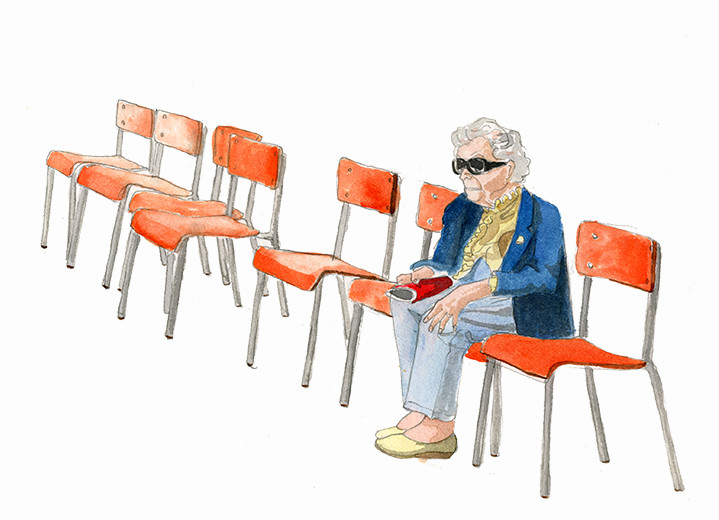
Waiting for the Parade by Kat Frick Miller

Waiting for the Parade by Kat Frick Miller

The “second oldest profession,” Erma Bombeck wrote of motherhood in her 1983 book on caring for “children, a husband, and oneself.”

Motherhood is indeed an ancient profession—or job, or calling, or stage of life—yet Bombeck’s book was among the first to discuss it candidly. We have printed and distributed books since the 1400s. Women have mothered since life began. And yet the history of books about motherhood spans roughly 40 years.

Feminist scholars have debated the role of mothers and motherhood at least since the 1960s, but Adrienne Rich opened the discussion to a broader audience with her 1976 book, Of Woman Born. Like Bombeck, Rich drew on her own experience as a mother and included entries from her personal journal. In this sense, Rich and Bombeck were forerunners of today’s mommy bloggers. Of Woman Born takes a broader, more political and feminist point of view than Bombeck’s book of humour and advice, but both authors aimed to dispel the idea that motherhood is easy, natural, private, and the most significant way to define a woman.

Following Rich’s book, motherhood studies gained some traction in the publishing world with The Reproduction of Mothering (1978), The Myths of Motherhood (1994), The Mommy Myth (2004), and The Maternal is Political (2008), to list a few. Despite this relative boom, books on motherhood remained fringe, a serious read for a dedicated few.

Mother-writing moved toward mainstream with first-hand accounts from the trenches. Anne Lamott published Operating Instructions: A Journal of My Son’s First Year in 1993. At twenty years old, the book is considered a classic of motherhood memoirs. Subsequent works by Ariel Gore, Rachel Cusk and others portrayed the messy reality of motherhood: hard, diverse, ungoverned yet public. These were raw, brave works that ushered a new age of mommy lit.

And then there was blogging.

Weblogs, as they were first called, provided an easy platform to chronicle motherhood as it happened. Blogging opened the doors to thousands of homes and the mothering within. Heather Armstrong’s Dooce (2001), The Mommy Blog (2002), Her Bad Mother (2006) and the many blogs that followed have shown motherhood uncensored. Projectile poop, morning swigs of vodka, post-partum sex (or lack thereof), toddler tantrums captured in video—nothing is too real, too irreverent, for the mommy blog.

It’s the irreverence that seems to sell. The most successful mommy blogs have become books, and the most successful of those have become bestsellers. From Armstrong’s It Sucked and Then I Cried and to the current hit, I Heart My Little A-Holes, mommy blogs-turned-books have given voice to the anti-mom. Popular mother-writers are self-described naughty, slacker, slummy, scary and/or sh*tty moms.

We ought to thank the anti-mom—the one on our bookshelf and the one in our head. Her swearing, drinking, and willingness to publicize her children’s toilet-training have freed mothers (in North America, at least) to rage, I’m so much more than this! Her storming through major publishing houses in pajama pants and stilettos has allowed books about “holy-crap moments” of motherhood to breach the New York Times bestseller list.

But it’s time to move on.

The toddler years of mommy lit, Adrienne Rich and the women who followed, broke the silence. We learned to speak and write about the everyday of motherhood. The delinquent teen years, rife with slummy mommies, let the world know that both kids and moms can be “a-holes.” The teen years shook us up, grabbed our attention—and that of publishers.

Let’s now move toward a sophisticated adulthood of mother-writing. Let’s move toward Pulitzer-winning journalism and memoir about the ways motherhood shapes women’s lives and every element of our world: schools, violence, medicine, garbage, farming, war. Let’s move toward Booker-prize-winning fiction with complex, diverse and fascinating mothers as protagonists. Writers like Maggie O’Farrell, Jenny Offill, and Ann-Marie MacDonald have led the way, crafting motherhoods neither sentimental nor snarky, women whose lives neither begin nor end with—but are clearly changed by—motherhood.

At Understorey Magazine, we hope to inspire this next wave of mother-writing. We hope the essays, fiction, poems and excerpts published here will spark the literary prize-winning books of tomorrow. We invite you to read our current and past issues, to consider, to comment—and of course, to write.

*

If you like what you read in Understorey, please consider making a donation. We are a non-profit organization and rely on grants and donations to continue our work. Thank you!

Two Poems

This entry was posted on by .

General Instructions

I am sending my son to assist
you next week.
Do you have any children?
Treat him as your own.
Be patient with messy rooms,
odd solar powered gadgets running about.

Does your cook make veggieburgers,
brew Ginger Beer? I will email you the recipes.
Oatmeal cookies are his favorite.
I mailed some this morning for your freezer
as it is hot there.

Enclosed is a cheque to help with your phone bill.
Being a married man yourself, I know you’ll understand.
They are very close.

He tells me he will be winning hearts and minds
so you must keep track of his rifle.
I shall knit a blue sleeve for the barrel,
cross stitch his name.

My best wishes to your family.
Write when you have time because
the television doesn’t always get things straight, and please
let me know, as soon as you can,
what day you will be flying
my son home.

heidi_jirotka

Full Hearts by Heidi Jirotka

My Daughter’s Voice

Ancestral harmonies soften my solitude.

A sustained note streams into the future,
a continuance, like my sister’s hands.

My daughter paints long nails;
thinks they are her own.

I held her with my grandmother’s arms, close.

She swims out of reach now,
pushes life in front of her.

The hushed beauty, her own song
drifts in. With her new voice,

I braid the long mooring line.

momento mori

This entry was posted on by .

Still now
and every day after
I’d fight for Her.
And every day
in between that slips
by with sleep then

waking to the silence that screams
from Her empty crib. Where
full breasts weep
in warm showers draining
the last sign of Her from my body.

Now people can pretend
She was never there        here—

That there is no room filled
with the existence of Her
where the cat now sleeps.

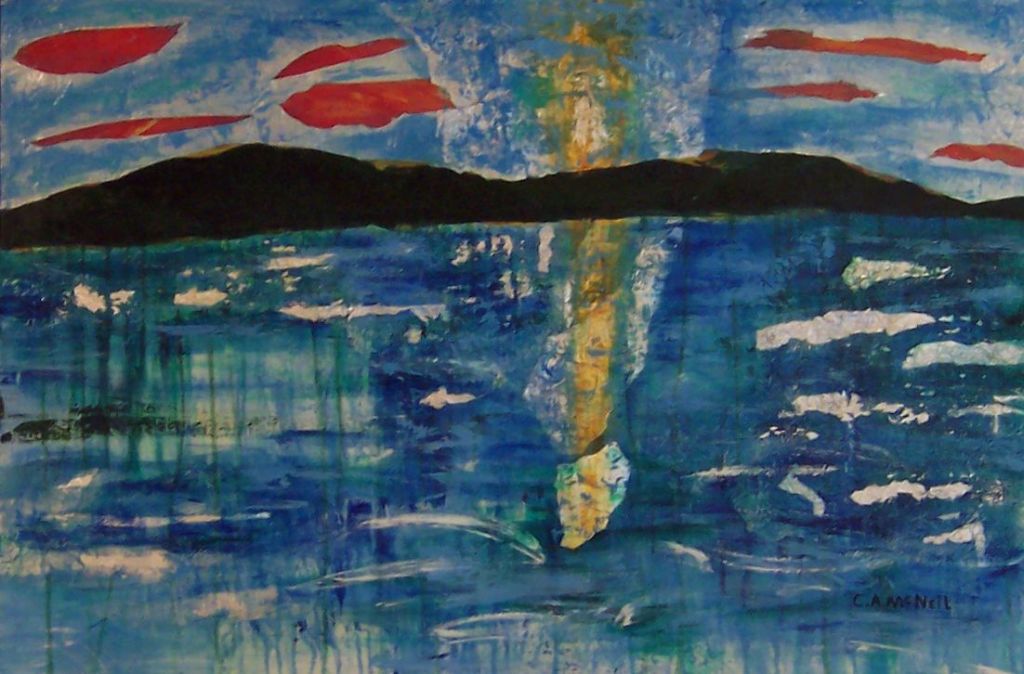
The Far Shore by Carol Ann McNeil

The Far Shore by Carol Ann McNeil