Archives

Walls

This entry was posted on by .

Walls is a CinePoetry collaboration between Ardath Whynacht and director Walter Forsyth. Since its premiere in April 2013, Walls has shown at many film and poetry festivals, including the Atlantic Film Festival (Halifax), Zebra (Berlin) and Visible Verse (Vancouver). Walls was supported by the Canada Council for the Arts and the Atlantic Filmmakers Cooperative.

Understorey Magazine is proud to present the online premiere of Walls.

Grist

This entry was posted on by .

Linda Little’s latest novel, Grist, examines motherhood, gender roles, and hard work through the character of Penelope, a women left alone to run a mill in nineteenth-century rural Nova Scotia. Grist has received fabulous reviews. Understorey Magazine spoke with Linda about her novel and her work.
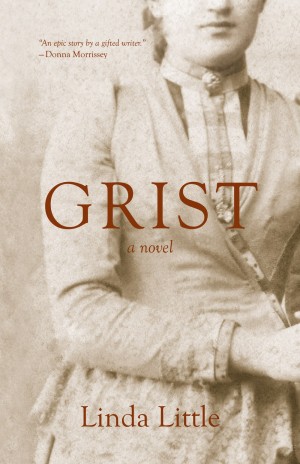
grist_bookcover

Understorey Magazine: There are autobiographical elements in Grist. You once worked in the Balmoral Grist Mill near Tatamagouche, for instance. Are there parts of you in Penelope too?

Linda Little: Certainly, my working at the grist mill was the fundamental inspiration for the novel. I love the mill and it was the springboard for the story. As for Penelope, I really didn’t draw much on my own experience or character. It’s hard to know how any of us would now respond to, and manage under, the circumstances that nineteenth-century women experienced as the norm. Penelope did what she could with the options and opportunities that arose—which is what we all strive to do, I suppose.

Understorey Magazine: You won the Thomas Raddall Atlantic Fiction Award for Scotch River in 2007. How did winning this prize influence your writing career?

Linda Little: It was wonderful to win that award. It is always a great thrill to have a novel receive extra attention. (And then there’s the money….) Having said this, it is important to remember that an award does not change a book. A novel is just as important/moving/affective to its readers before or after, with or without an award. Who wins an award depends on who sits on the jury. The great thing about an award is the chance to gain new readers. Yes, an award looks great on a resume but really, not many people ever need to see my resume these days.

Understorey Magazine: What keeps you writing, especially through those difficult days when the words don’t flow?

Linda Little: Writers need to bring their own motivations to their work. Just because a person is sitting in front of their computer does not mean they will capture something on the screen. But if you’re not sitting there, it is guaranteed you won’t! Writing Grist was a long and difficult process for me. I had to rewrite the book several times from different points of view, and by the end of the process my energy was just about spent. For my two earlier books and in the first few years of writing Grist the stories themselves carried me. When the going gets tough though, I think sheer naked determination is probably your best bet. There’s nothing fancy about it. I imagination the process has strong parallels to raising teenagers—it’s not fun any more but you can’t just stop. “In for a penny, in for a pound,” as the old saying goes. Just believe in the absence of other options.

Excerpt from Grist 

Cold closed in as we headed further down through December. Listlessness tugged at me. My days were peppered with bouts of feeling morose and ill. As Christmastime approached I brought an armful of evergreen boughs into the house and urged myself towards some small effort for the season though I knew from experience that Ewan would work as usual on Christmas Day. I visited Nettle for the few supplies I would need to make the Christmas pudding which would elicit no comment from him, one way or the other.

On Christmas morning I woke to a soft snowfall. Ewan had already left for the mill as usual. I pulled on my coat and boots and stepped out into the fresh, white hush and turned my face to the sky. The world was magnificent. I only needed to open my arms to receive its blessings. Buoyed, and thankful that I had made the small efforts I had, I set to my chores in anticipation. Then I packed up my gingerbread creation and bore it triumphantly up to Browns’ where I knew there would be Christmas cheer in abundance.

Indeed the family enveloped me the moment I entered. The children clamoured to show me the treasures Santa Claus had left them.

“Look, Mrs. MacLaughlin—an orange and a stick of candy! And the whole of it’s for me!”

“See mine, Mrs. MacLaughlin?”

“What have you got in your package, Mrs. MacLaughlin?” young Peter asked.

“I’ve brought a surprise. Shall we set it out here on the table where everyone can have a look?”

The children crowded around as I unveiled the little house with its candy-shingled roof and walls and its gumdropped laneway. I had made six gingerbread figures—one for each child—cavorting in the egg-white icing snow.

“Look at the windows!” cried Harriet. “They’re like real glass, but candy!”

“Look at the peppermints!”

“This gingerbread boy is me! See, Mama, he’s got a snowball!”

When I looked up Abby was staring at me with the most bewildered look on her face. She smiled then, of course, and gushed about the house, but I had caught her out. I felt my social self peel away, outwardly listening to the children’s questions and exclamations but underneath an awkward ache tugged me away from them.

Later, with the children sent outside to play, Abby turned to me. She cupped my chin with her hand and peered intently into my face. “Penelope, I believe you have that glow. Am I right? When did you have your last…?”

Answering her whispered questions, I pressed my palms to my womb. Yes. I had been so foolish with fussing over my troubles that I had missed the very gifts set before me.

“Yes,” Abby nodded. “There is a glow, I’m sure of it.”

I walked slowly and carefully down to the mill feeling more certain with each step. I found him by the fodder stone.

“Ewan,” I whispered, setting my hand on his shoulder, “I think we may be blessed. A child.”

Ewan cocked his head, stared at my abdomen. “Ah, your extra labour when I was gone. This is your reward.”

I caught a merry laugh as it bubbled up, caught it just in time and contained it in a smile. Had he been a different sort of man I would have teased him that a man’s absence from his wife is seldom rewarded in this way. Instead I leaned over and kissed his cheek.

I sang at my work and prayed and worked and sang some more. After all my waiting and troubles and disappointments, I felt so certain, so strong. On Sundays I visited with Abby revelling in her little ones as proof of how it would be, splashing optimism everywhere, painting the world with certainty. Abby gave me little dresses as patterns for the wee gowns I stitched and decorated. Mrs. Cunningham deduced or heard the news of my condition. When I met her on the road on my way back from Nettle’s she shot a doubtful frown over my body and advised that after this long time I shouldn’t get my hopes up.

On a winter day like so many of the days that linked dramatic weather—a seasonal day wrapped in batting, an everyday day—I was hauling water to the barn, breaking the ice on the pails and topping them up with fresh water from the well. The barn was cozy with the warm redolence of animal breath and I took my time with the beasts, stroking Billy’s nose and Pride’s too when she nuzzled over, jealous, patting the flanks of the cows. I had a bred heifer that would freshen in the spring and each day I ran my hands over her and down her hind legs, across her udder, preparing her with my smell and touch, feeding a handful of molasses oats with my ministrations. I carried armloads of hay out to the loafing shed where the sheep greeted my benevolence with bleats of praise. I had just given the horses their winter rations from the oat bag when I felt it. A nudge, a shift. If it had been a sound it would have been a rustle. Involuntarily I looked down at the front of my coat the way one might turn towards a tap on the shoulder. Beneath my palm, beneath a layer of stretched skin and a shallow dome of flesh, a human child had moved. No longer me, now a person in its own right, a baby swaddled by my body, of me but not me. My child, Ewan’s child, whose arms and legs were guided by its own separate little heart and mind. Such a flowering of pure love enveloped me I could barely breathe. “Again, my dear one,” I whispered, coaxing, now clutching my womb with both hands. I waited, my heart as broad and steadfast as the great gentle horses beside me. It came again—a flutter this time. I wept with wonder of it. The quickening.

From that day forward I never sat or stood or moved without thought of the baby I carried beneath my heart. I carried the babe through the cold of February, the ice of March, the inconstancy of April, the dawn of spring and into the fullness of summer. When the water ran low Ewan returned to Curry Point for a fortnight. I hardly noticed his absence. I carried my bundle as it grew and kicked, speaking to me as I spoke to it.

Our baby daughter came with the summer daisies, with all the hope and joy that happy flower brings. Ewan smiled and held the child, his disappointment at her sex soothed by her vibrant health. I felt our lives were beginning again, that everything up to this point had been a long meandering opening chapter; necessary detail perhaps, but now the story would begin.

“Our next will be a boy,” I promised.

“Aye,” he said.

Vox Humana

This entry was posted on by .
Vox Humana by E. Alex Pierce

Vox Humana by E. Alex Pierce

“Last Summer in the Old Craig House” from Vox Humana

Musk melon, moth skirt, with those skin-like petals that come in pink and white.
Mauve pink, for musk, our mother, that summer our brother was born.

Gold spun hair on the gun-metal green lilacs, put there to help the fairies build
their houses. And fairy-rings she found in the mossy woods. She was certain of it.

We were two lost princesses travelling with her in her last bid for freedom
while she still ran wild in the meadows and woods-roads,

traipsing us down through the salt marsh to sit on Craig’s Beach
and have royal cups of tea, red Kool-Aid that ran in streams

down our white shirts. It was our last summer in that house,
the end of our reign – he came in August, late August.

They put a Union Jack out on the clothesline up the road.
To give birth – to a son.

Lying in that brass iron bed –
now, she was Queen.

E. Alex Pierce: Much of what I write springs from my life at Sable River, Nova Scotia: I can see the salt marsh and the mouth of the tidal river from my upstairs windows. The village is much the same as it was when my grandparents (all four of them) lived here. I grew up in the nearby town of Liverpool, and spent weekends and summers at Sable with my family. “Last Summer in the Old Craig House” comes from an early memory of one of the houses we stayed in. I left Liverpool at sixteen to study music at Mount Allison and later got involved in the theatre and made that my profession. Decades later I had a chance to buy my grandmother’s house. I live there much of the time now and recognize that this landscape formed a great part of my inner life. I have photos of me at seven weeks in my mother’s arms outside the house where I live now.

“Eternal Lines” from Vox Humana

My mother spouted lines as if they were
her own: “I could compare thee,” she might say,
Shall I compare thee to a summer’s day?
The poem’s truth came later, here, or there,
she’d grafted life to art – the darling buds
of May were mine, his gold complexion dimm’d,
my father’s secret way. The eye of heaven
shined on us – and her, until the stroke
that found her vein and played its course
took all her words away. My love for her
was locked inside the poem then–but now
I read to her, and she responds to sound
without the sense, receives the lines she gave:
conceit of childhood – all at once unmade.

E. Alex PierceVox Humana felt like the right title for this book. As well as “the human voice,” its more direct meaning, vox humana also refers to an organ stop that I knew from the pump organ in our parlour. It’s a reedy sounding stop that is said to resemble the singing voice. For me, poetry is voice in that what I write is always something that can be spoken rather than something that is read and understood only in the mind. The words take up physical space and have substance and sound. You could say that the poems in Vox Humana are close to theatre because there is always the sense of a human voice breaking through the poetic form.

Marianne Claire Rivers, 1851

This entry was posted on by .
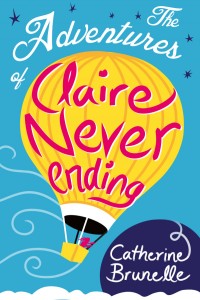
Claire Never-Ending by Catherine Brunelle

The Adventures of Claire Never-Ending by Catherine Brunelle

From the Editor

When Catherine Brunelle sent the manuscript for The Adventures of Claire Never-Ending, I agreed to publish an excerpt on Understorey based solely on the strength of Catherine’s writing and her determination to bring her book into the world. Claire Never-Ending was self-published with funds raised on Kickstarter. In other words, the book was carefully written, painstakingly edited, beautifully designed, and doggedly marketed—largely by Catherine herself. This takes both creativity and courage.

But I didn’t know the half of it.

After I responded to Catherine, she told me the rest of her story: “Claire Never-Ending was never meant to be self-published, at least not in the beginning. After three years of writing and editing, my query efforts came to a sudden halt when I was given a stage four cancer diagnosis. Life suddenly had a ticking clock in the background. I decided this novel, a story of nine generations of women who all share the middle name Claire, would go directly to the readers through a crowdfunding campaign. The project was totally under my control, and it was thrilling to see the book take physical shape. Self-publishing isn’t easy, and crowdfunding demands hustle, but the pay-off in satisfaction is huge. My Claires are now out in the world.”

One of Catherine’s Claires lives in Cape Breton in the mid-1800s. Marianne Claire Rivers is heavily pregnant and soon to leave for Thunder Bay with her husband, Marshall. Marianne’s mother-in-law, Bonnie, protests the departure of her son, daughter-in-law, and future grandchild, by refusing to eat. Marianne intervenes as follows.

From “Marianne Claire Rivers, 1851.”

Marianne turned round to the door. “Bonnie, I’m going to pick up this here piece of decorative drift wood in your garden and smash it through your window. You want me to do that? I swear to Mary and Joseph, I’ll do it if you don’t open this door. And then imagine what Fiona Campbell will be saying across town. Hmm?”

Marianne waited. The last thing she wanted was to bend over and pick up that log. She might not be able to get back up.

“You’re a stubborn goat, Marianne La Fleur,” called Marshall’s mother.

Bonnie always used maiden names whenever she was fed up with daughter-in-laws.

“As are you Bonnie Sinclair.” Marianne did the same for mother-in-laws.

The door clicked and was opened a crack. Mrs. Rivers walked back toward the dim kitchen as Marianne pushed through the entrance and stepped into Marshall’s childhood home. It wasn’t a very large place, just a few good-sized rooms grouped together and supported with wooden beams from inland. The outside was salt encrusted with a lifetime along the ocean, and the inside was cluttered with family memories and traces of their trade: netting in the corners waiting to be repaired, driftwood piled by the hearth for burning, shells along every flat surface you could imagine.

Marianne put down her basket and eventually managed to step out of her boots, trading them for some black knitted slippers she pulled from her pocket. Taking the basket, she slowly hobbled her way along the corridor to the kitchen. Bonnie was on the cot in the kitchen. The room was stuffy and hot, the curtains were drawn. Marshall’s mother looked pale as cotton and more deflated than a jelly fish on the beach.

“By the way you were fighting me, I almost thought you’d eaten a horse and more this past week. But Marshall tells me you haven’t
touched a thing.”

“I’m not hungry.”

“Fine,” replied Marianne. “But I’m starving and our stove is plugged. You mind if I make myself some dinner here?”

“Don’t play your games, girl. I know your stove ain’t plugged.”

“No games here, Bonnie. A family of sparrows just laid eggs and I don’t want to move the nest till the young ones have hatched and flown away.”

“Couldn’t have moved it before the babies arrived?”

“And where would they go otherwise? The seagulls would get them.”

“Marianne, all that sweetness will rot your teeth.”

Marianne put her basket on the kitchen table and walked over to the large windows, pulling back the drapes and letting in the light. Bonnie turned on her cot by the stove and faced the wall. The woman began mumbling to herself.

“What’s that?” asked Marianne. Going to the cupboard, she pulled out a large pot and left it on the counter.

“I said, ‘just like a child to fly away,’ even birds are ungrateful to their mothers.”

“Birds have no concept of gratitude; they just do what’s natural.”

Marianne opened a drawer and pulled out a small knife. Then, sitting down before the basket at the table and pulling over the large cutting board, she grabbed a handful of carrots.

“You rinse those carrots?” asked Bonnie, peeking over her shoulder.

“Of course I did,” replied Marianne. Marshall’s mother’s white hair was hanging loose across the cot. That was a bad sign. Normally the woman kept it high and tight in a bun.  Marianne peeled her carrot, then another, and then another. Moving aside the peels, she began to slice the carrots with a small paring knife. Soon the board was a mountain of carrot slices. Pushing back her chair, she moaned at the weight of the baby and stood up, getting the big pot and carrying it over to the stove. She lowered herself slowly down to the cupboard beside the stove, taking up the oil jar and pouring several ‘glugs’ into the pot. Putting away the oil, Marianne turned to the cutting board and brought it to the oven.

“In we go,” she whispered as the carrots splashed into the heating oil.

“I won’t eat a thing,” barked Mrs. Bonnie Rivers.

“The carrots are in the pot,” replied Marianne. Picking a wooden spoon from the drawer, she pushed them around to cover the base. Then, taking a small log from the wood pile near the door, she opened the oven and added it to the burning embers.

“Don’t you know better?” asked Bonnie, still facing the wall and not moving. “You cook the onions first. Gets rid of their sting and makes everything sweeter.”

“I sure do know better,” replied Marianne. “Carrots first brings out the yellow, and everyone likes a soup with strong colour.”

Marshall’s mother snorted. “Young girls think theys always knows best.”

“All I know is that carrots go first.”

“Onions first!” Mrs. Rivers turned away from the wall to stare down Marianne. “I’ve been cooking soup all my life, girl, and I knows about order.”

“This recipe has been handed down generations,” replied Marianne. She pushed at the carrots and looked out the window. “That essentially makes it historic.”

Another snort from Bonnie. “Historic, my backside.”

“That too, of course.”

What Did You Do Today?

This entry was posted on by .
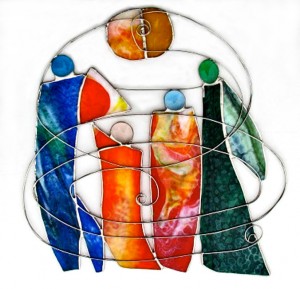
Family by Jay Leblanc

Family by Jay Leblanc

No doubt you’ve been asked, perhaps by a partner, an acquaintance, your own child returning from school: “What did you do today?”

Maybe you have asked yourself: What have I done today? What have I achieved?

How do you respond?

“I sold two paintings.”

“I closed a deal.”

“I ran 10K.”

Do you respond with the big things we tend to count as true accomplishments or the smaller things, the hundreds of smaller things we do every day?

“I made coffee, fed the cat, took out the garbage and washed the kitchen bin, put in a load of laundry, helped three boys make their breakfast, swept Rice Chex off the floor, wiped jam from the chair backs, unloaded and reloaded the dishwasher, made three (different) school lunches, and pumped a flat bike tire… all before 8 am.”

Not world-changing.

Not glamourous.

Sometimes not even noticed.

But necessary.

We “do” so much as mothers, caregivers, partners, working women. Our days are filled with accomplishments both monumental and mundane. For some we receive, or allow ourselves recognition; for many we do not. For some we feel satisfaction and pride; for others guilt, resentment or sheer boredom.

We invite you to keep track—for an hour, a day, a week—of what you do. Not a “to-do” but an “I’ve-done” list. Send your list to Understorey and we will publish it on our new blog (anonymously, if you prefer). See our contact page for addresses.

In his book Material World, Peter Menzel documented possessions; households around the world were emptied onto the street and photographed. In What I Eat, Menzel and Faith D’Aluisio documented the daily food intake of people from diverse cultures and backgrounds. And in Where Children Sleep, James Mollison captured the sad and startling places children rest at night.

In a similar way, the “I’ve done” lists are meant as art of the everyday, a literary gallery of the number and diversity of womens’ daily achievements. The lists are also a way for all women—writers and non-writers, from Nova Scotia and away—to contribute to the magazine. Not a competition but a celebration. Not a challenge but a small tribute to ourselves and each other.

I hope to hear from you.

Katherine

PS. Need inspiration? See recently posted lists by Linda Roe, Lesley Crewe, Sheila Morrison, and Su Rogers. But remember, you don’t have to provide your name!